Serving Clayton, NC & nearby
(984) 290-6882
Clayton, NC

The Noises Your Garage Door Makes in Clayton, and What They're Telling You

Clayton homes built mostly from the 1980s through 2013 wear differently than older houses, especially once cold winters set in. Here's what each noise means.

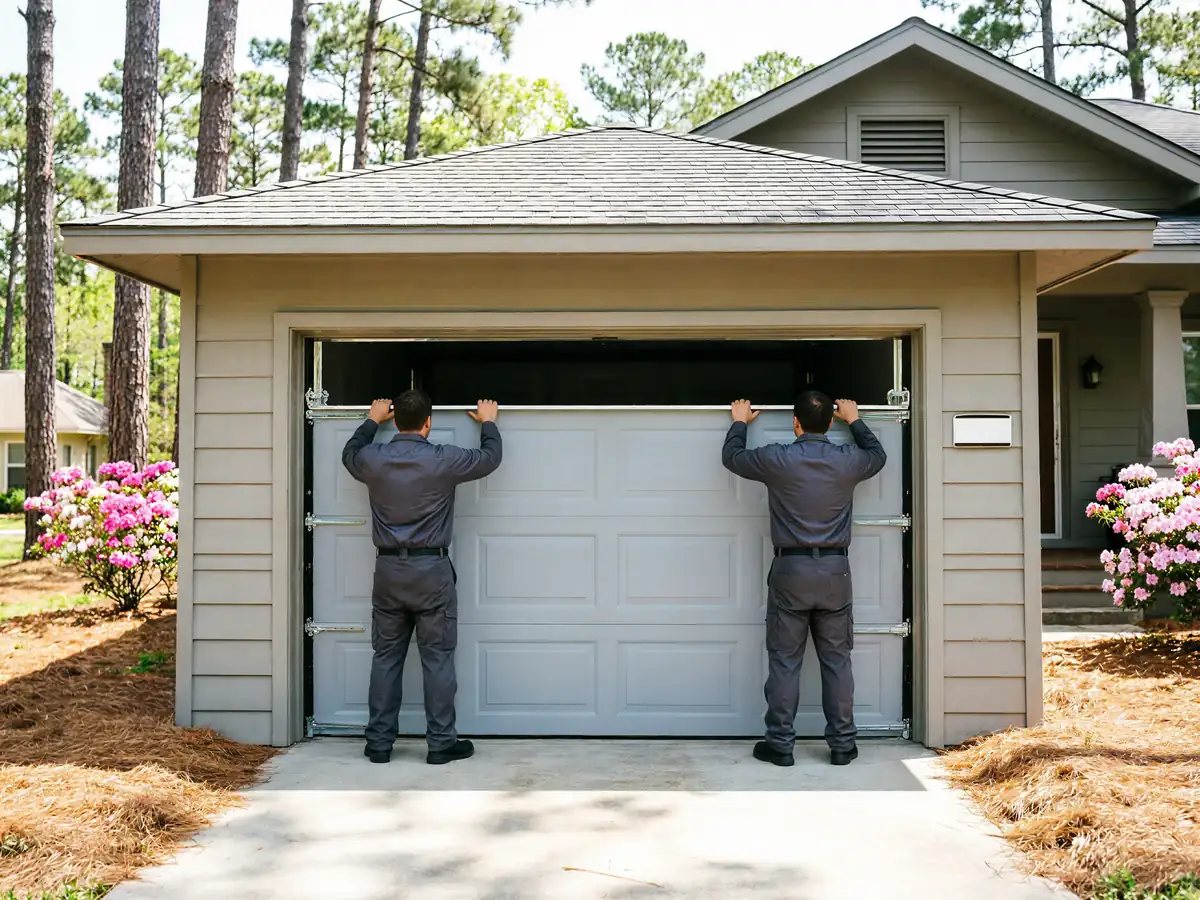
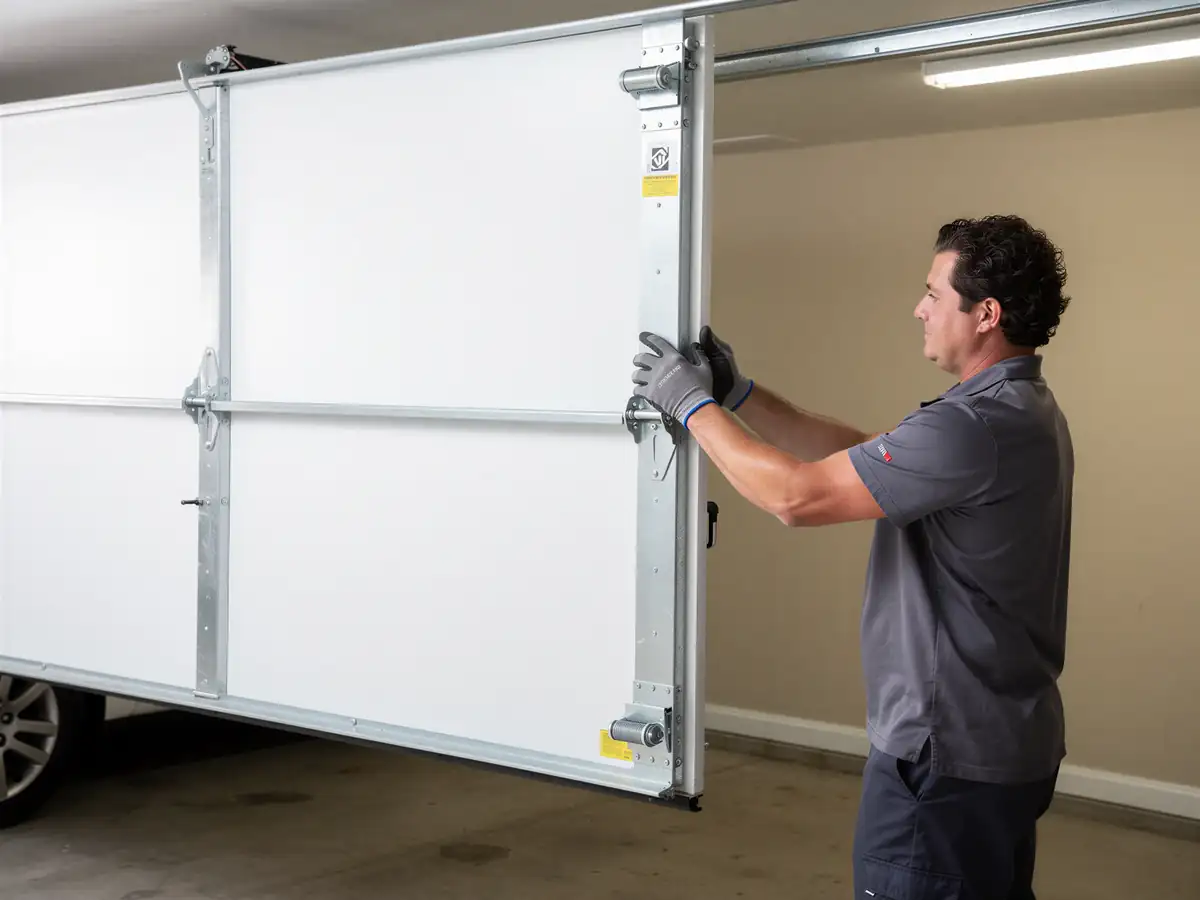
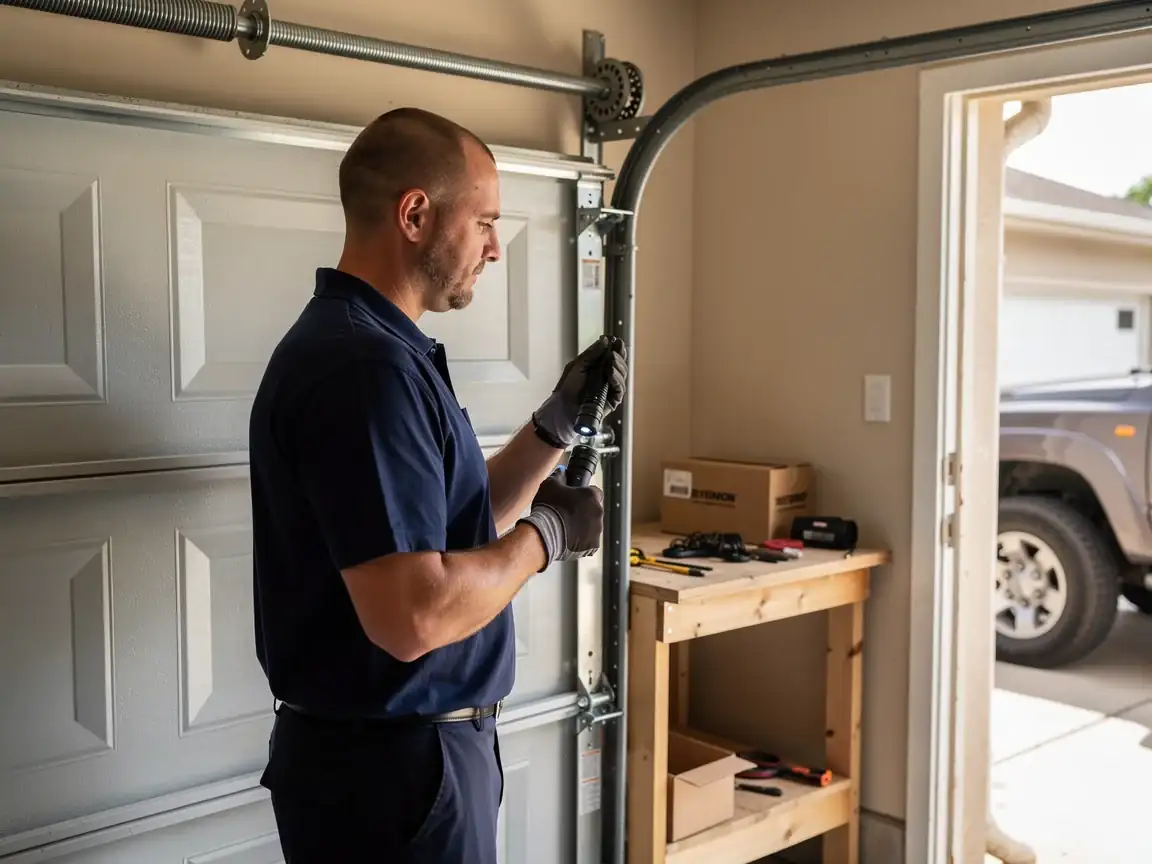
A technician stands in a garage with a partially open white garage door.

What Most People Get Wrong

Most homeowners here assume a noisy garage door is just something that happens as a house ages, and they wait. But in Clayton, where the bulk of the housing stock went up between 1968 and 2013 with a median build year of 1985, that noise usually isn't random - it's a specific part reaching the end of its service life at roughly the same time as thousands of similar doors installed in that same building wave. A door from a 1985 build is now pushing 40 years on original torsion springs, rollers, and hinges, even if the opener itself got swapped out somewhere along the way. People hear grinding or popping and blame the motor because that's the part they can see move. Most of the time the noise starts lower down, in the spring and roller hardware that's been doing the same job, unlubricated, since that building era. Waiting on that kind of noise doesn't make it go away - it means the part is closer to failing outright, usually mid-lift with the door half open.

How Local Conditions Play In

Across the wider service area - out toward Wendell, Knightdale, Smithfield, Selma, Zebulon, and the smaller pockets like - the housing mostly dates to the 1980s and 90s, which means a lot of these doors share the same hardware generation. That matters for noise diagnosis: a grinding sound on a 1988 double door in one of those older sections usually traces back to the same dried-out bearing plates as the house two streets over, not a one-off defect. With roughly 14,940 owner-occupied houses across this stretch and a median household income around $55,000, most owners are running original or first-replacement hardware rather than premium upgrades - which is fine, but it means the parts wearing out are the builder-grade ones, not heavy-duty aftermarket stock. That's worth knowing before you start troubleshooting: the noise is probably not a sign something exotic broke. It's the standard part for a standard-era house finally giving up, and it's happening on the same schedule for a lot of houses nearby at once.

What Changes With the Season

This area sits in a cold-moderate climate band, which means real temperature swings between seasons without the deep-freeze extremes you'd get further north. That swing matters for noise specifically because steel torsion springs and tracks contract when it's cold and expand again as the day warms - on a door that's already got dried grease or a slightly bent track, that contraction is what turns a quiet door into one that squeals or bangs on the first cold mornings of the year. Humidity shifts between seasons do something similar to the wood framing around a garage opening, changing how square the door sits in its track by a few millimeters, which is often enough to turn a smooth roll into a scrape. None of this is dramatic weather - it's just enough seasonal movement, repeated every year since the house went up, to work loose whatever was already marginal. If a door's been quiet for years and starts making noise right as the first cold snap hits, that timing is the diagnosis, not a coincidence.
The Problem

Here's the honest part: not every noise is worth chasing down to a single bolt. On a door old enough to match this area's 1980s median build year, a new noise is often the first of several, because the spring, rollers, and hinges were all installed at the same time and wear on a similar schedule. We can quiet one bearing and have another go within a season. Past a certain point, especially on original hardware from that era, replacing the noisy part and leaving the rest alone is a short-term fix, and telling a customer otherwise would be dishonest. We'll always say when a repair is a stall rather than a fix. What we can't do is diagnose a specific noise over the phone with any confidence - grinding, popping, and squealing point to different parts, and guessing wrong just means a second trip out.

How it works

From “it’s stuck” to “it’s fixed”

A man stands in a driveway holding a phone, facing a gray garage door.

Tell us what’s wrong

Describe the symptom - won’t open, loud bang, opener runs but the door won’t move.

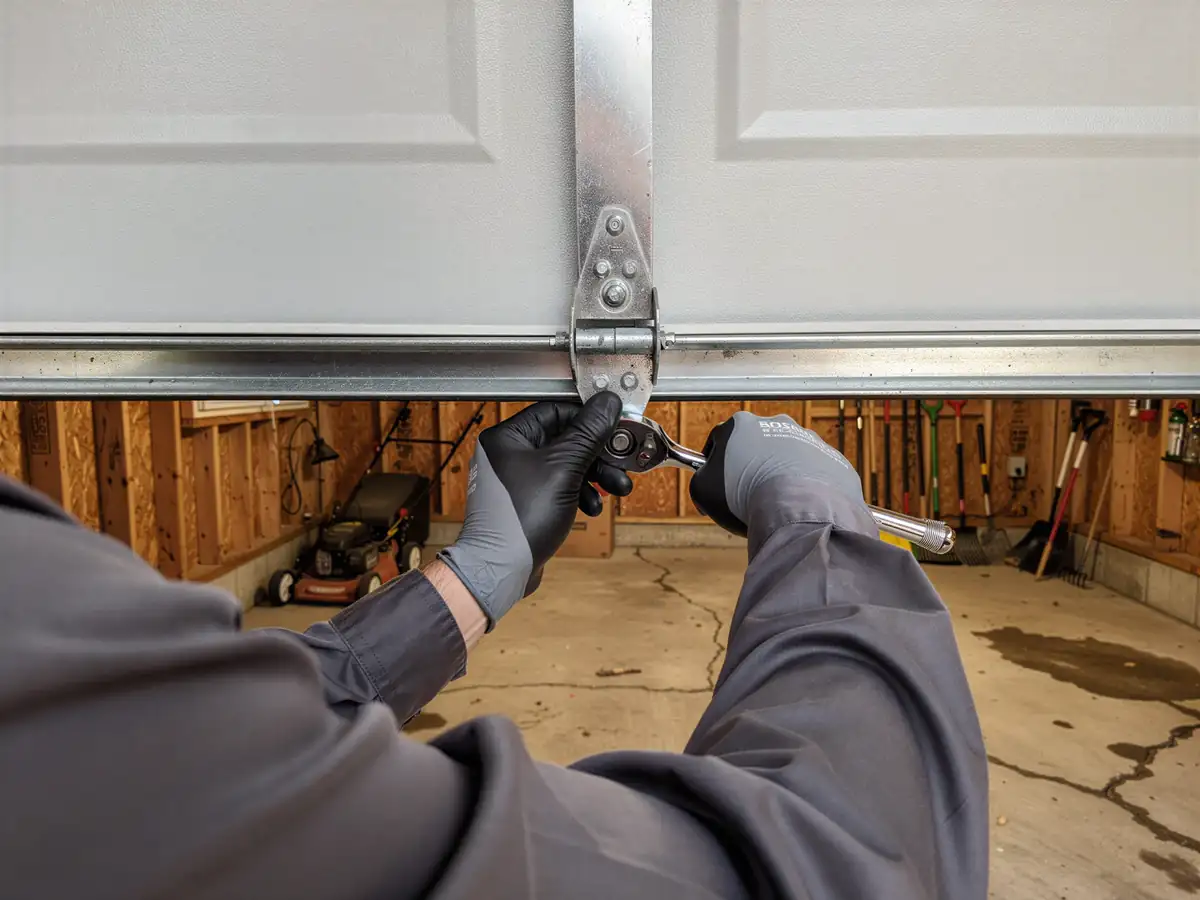
A technician in gloves holds a flashlight next to a white garage door.

On-site diagnosis

A technician tests the door under power and by hand and finds what actually failed.

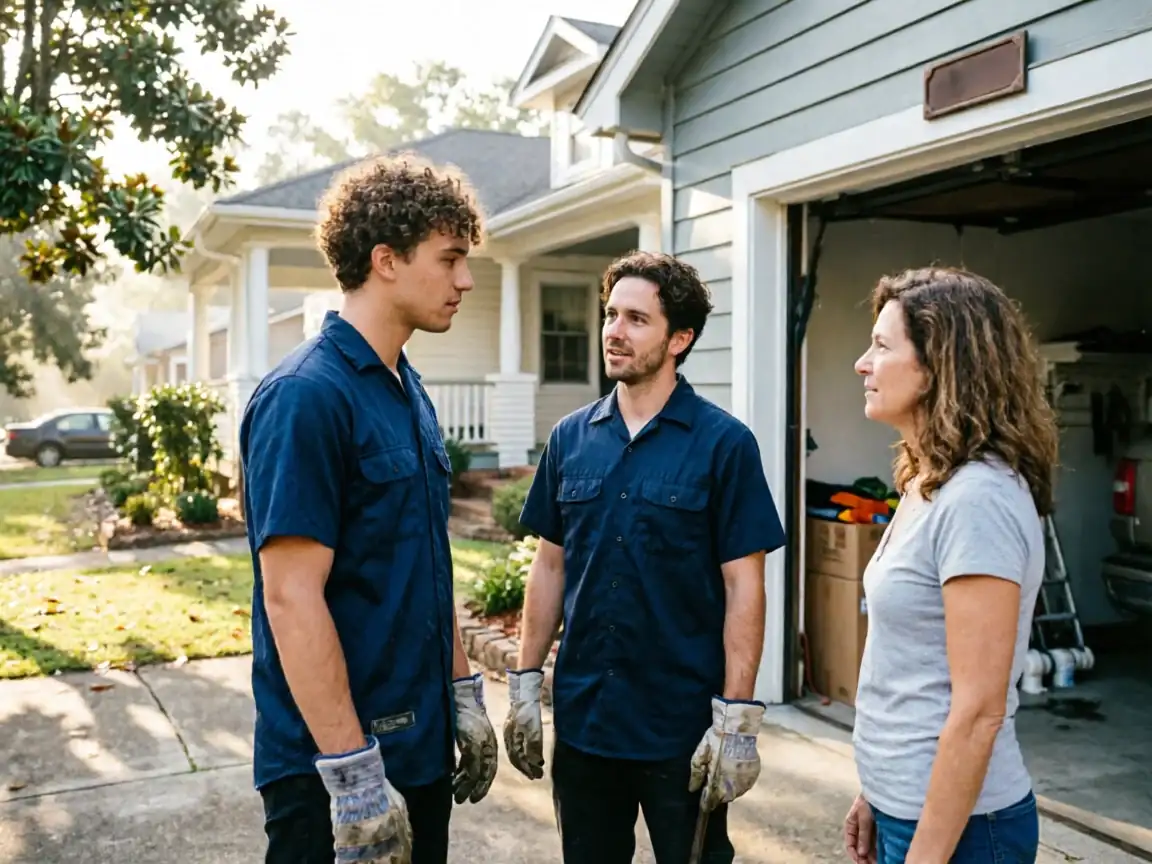
Two technicians in blue shirts talk with a woman in front of a house with an open garage.

Clear, up-front plan

You get the fix that’s needed and what drives the cost - before any work starts.

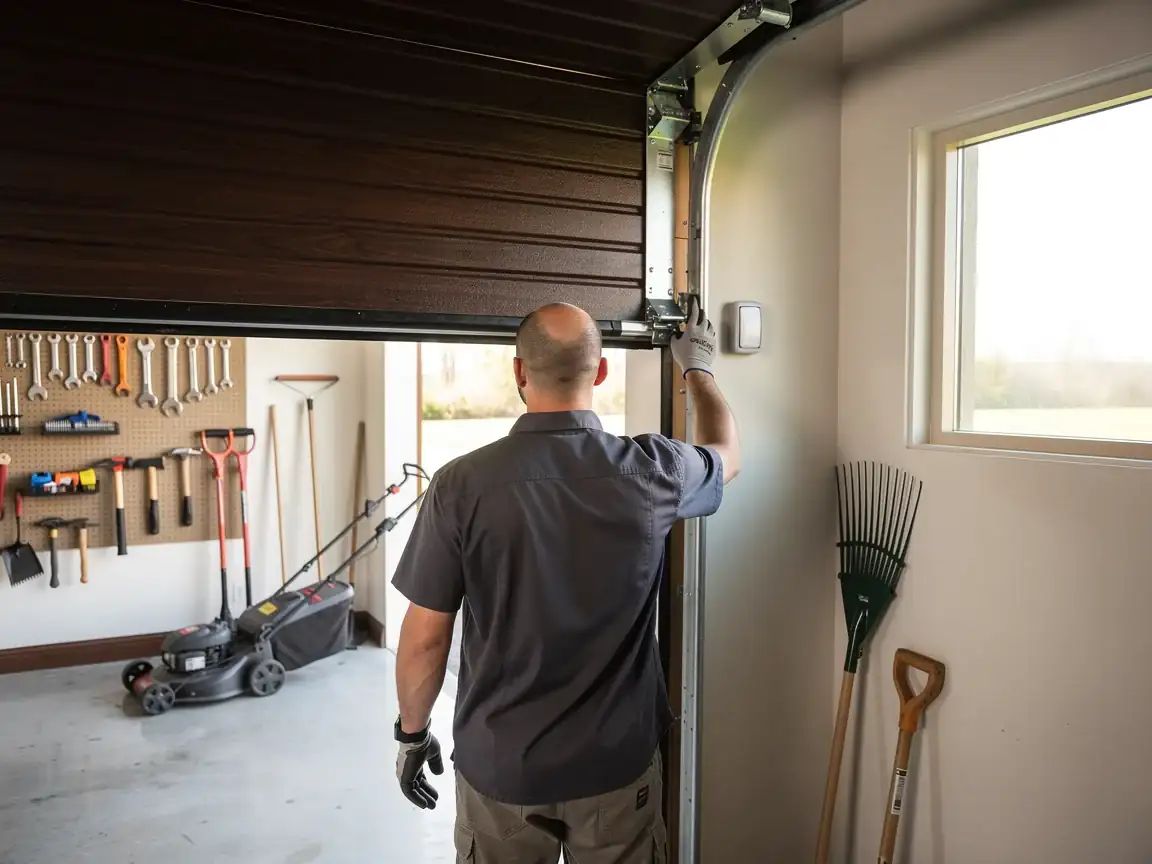
A technician adjusts the brown garage door track inside a garage.

Repaired & tested

The repair is done, the door is set true and tested, and the work area left clean.

Next step

Not sure which repair your door needs in Clayton, NC? Describe what it’s doing - every job starts with a diagnosis.

How we work

What to expect

  • Diagnosis firstEvery visit starts by finding what actually failed - not a pre-written parts list.
  • The right part for the doorSprings and openers matched to the door’s weight and age, so the fix holds up.
  • Straight answersWhen a repair makes more sense than a replacement - or the reverse - you hear it plainly.
  • Clean, careful workTension released safely, hardware set true, the door tested under power before we leave.
What we do

Garage Door Services

Repair and installation work for Clayton homes and businesses.

Questions

Frequently asked

Straight answers about garage door repair in Clayton. Still unsure? Ask us directly.

My garage door squeals only on cold mornings - is that serious?

Usually it's the metal contracting overnight in a cold-moderate climate like this one, catching on a dry roller or slightly bent track. It's worth fixing before it gets worse, but a morning-only squeal is rarely an emergency on its own.

Why does my neighbor's door make the same grinding noise mine does?

If your houses went up around the same time - which is common here, since most of the stock dates to the 1980s and 90s - you're likely running the same builder-grade hardware. It wears out on a similar timeline, so simultaneous complaints in the same neighborhood aren't unusual.

Can I just lubricate the noise away?

Sometimes, if it's early and the noise is a dry hinge or roller. But on original hardware from a house built decades ago, lubrication often just delays a spring or bearing replacement by a few months rather than solving it.

Is a grinding noise worse than a squeal?

Generally yes. A squeal often points to dryness or minor misalignment. Grinding usually means metal-on-metal contact from a worn bearing, roller, or spring component, which tends to fail sooner and shouldn't wait.

Ready to get your garage door sorted?

Tell us what it’s doing and where you are in Clayton - we’ll take it from there.

Request a QuoteCall