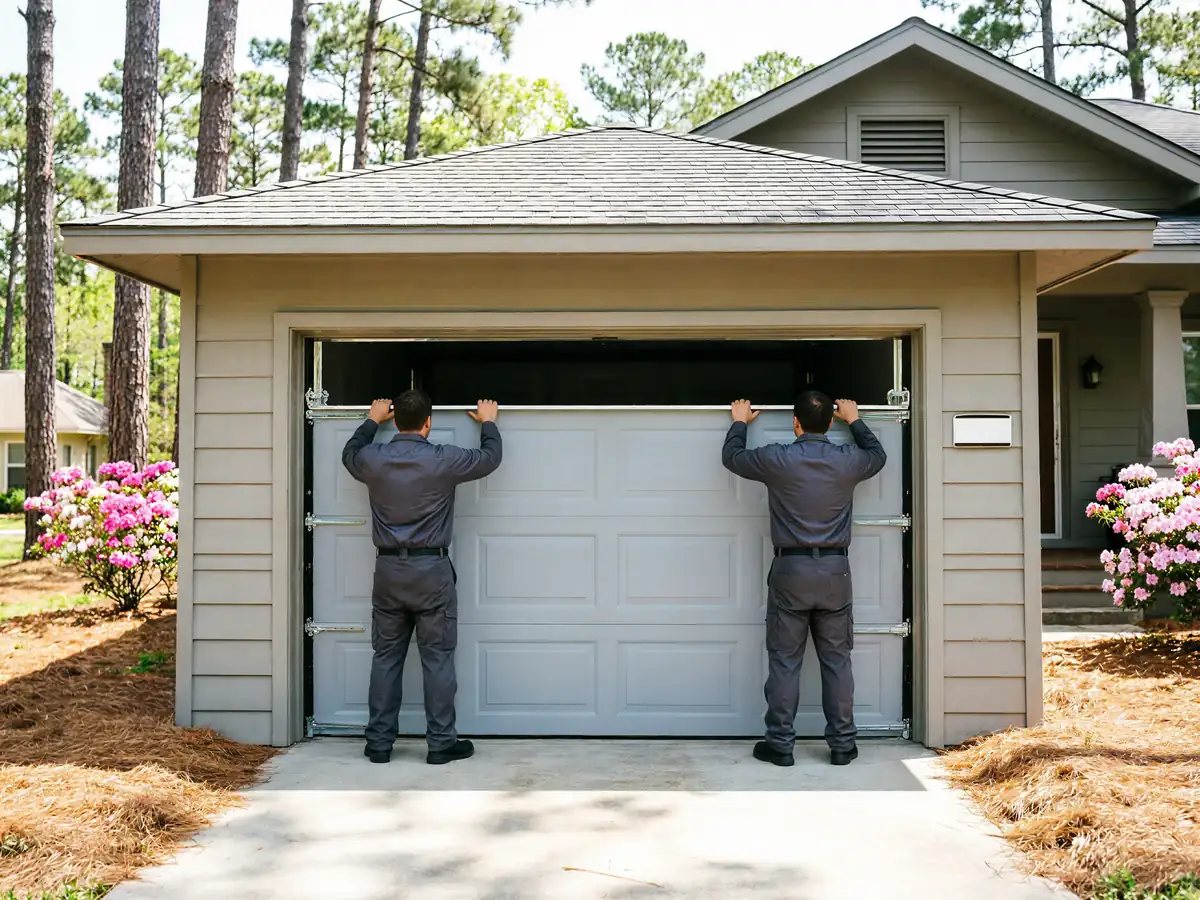
How We Fix It
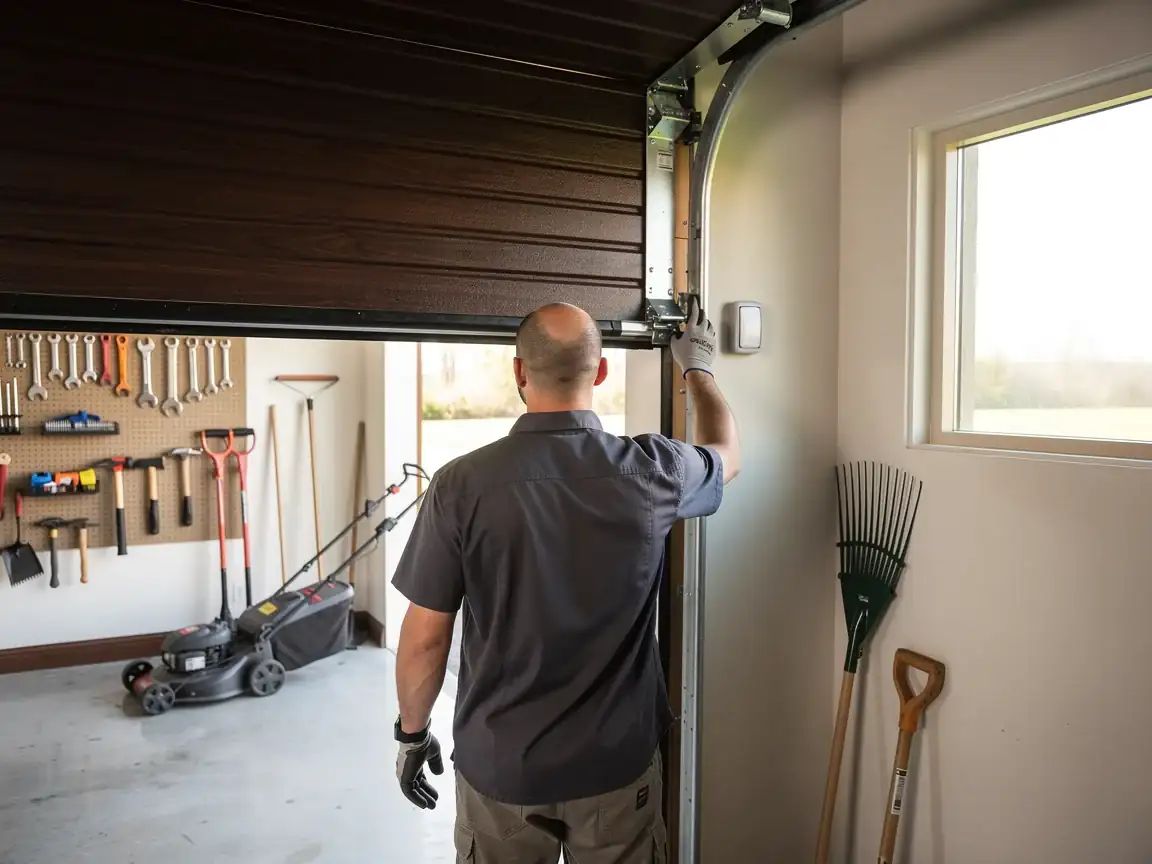
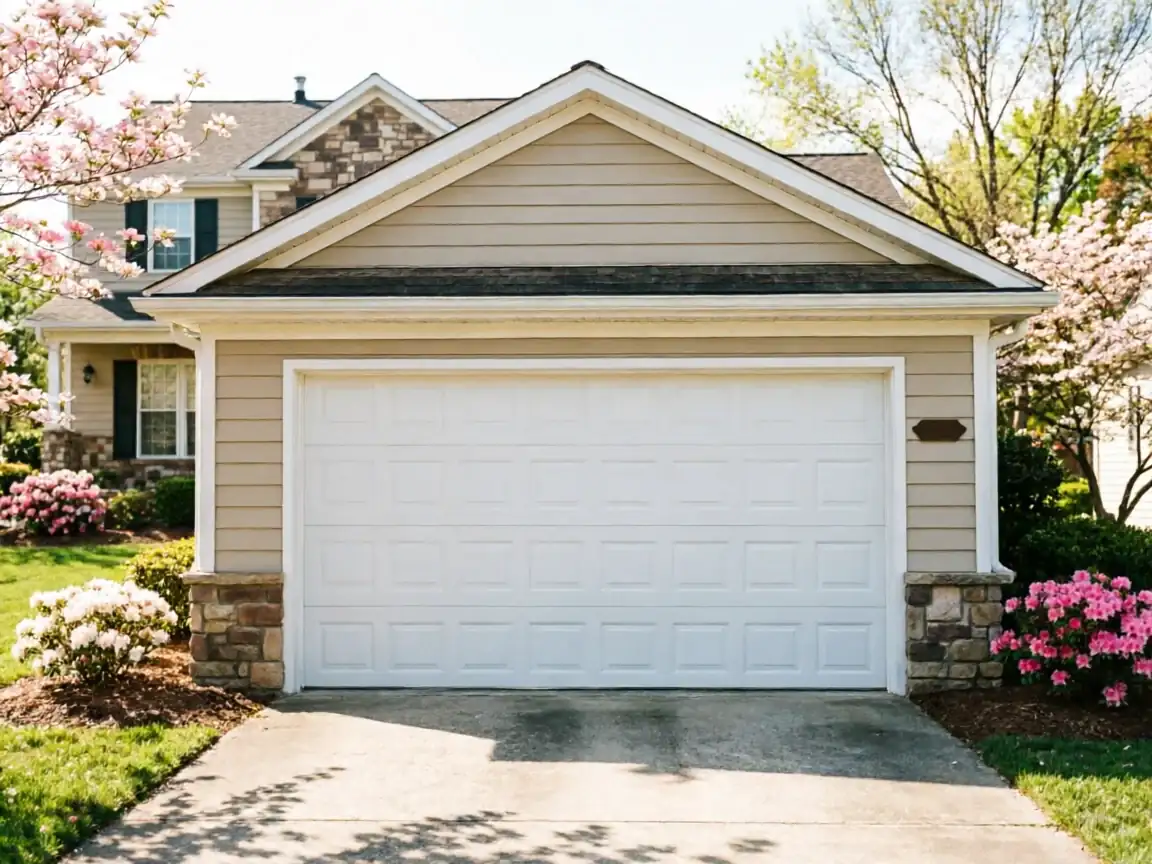
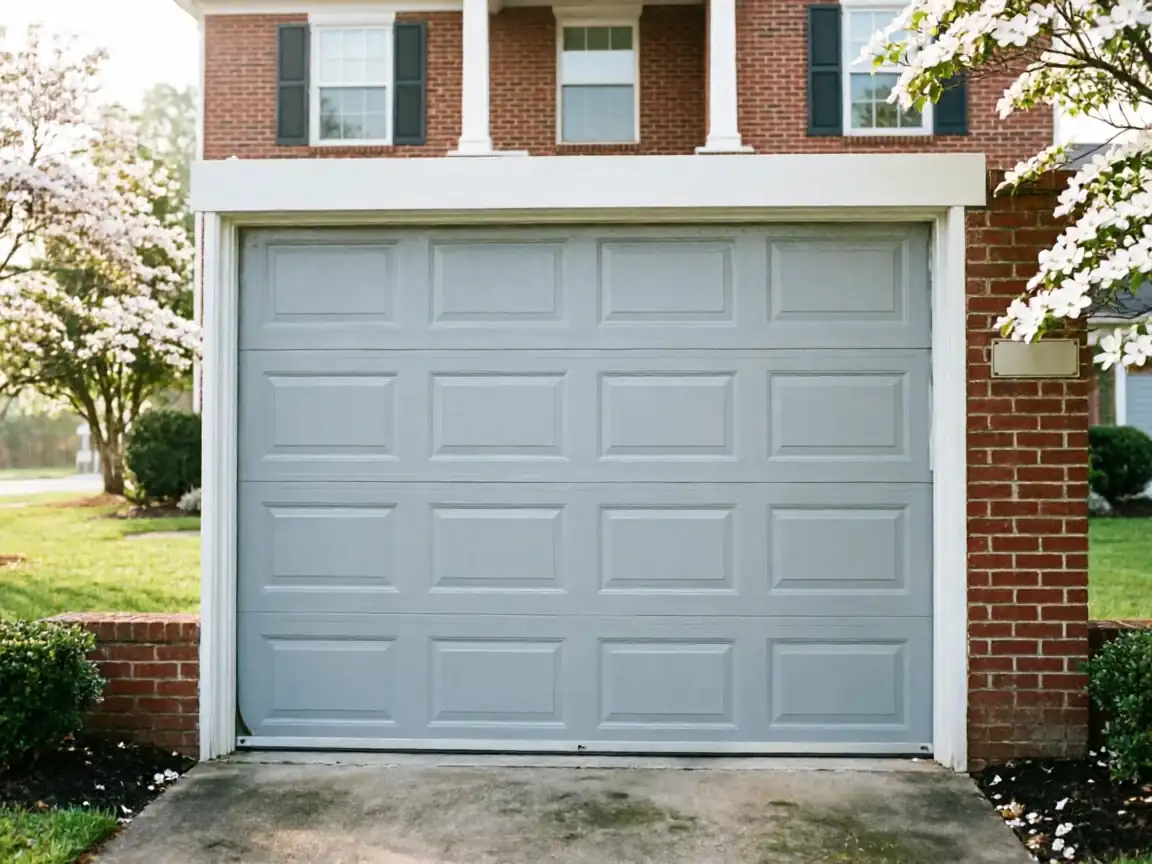
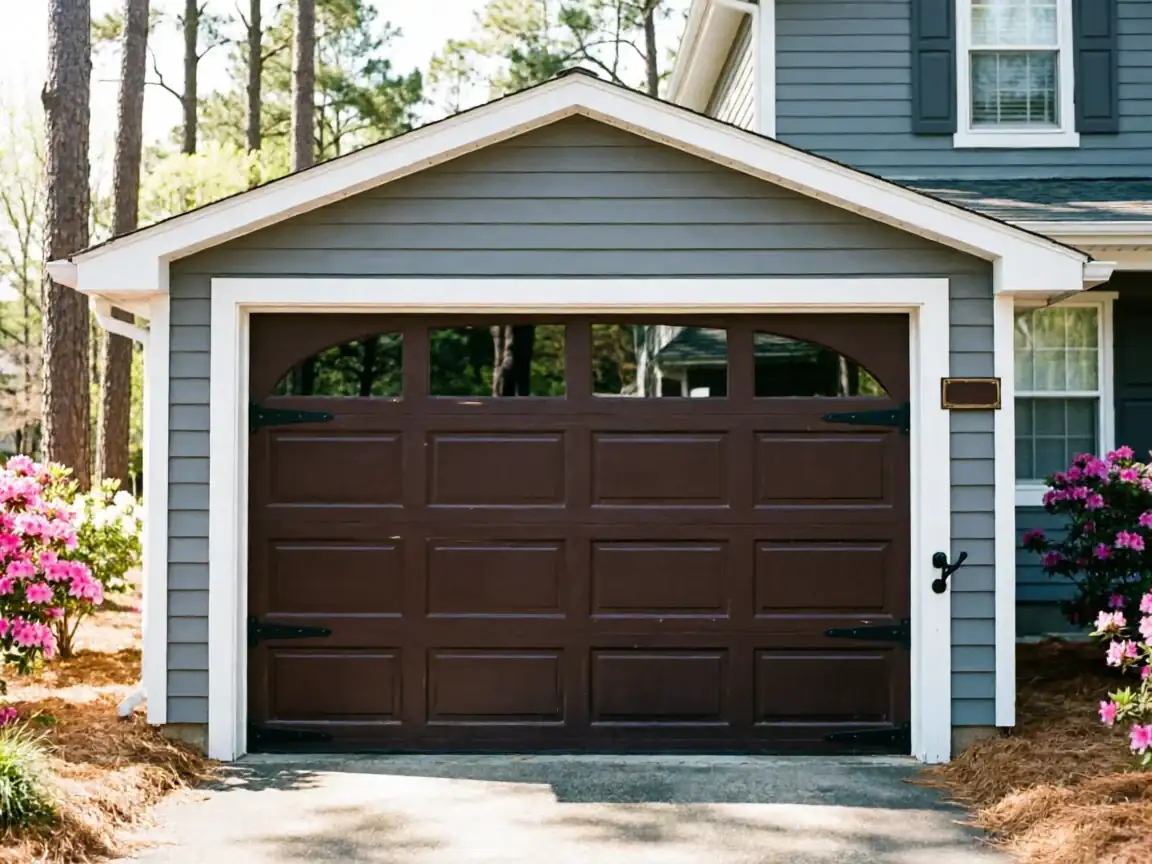
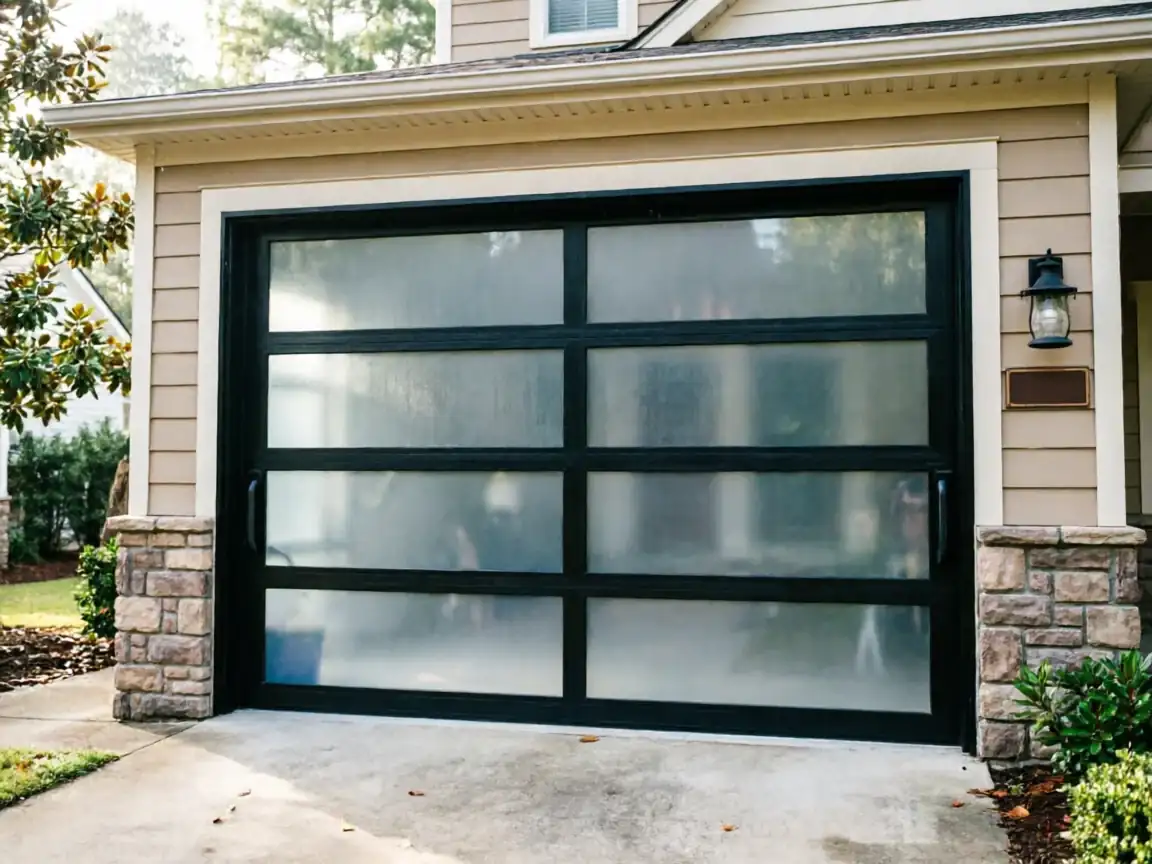
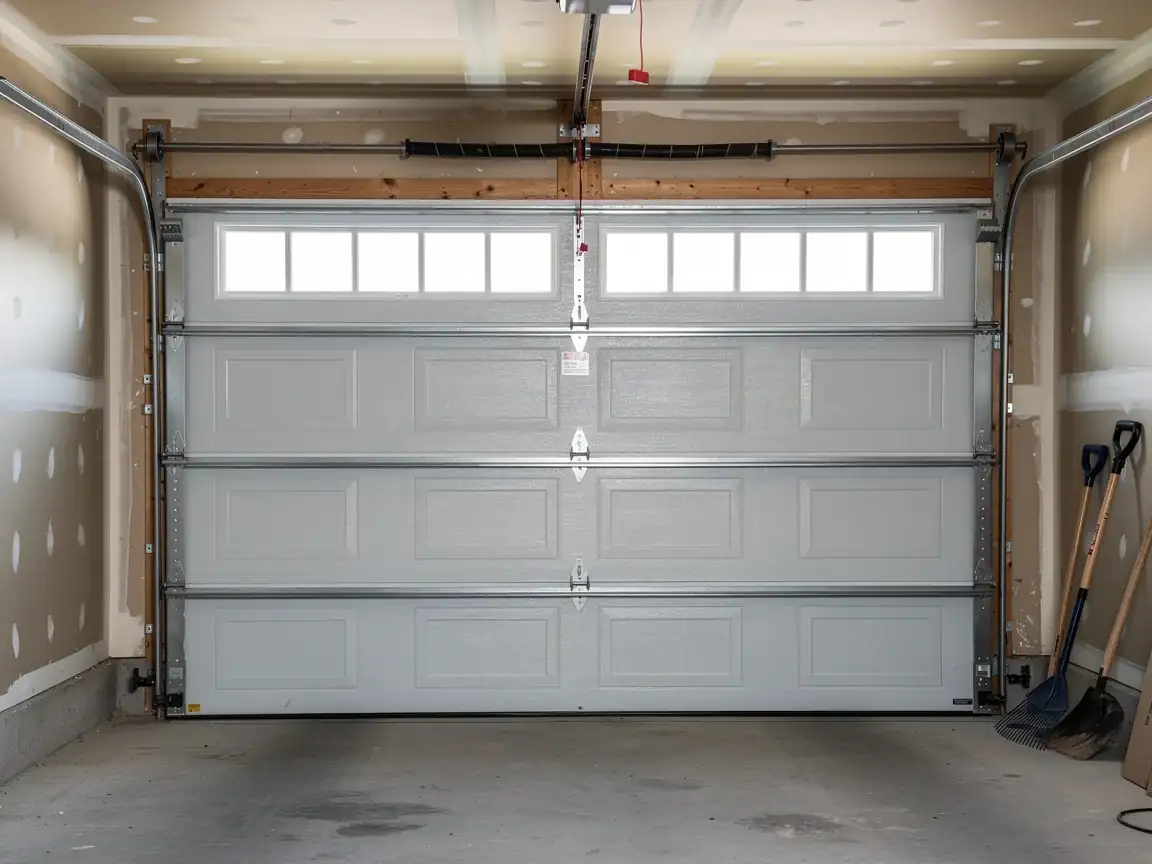
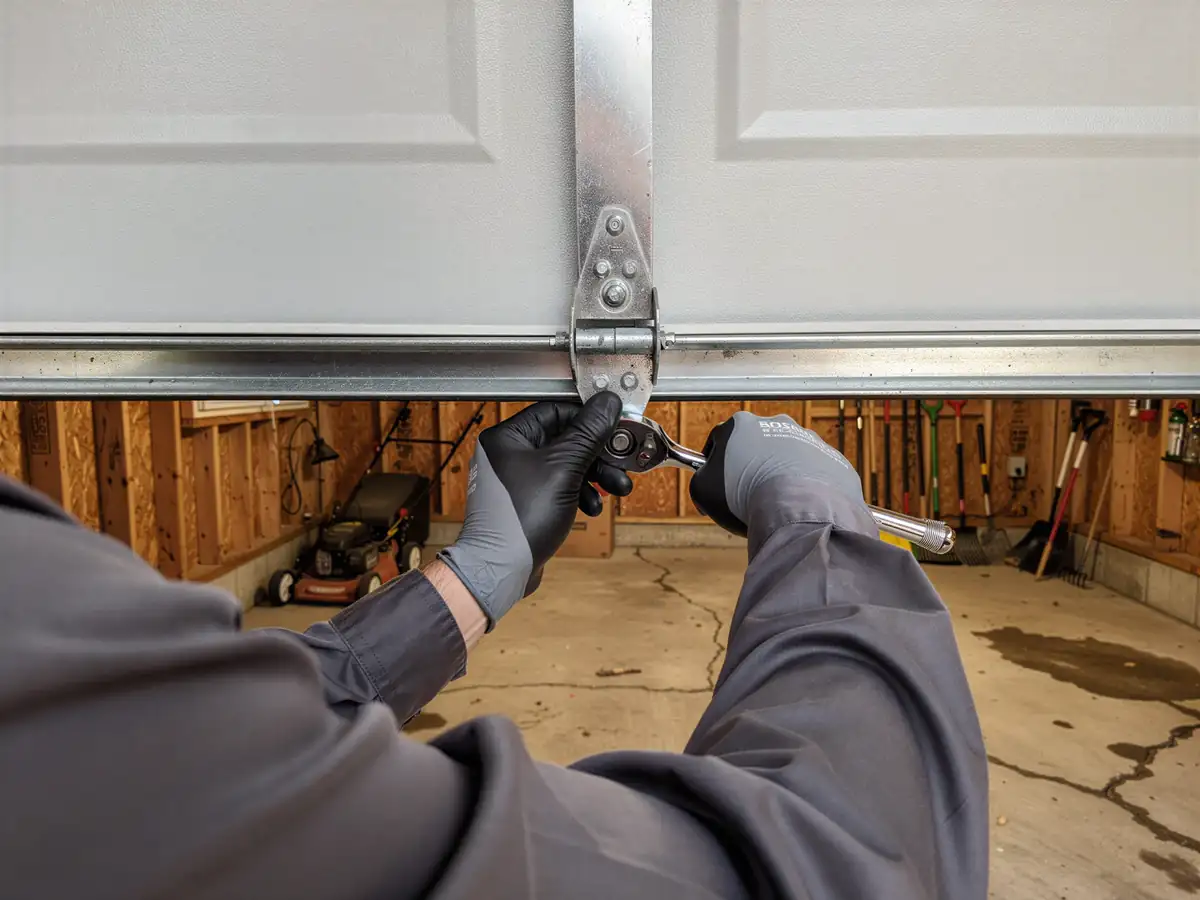
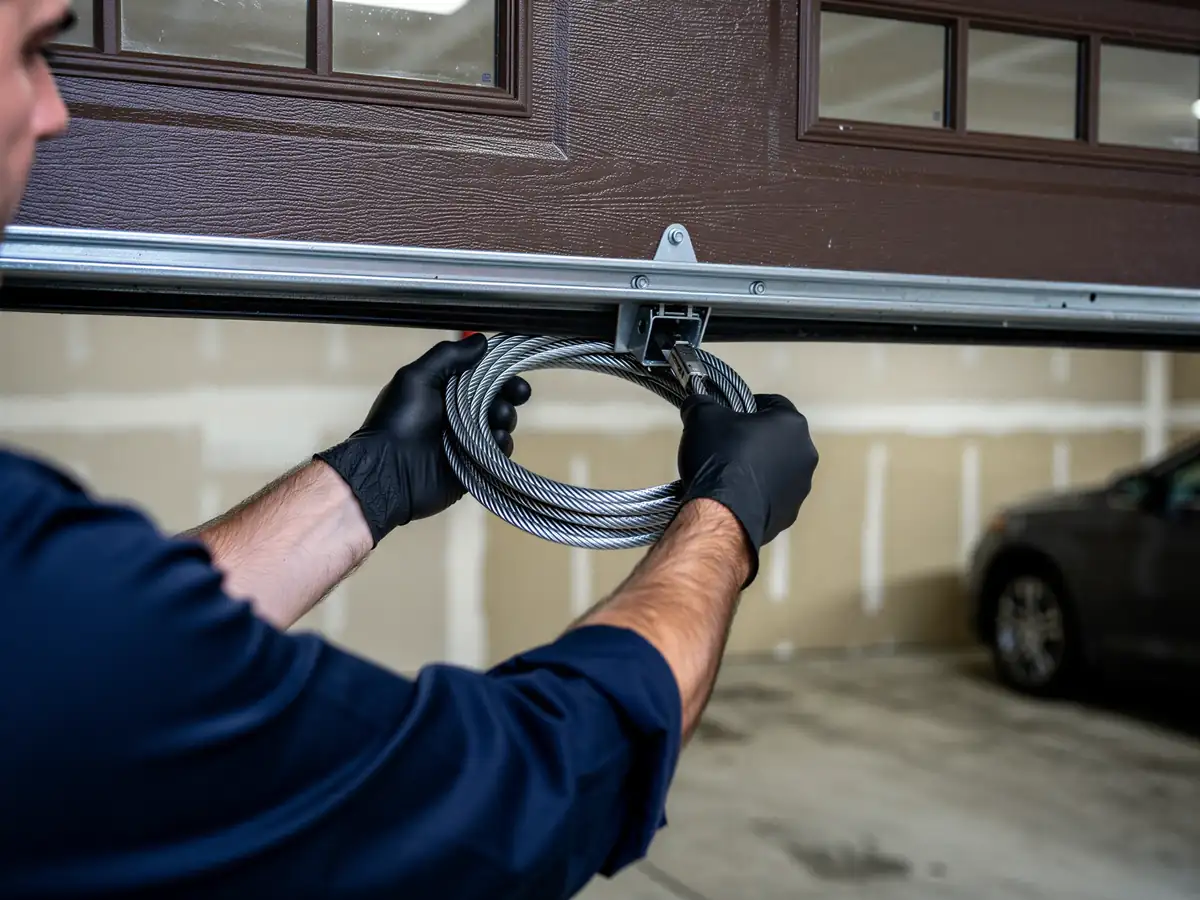
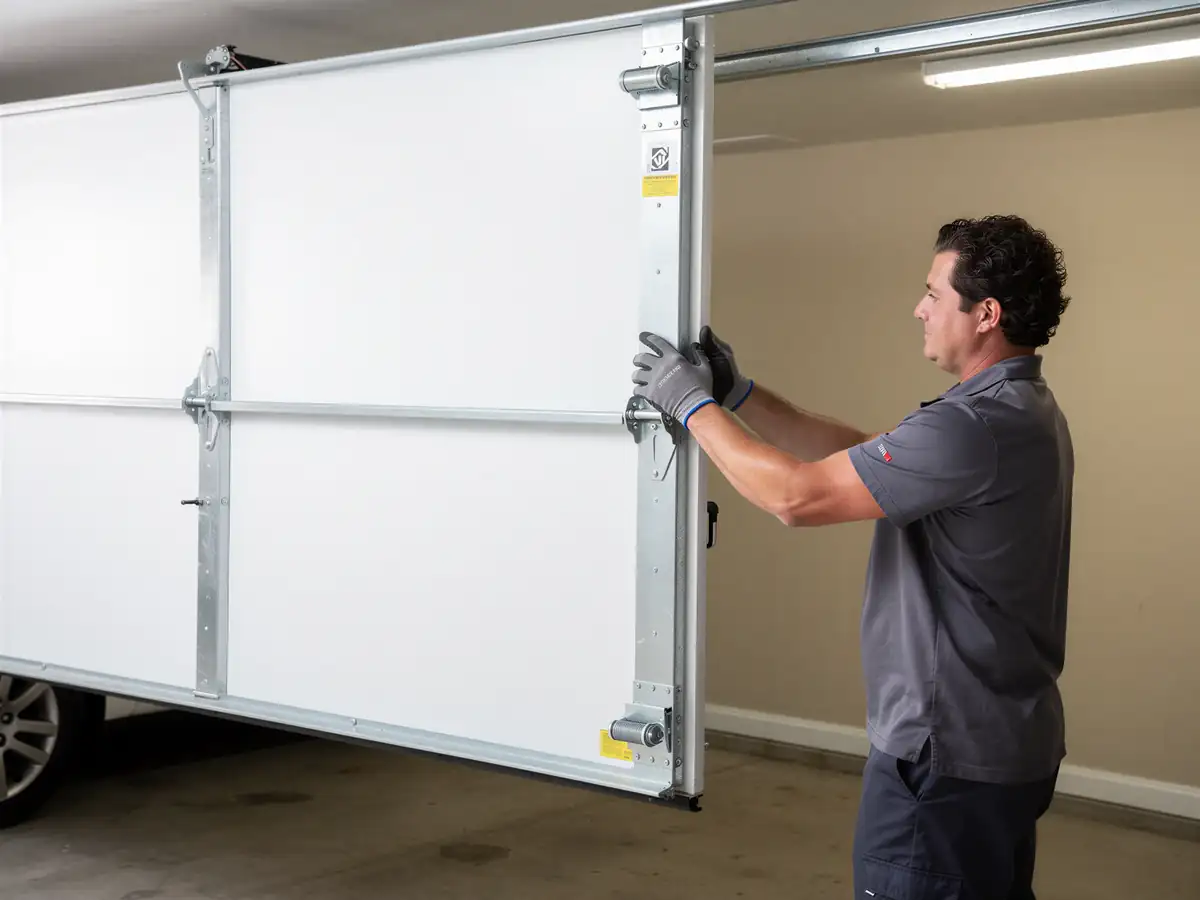
When a door is past fixing, we pull the old track, hinges, and panels down to the frame and start clean rather than bolting new hardware to tired lumber
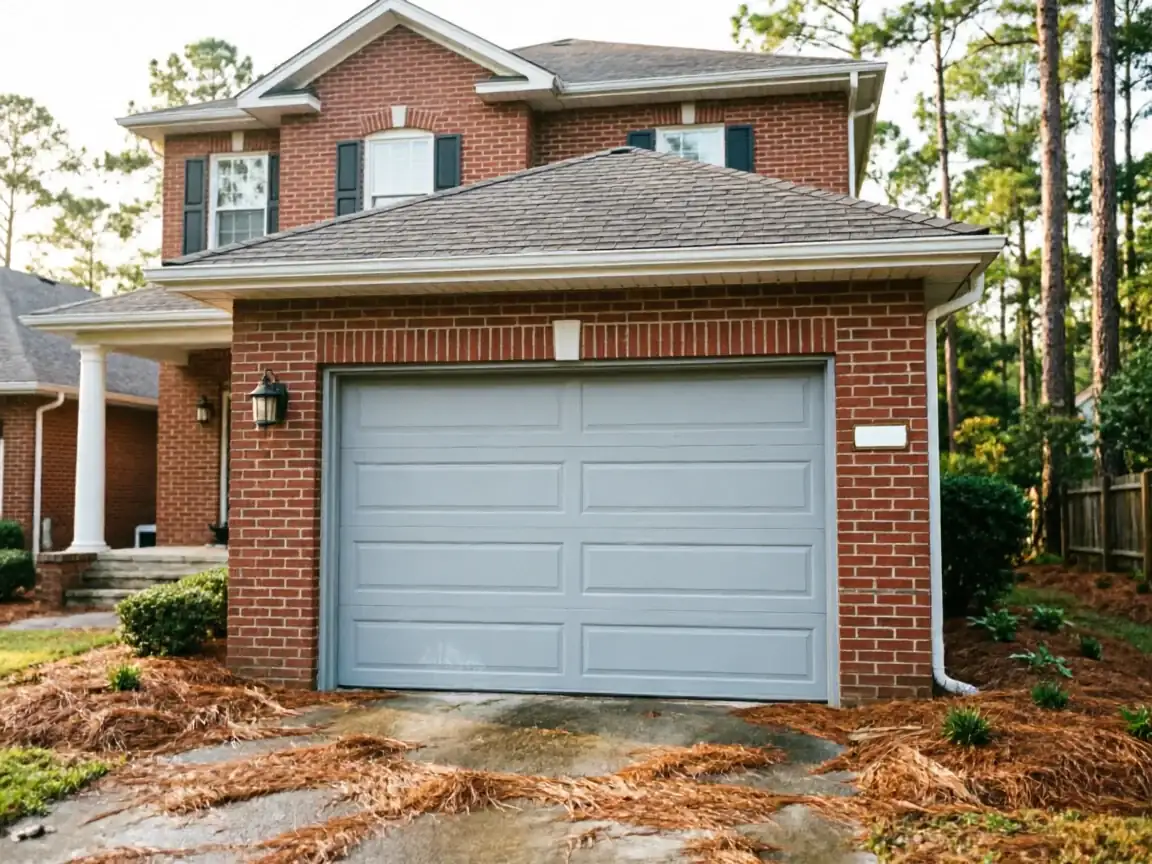
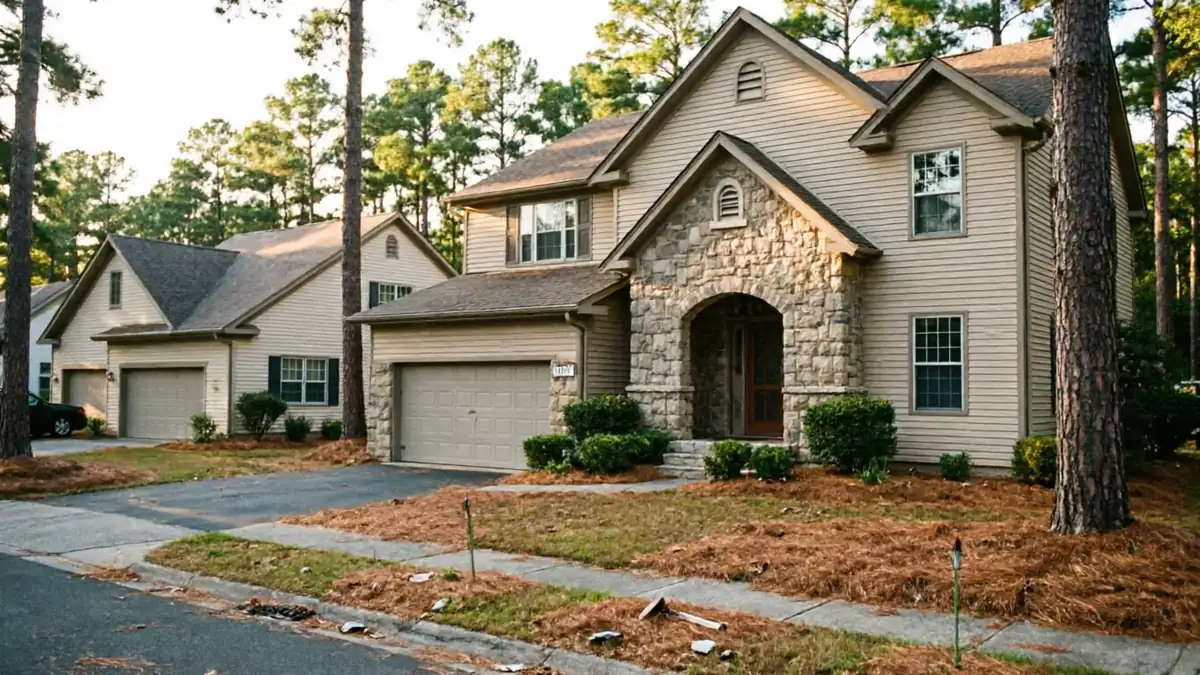
Most of Clayton's housing went up between 1968 and 2013, with the median build year sitting around 1985, so a big share of the doors we replace are the original steel sandwich panels from that era - thin skin, no insulation core, and springs sized for a lighter door than code now assumes.
We measure the opening, check the header for sag
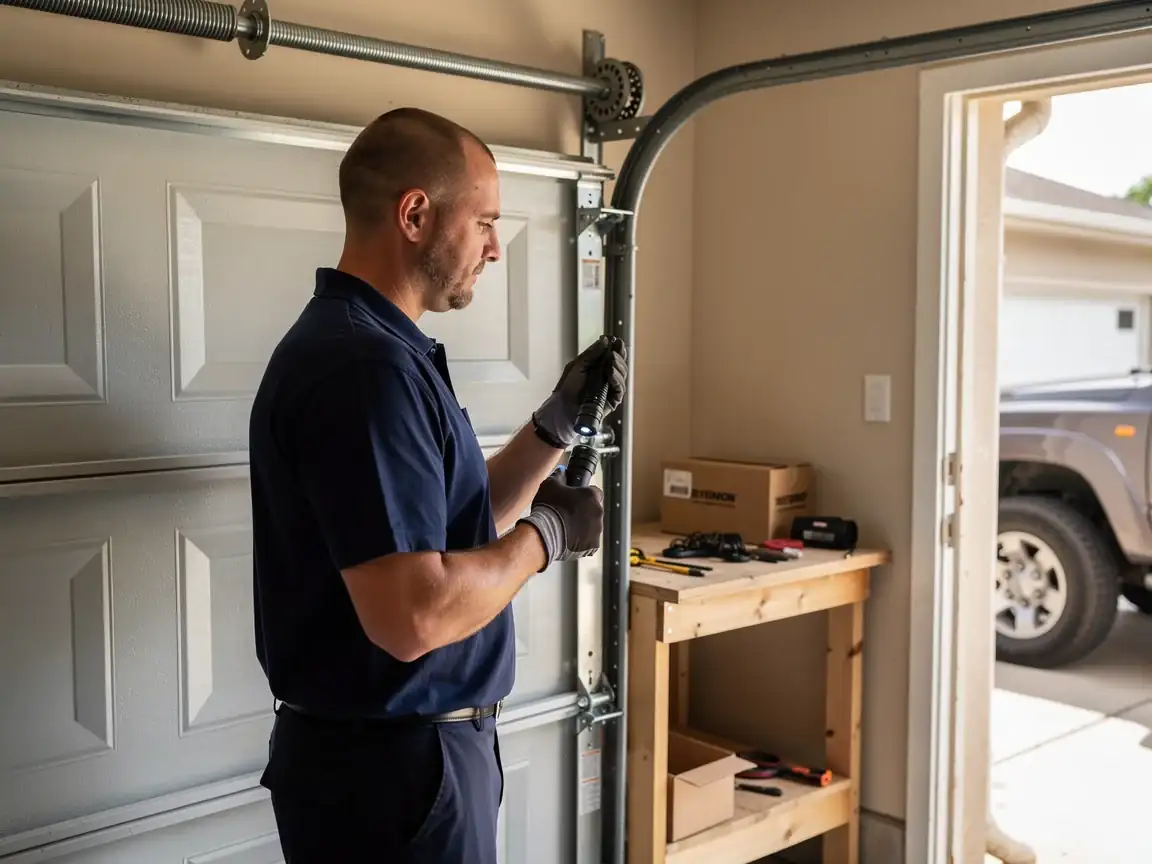
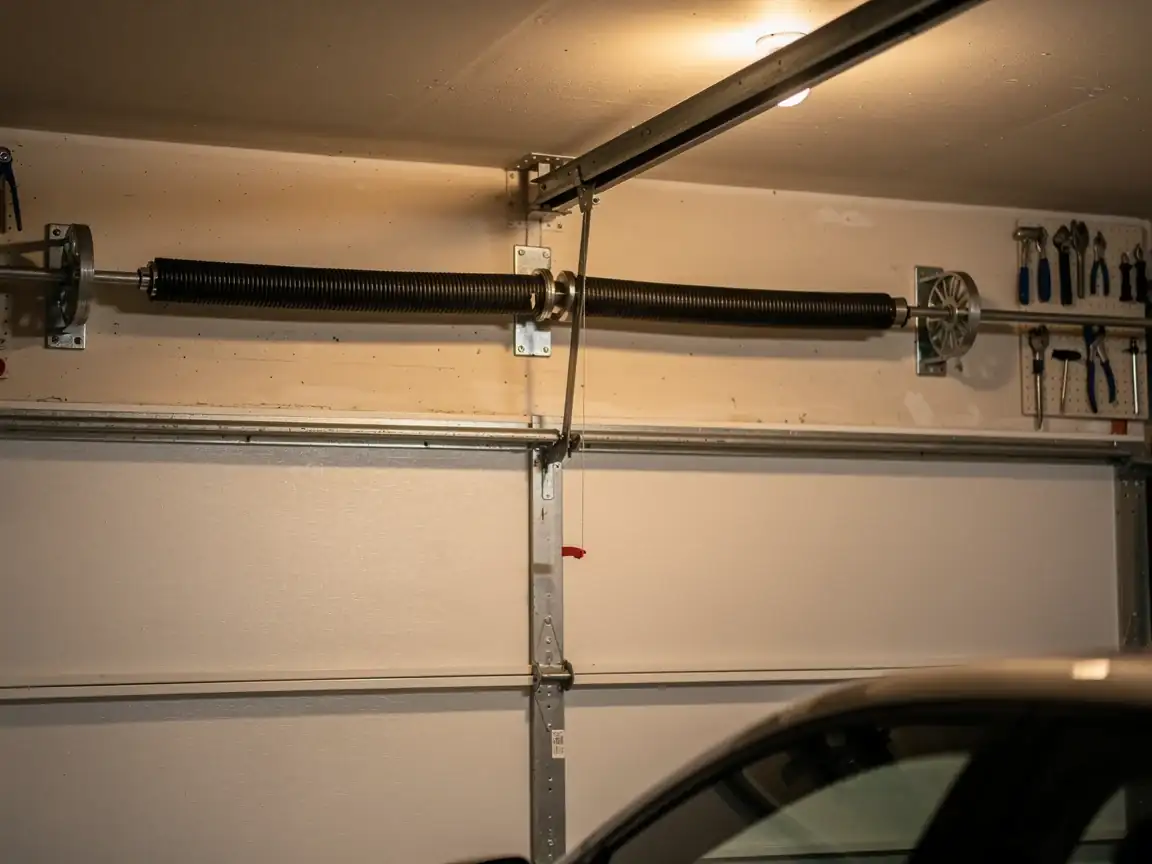
And size new torsion springs and track to the actual weight of the door going in, not the one coming out. On homes from the 1980s and 90s stock that makes up most of the neighborhoods out here, that often means swapping single-layer panels for an insulated door and upgrading to a heavier-gauge track, because the old hardware was never built to hold it.
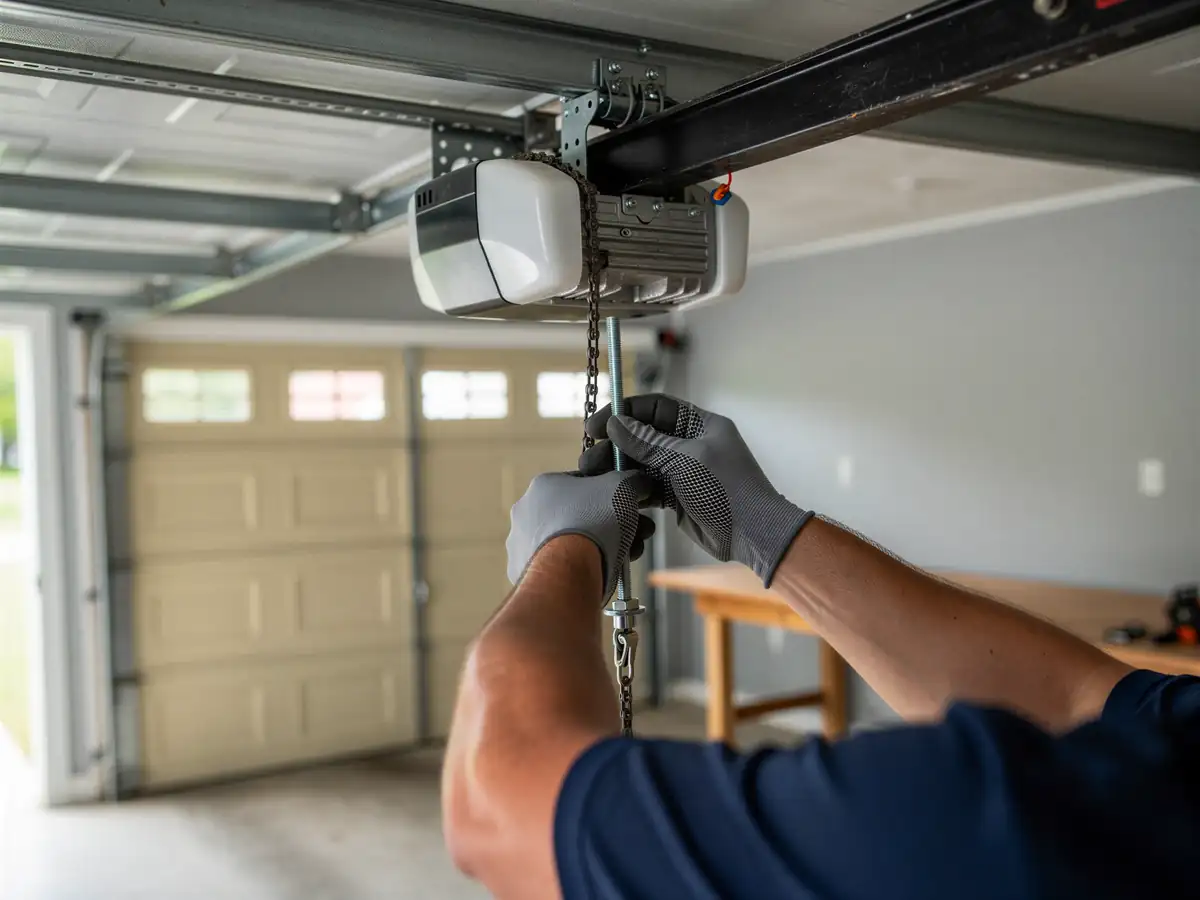
We set the opener travel limits and force settings after the door is hung, not before
So the safety reverse actually works on the new weight. A door that closes on the first try and reverses clean on a hand under the edge is the test we leave on before the truck pulls out.
What You Are Seeing
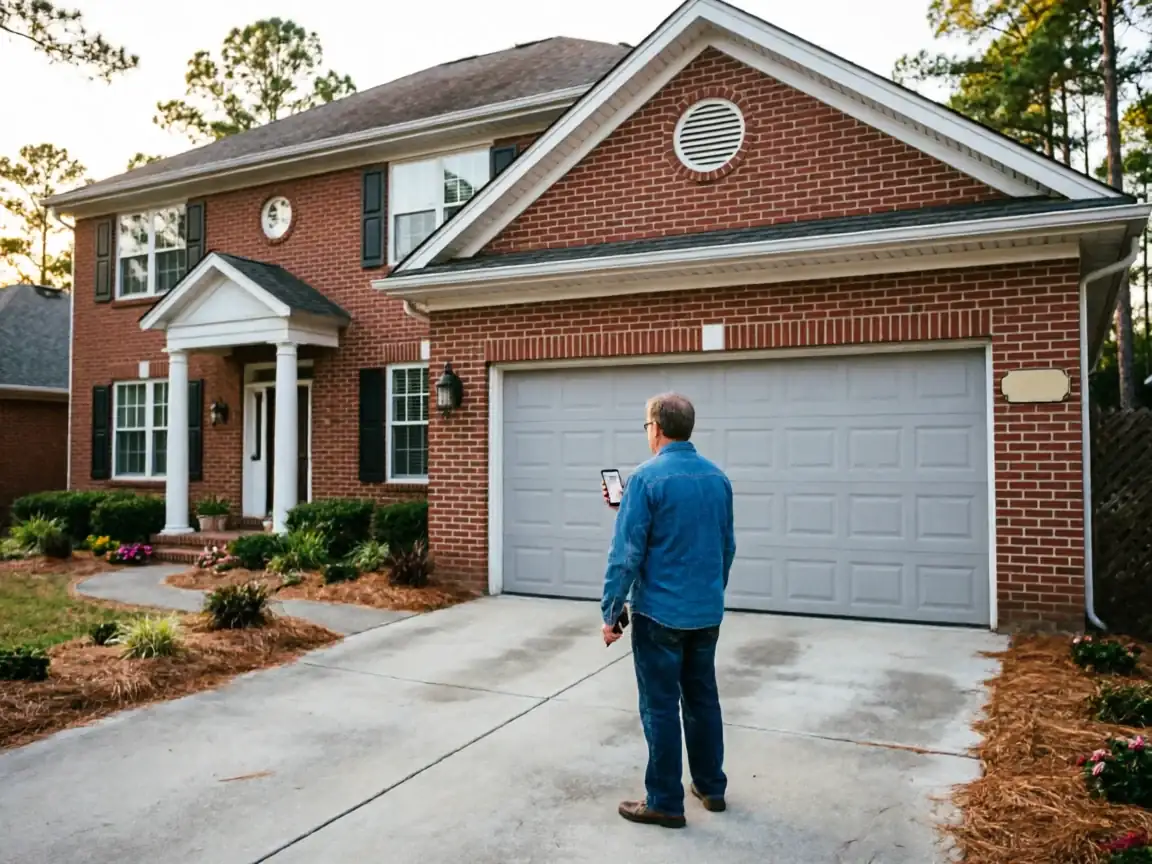
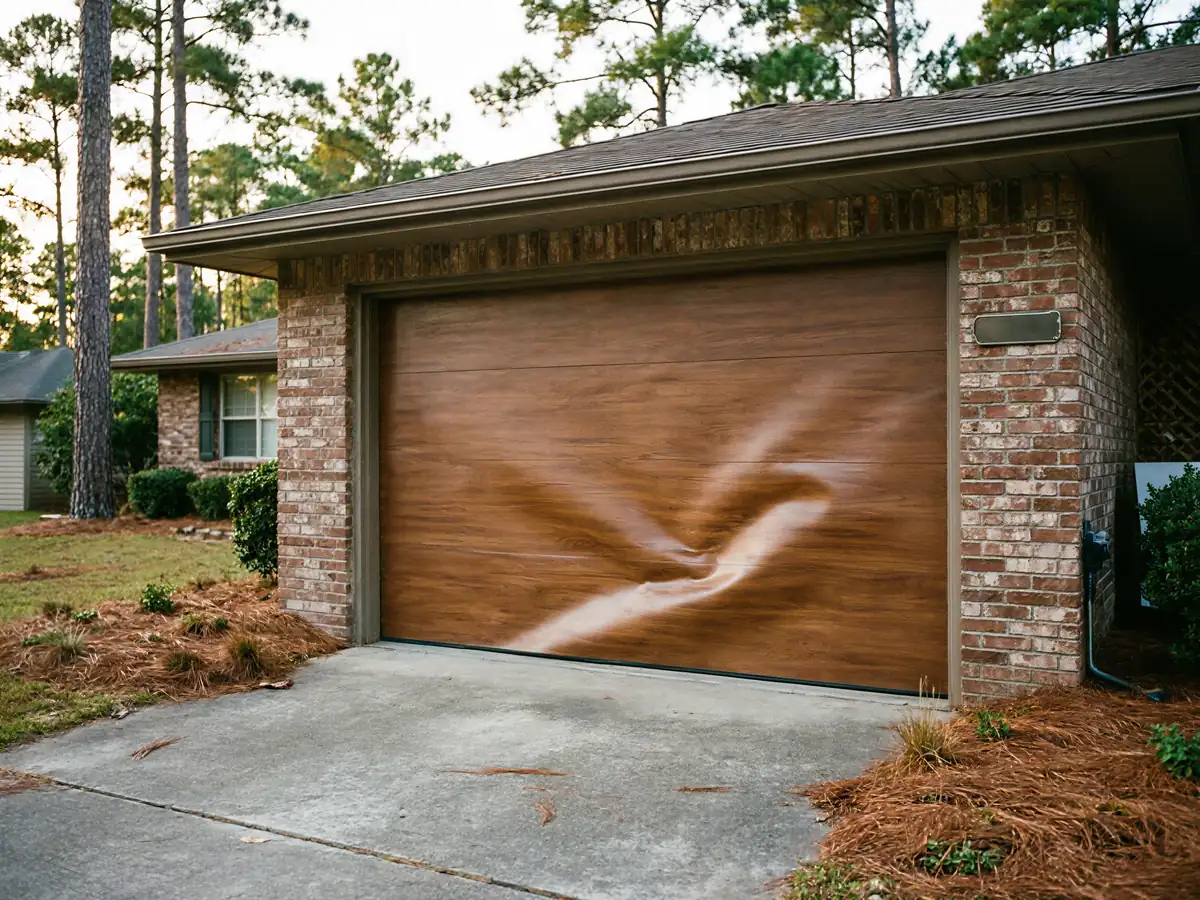
The usual call starts with a door that's gotten heavy to lift by hand, or an opener that strains, clicks, and reverses itself halfway down. On a lot of Clayton houses built in that 1968-2013 window, the panels have thinned and warped over the decades, and the track has worn into a shape that no longer matches the rollers running through it.
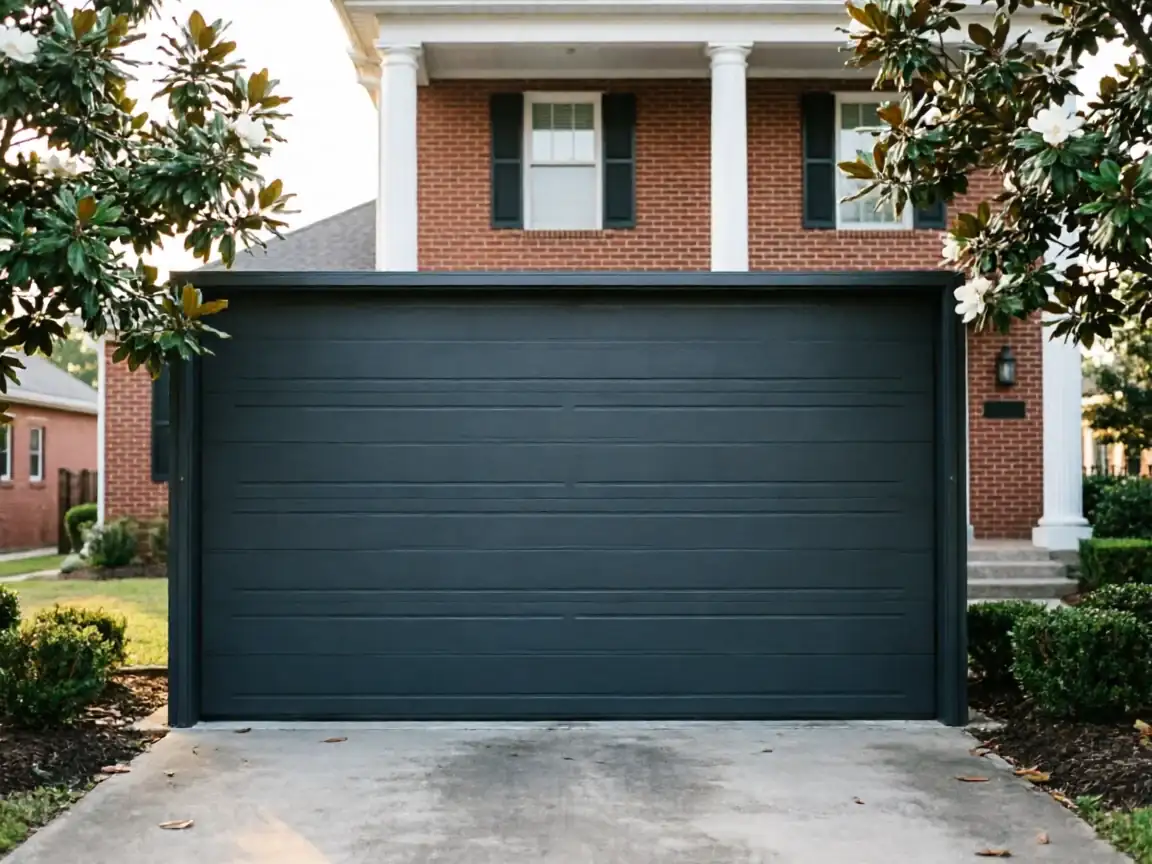
Some owners see daylight around the bottom panel even with the door shut - a sign the seal and the frame have both given up at the same time. Others notice the door sitting crooked in the opening, pulling to one side as it travels. That's not a cable problem you adjust; it's usually a door and track combination that's reached the end of what it can do.
Cold mornings make it worse. In a cold-moderate climate band like this one, metal contracts, grease stiffens, and an opener already working too hard against a heavy, out-of-square door will finally give out on the coldest stretch of the year, not the mildest.
Can You Do This Yourself
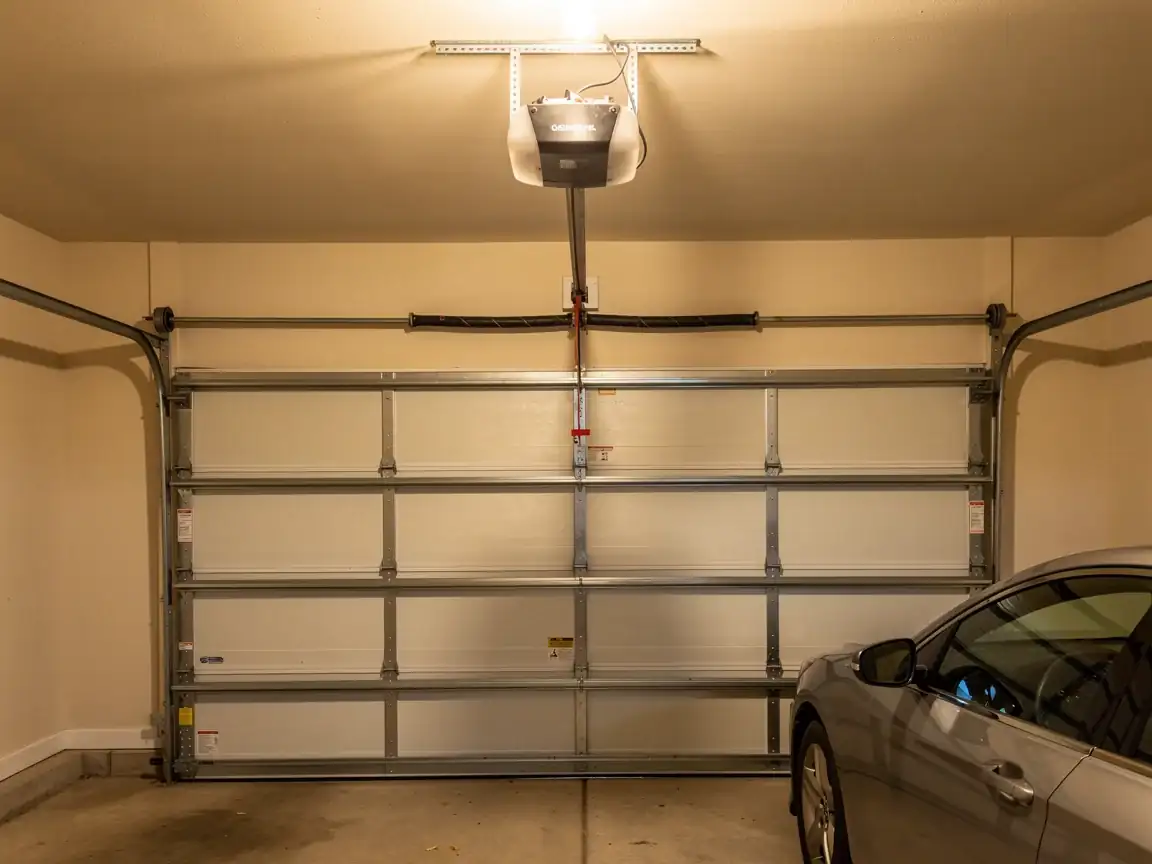
A torsion spring under full tension can break a hand or worse, and setting one for a new door's actual weight isn't something to guess at from a video. That part of the job we don't recommend doing yourself, full stop - it's the one honest line we draw.
What you can reasonably do: clear the opening, remove the old remote and keypad, and have the slab clear for us when we arrive, which keeps the job moving and keeps the quote accurate. You can also measure your own opening width and height ahead of time if you want a rough idea of door sizing before we show up.
Beyond that, hanging a new door - squaring the frame, setting the track plumb, balancing springs to the panel weight - takes two people and the right bar and winding tools every time. We've seen enough DIY installs with the track screwed straight into drywall or the spring wound half a turn short to know where that road ends. If you're set on doing it yourself, at minimum get the spring sizing checked by someone who does this daily before you put weight on it.
Why This Fails Locally
The reason installation calls cluster the way they do here comes down to the housing itself
With most of Clayton's stock dating to the 1968-2013 range and a lot of it concentrated in 1980s and 90s construction across the ten-plus named areas we work in, a large block of doors are all aging out in roughly the same window - meaning hardware designed for lighter, uninsulated panels is now being asked to carry heavier retrofits or simply failing from fatigue at the same time.
The cold-moderate climate band adds its own wear
Freeze-thaw cycling through the winter stiffens lubricant, shrinks seals, and puts extra load on springs already sized thin for 1980s-era doors. None of that is unique to one house - it's a pattern across a service area of roughly 30,812 households, with 14,940 of them owner-occupied, built in the same decades under the same winters.
- 30,812 households
- 14,940 owner-occupied
Income plays into the decision too
With a median household income around $55,051, most owners we talk to want one install done right rather than a cheap stopgap repeated every few years, which is part of why we size the new door and springs to last rather than patch the old ones back together.
- $55,051 median household income