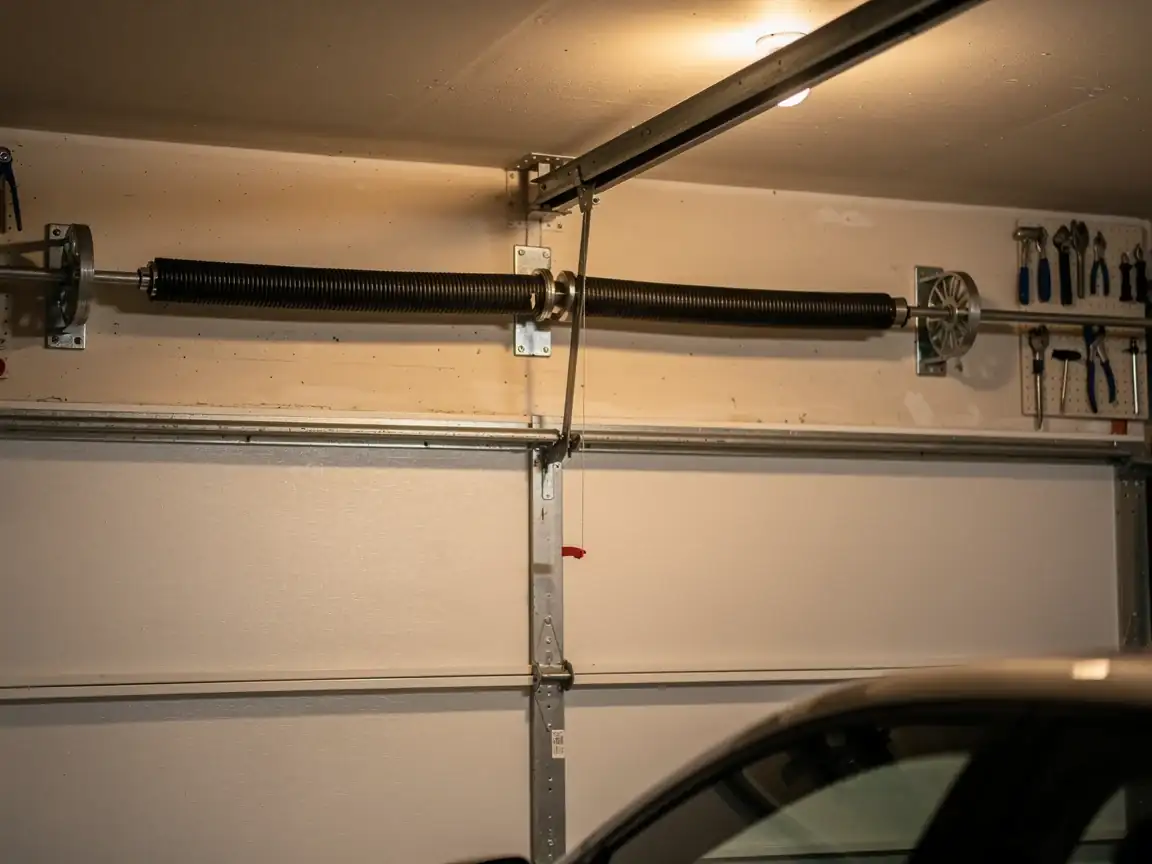
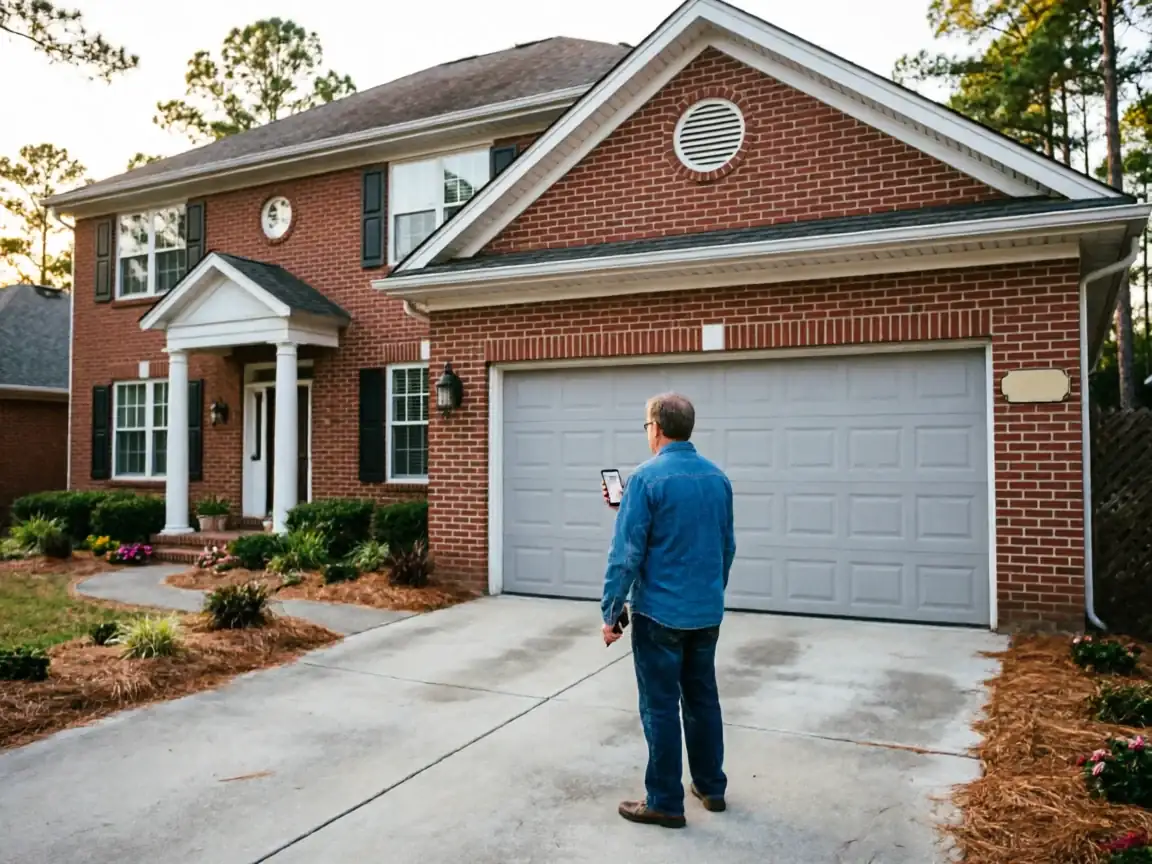
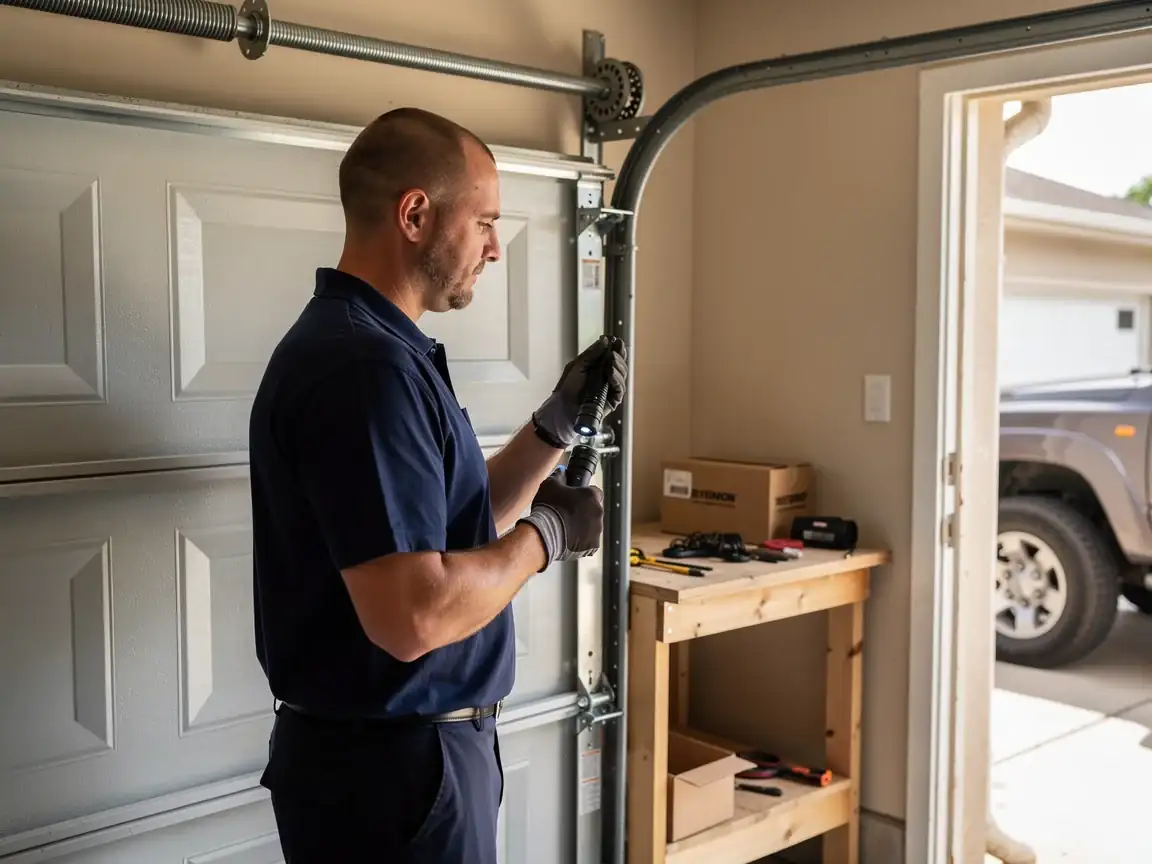
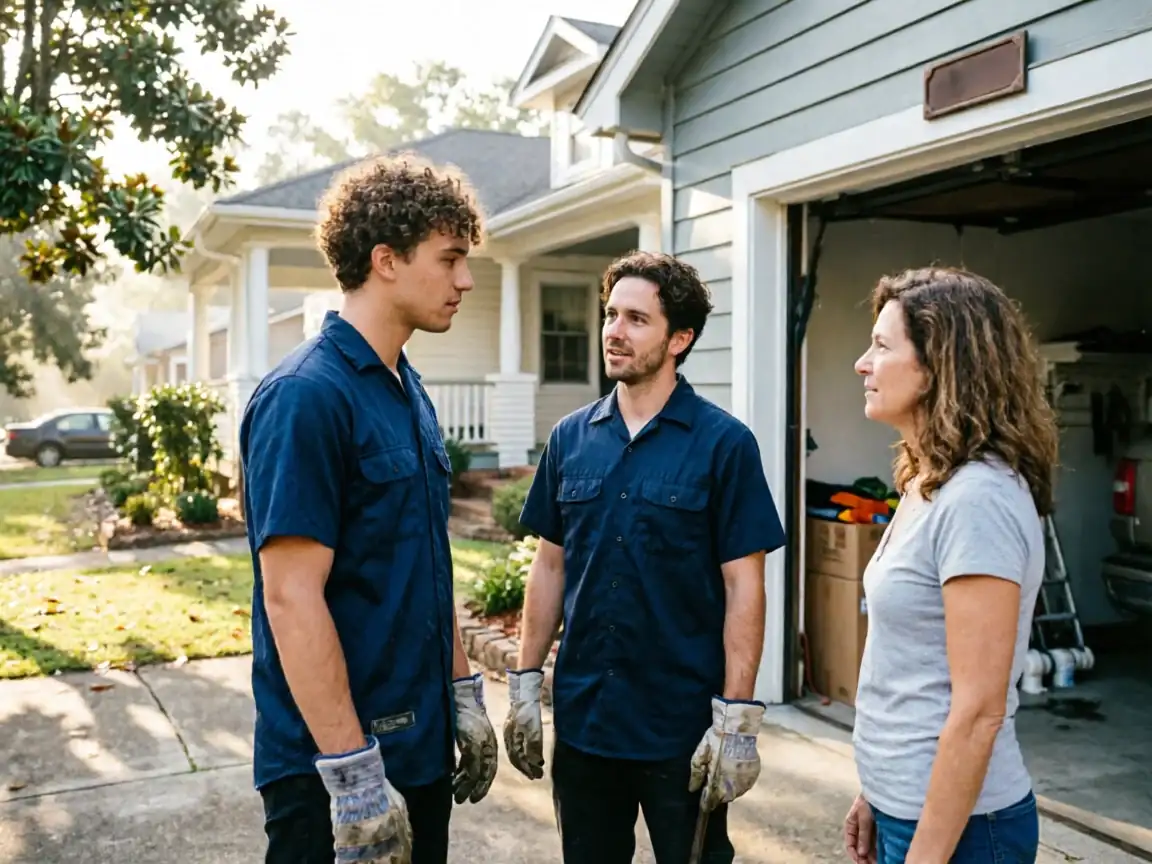
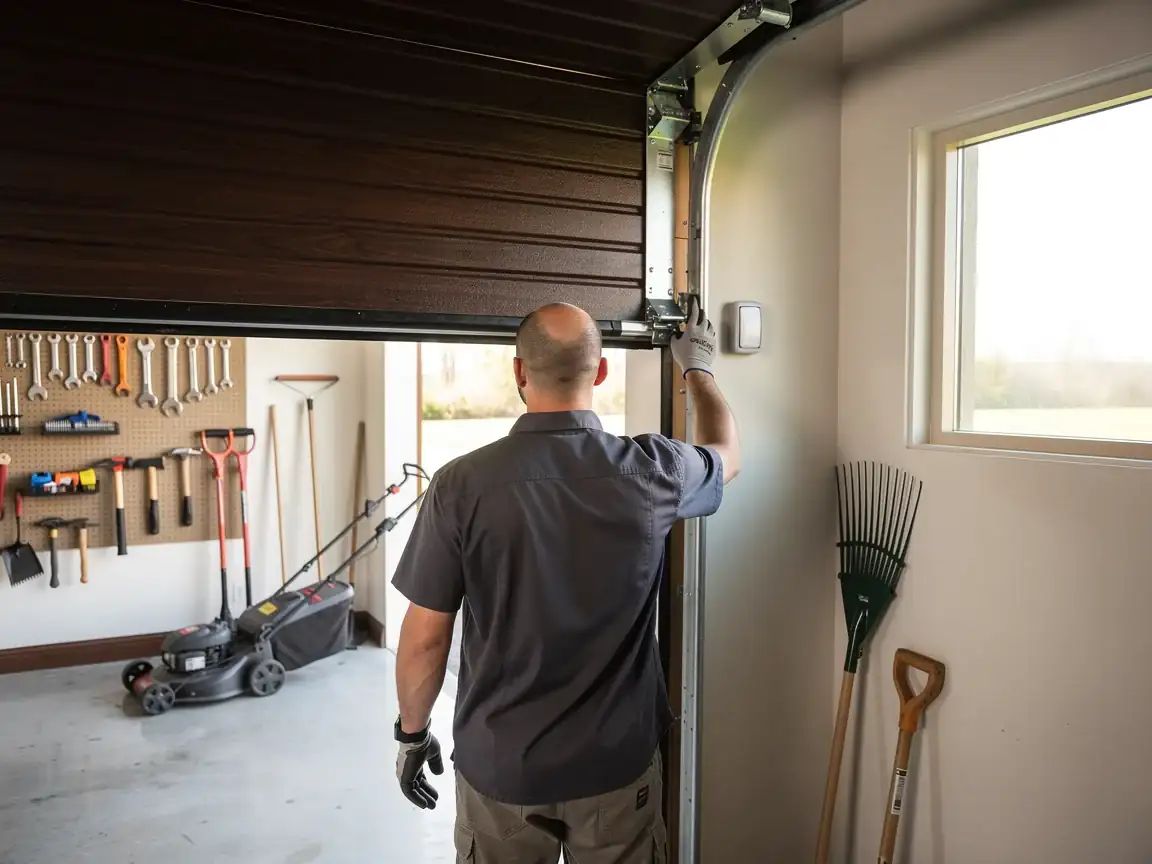
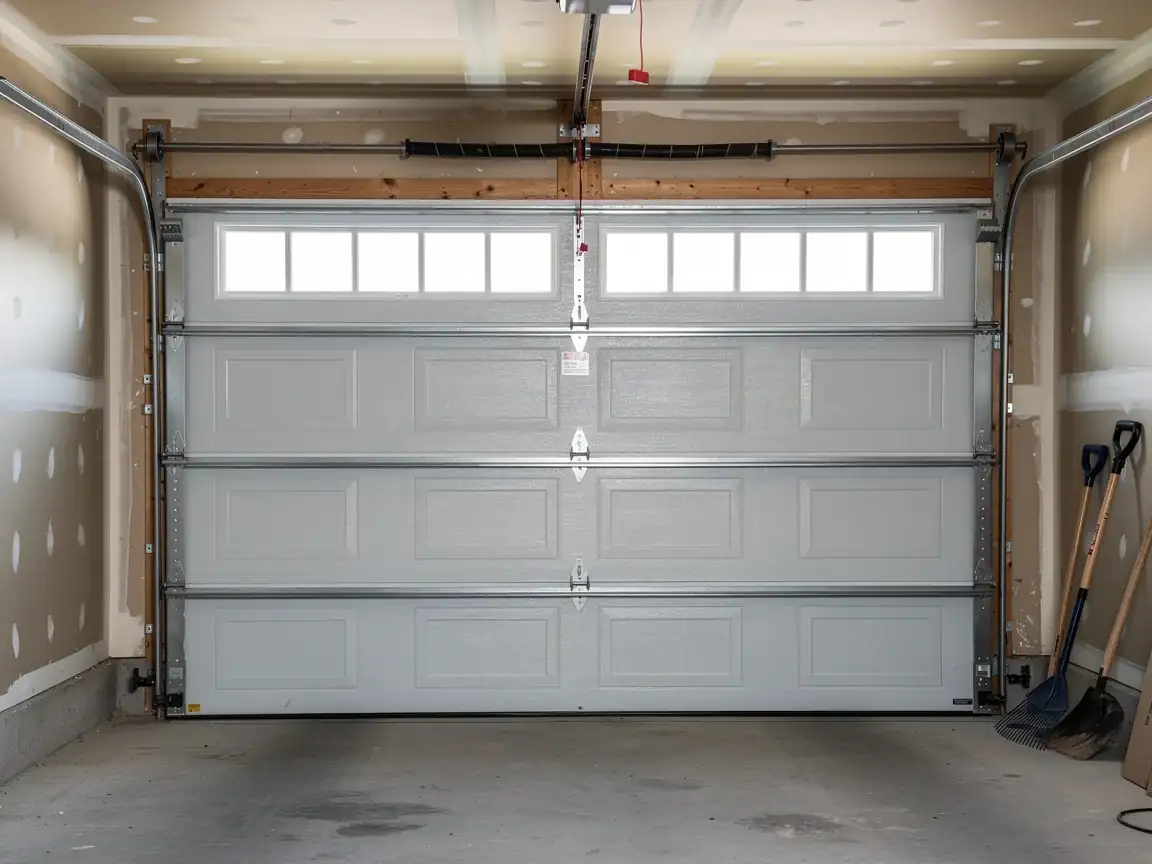
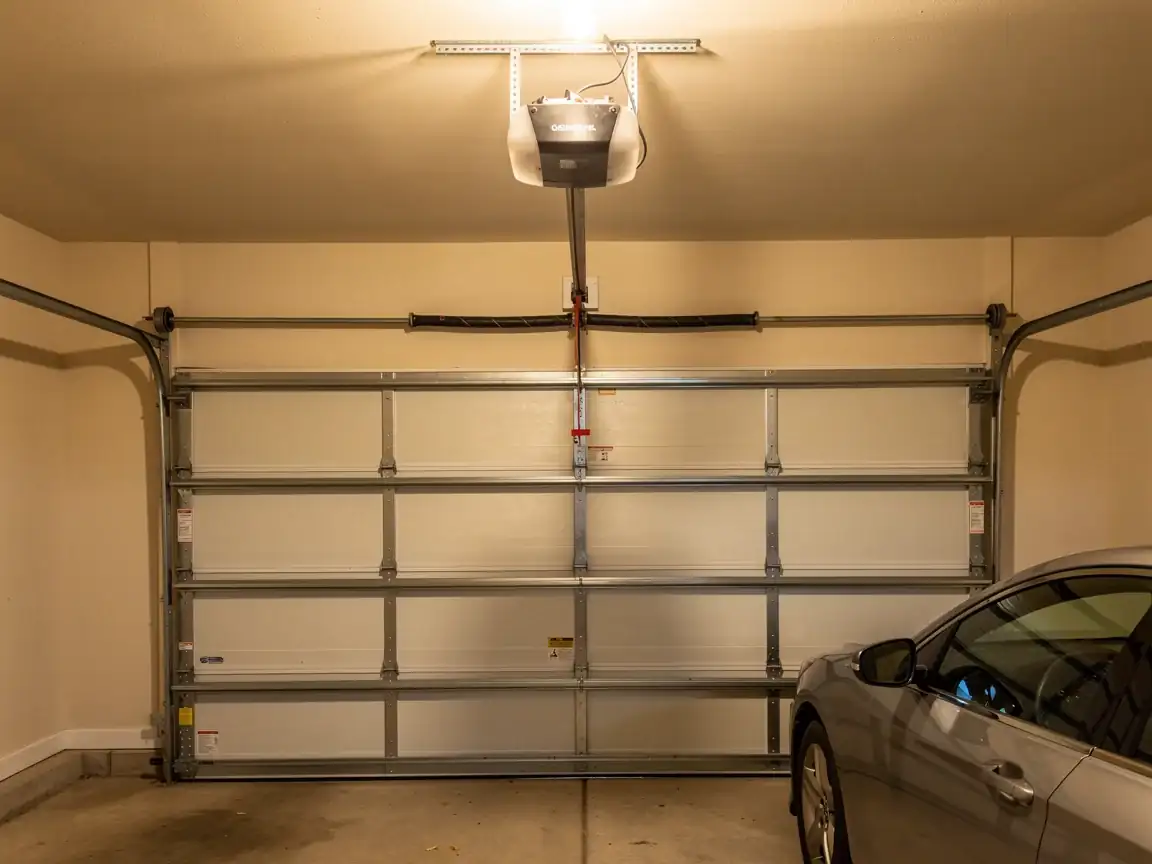
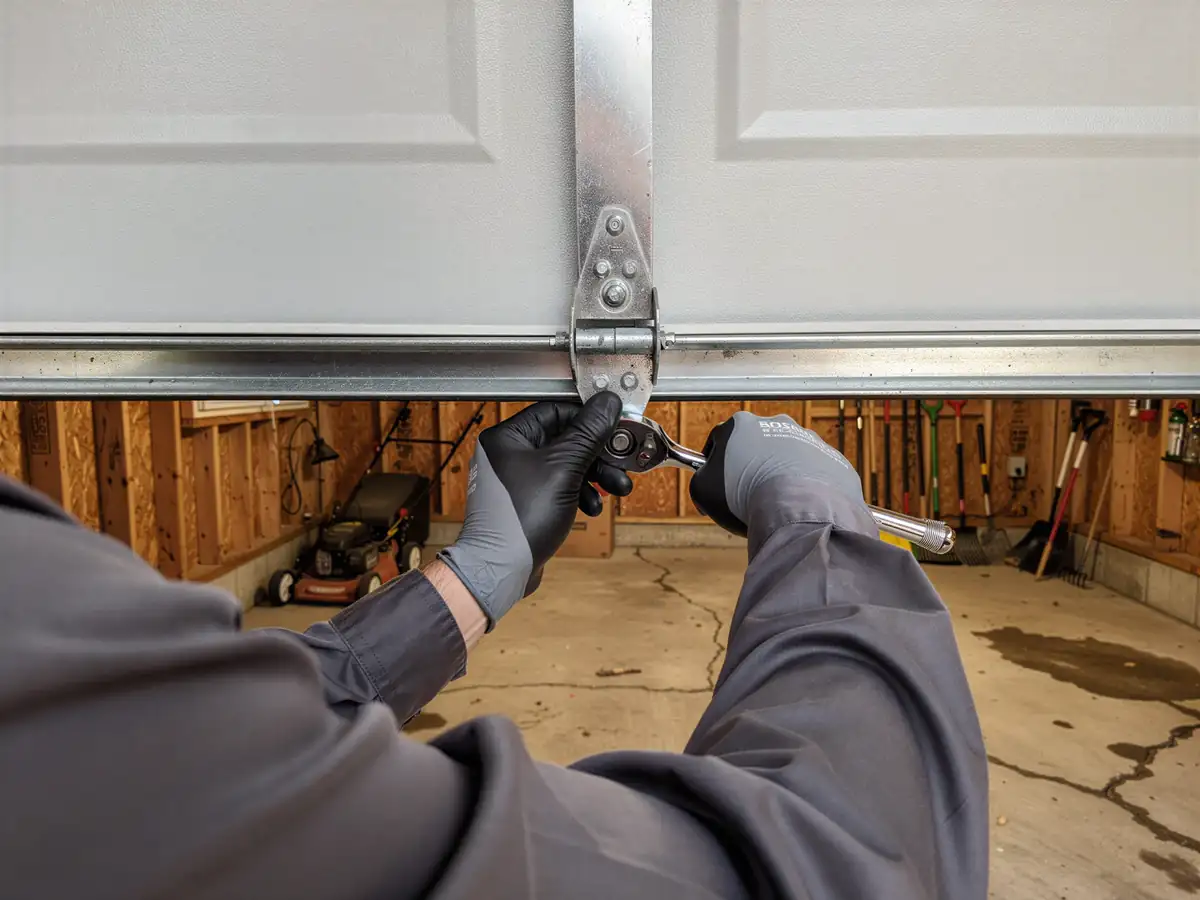
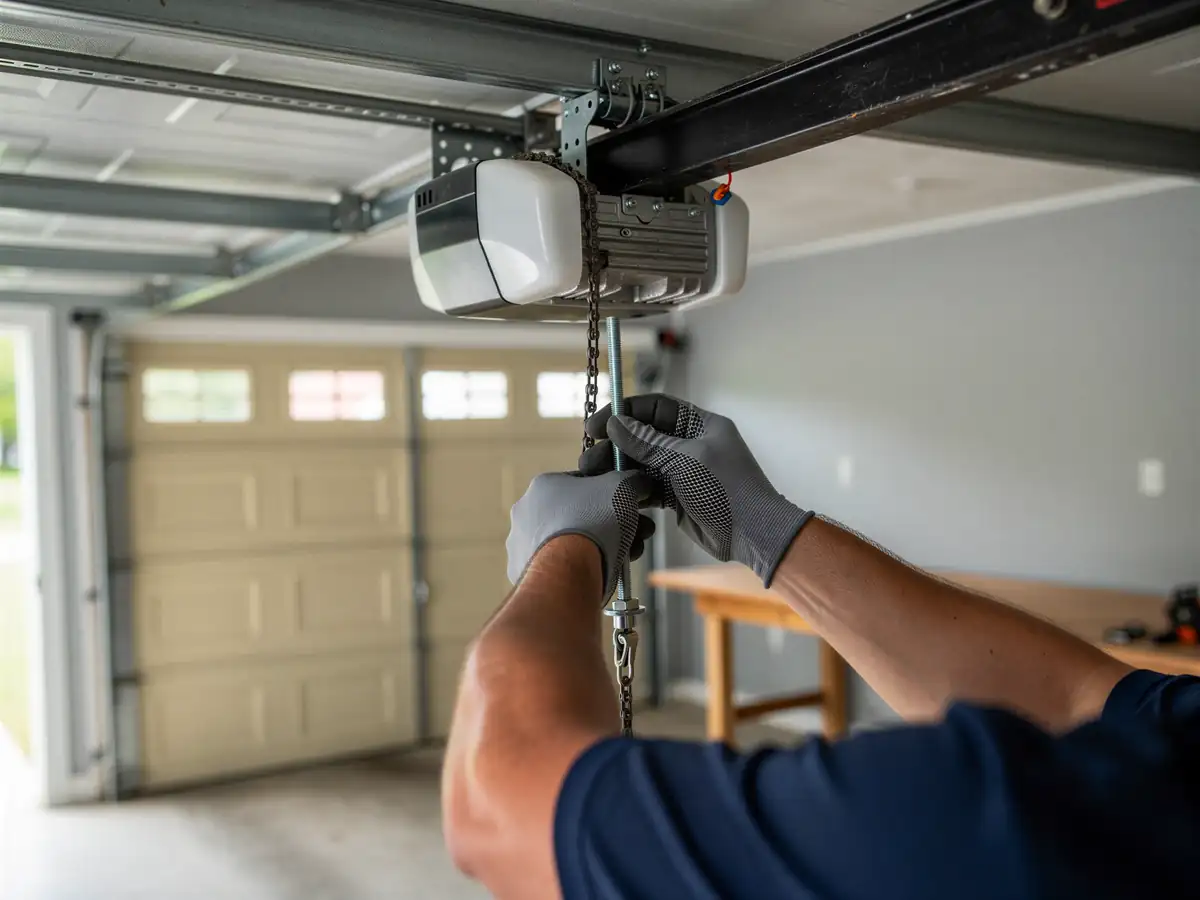
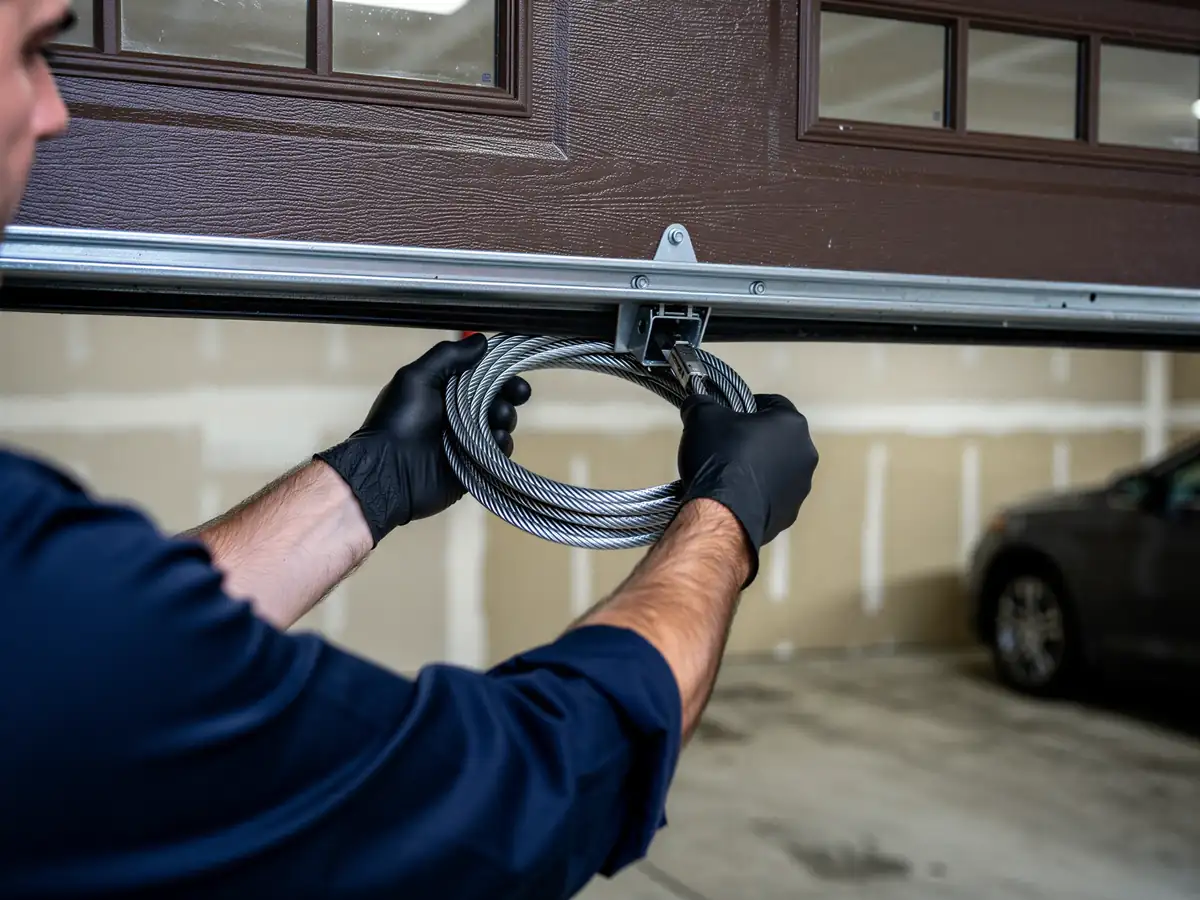
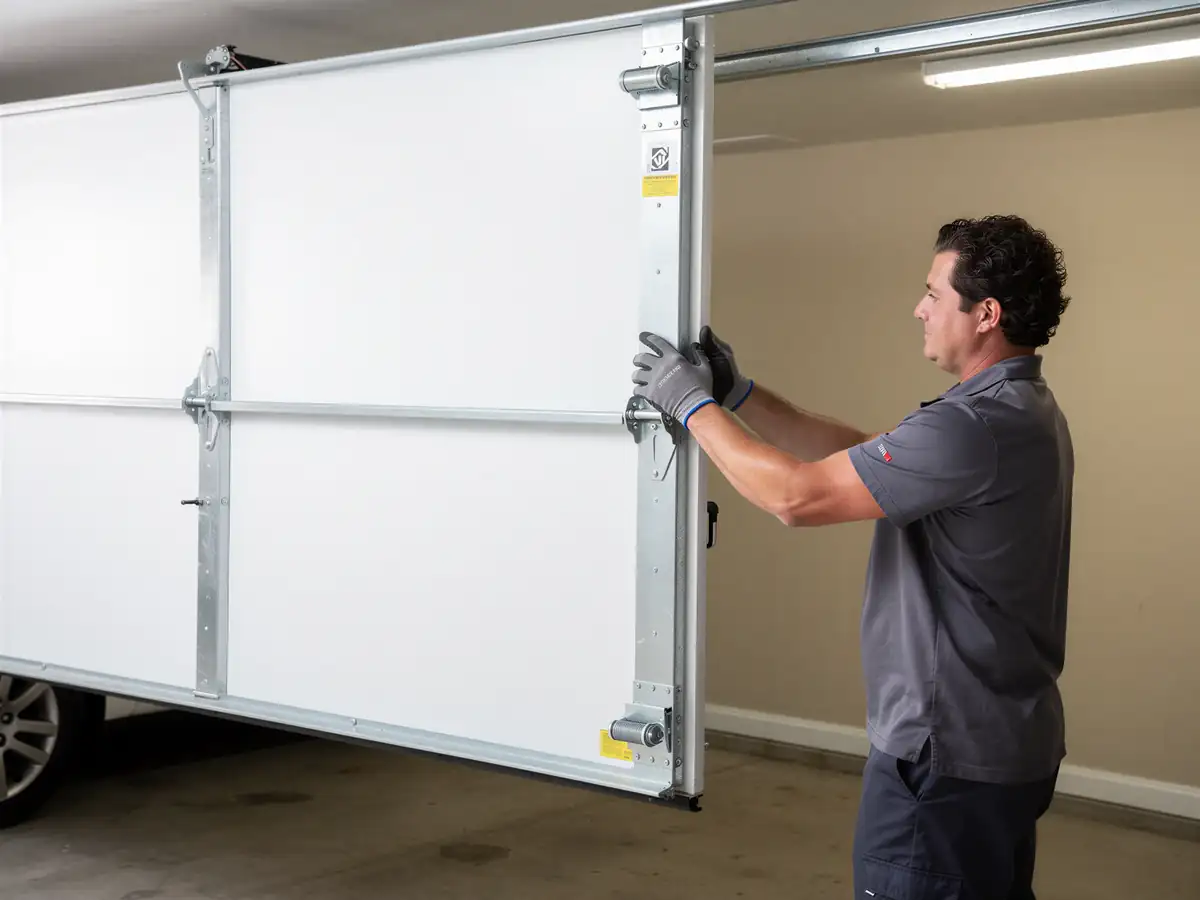
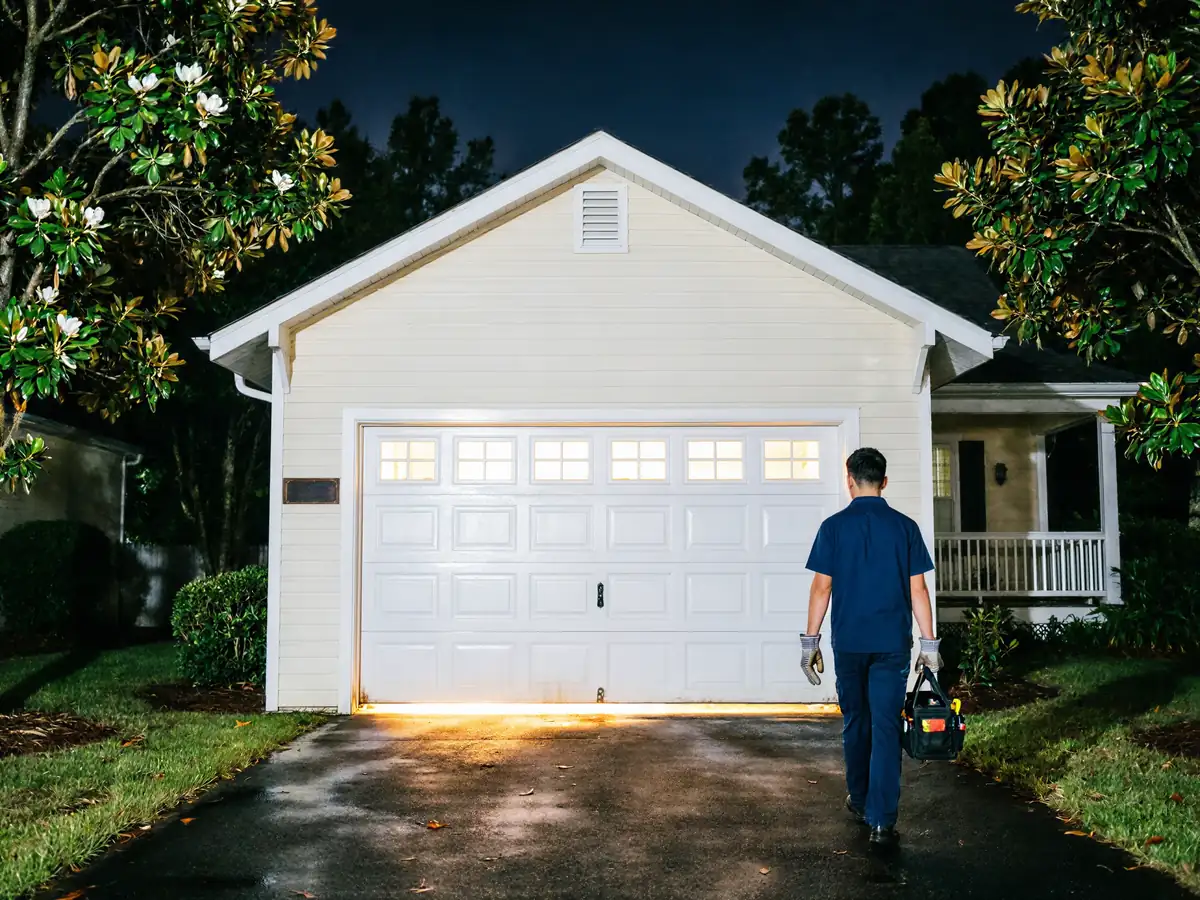
We start at the spring, not the opener, because that's where most Clayton calls end up. You pull the manual release, lift the door by hand, and feel whether it's the spring or the track binding. If the door feels like it weighs three hundred pounds the second it clears the floor, that's a broken or weakened torsion spring doing none of its job. We measure the shaft, match the wire gauge and wind to what's already on the door, and replace both springs on a double door even if only one let go - uneven springs wear the second one out fast. If the opener is straining against bad springs, we check the gears and the capacitor before we touch anything electronic, because a motor working against dead springs burns out gears that would otherwise last years. We don't swap an opener to fix a spring problem, and we don't sell a spring kit to fix a worn-out opener. Each gets diagnosed on its own.
What You Are Seeing
The door won't open past six inches, or it opens and then slams back down. Sometimes it's a loud bang from the garage followed by a door that won't budge at all - that's the spring letting go, usually with the cable still attached and looped where it shouldn't be. Other times it's slower: the door's been getting harder to lift by hand for weeks, the opener's been grinding more than usual, and then one morning it just stops. Clayton's housing stock runs from 1968 up through 2013, with a lot of it built in the 1980s and 90s across the area's older subdivisions. A door installed when the house was built is now thirty to forty-five years old, and torsion springs are rated for a number of cycles, not a number of years - once that count runs out, age plus one cold morning is usually what finishes it.
Can You Do This Yourself
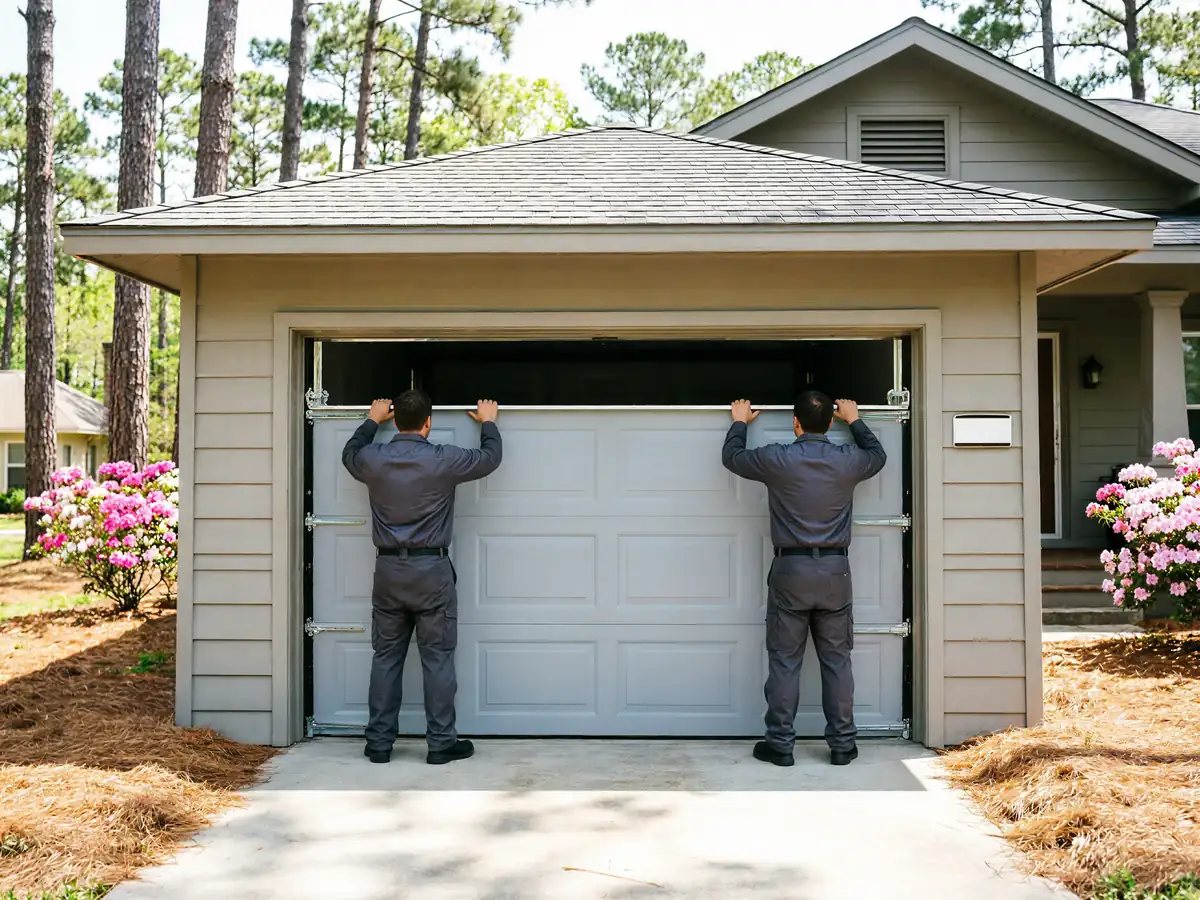
Changing a torsion spring is not a weekend project, and we'll say that straight. The spring is wound under enough tension to do real damage if the winding bar slips, and the tools for it aren't something most garages have sitting around. If your door is stuck shut and you need it open to get a car out, you can usually disconnect the opener and lift by hand if the spring hasn't fully failed - that much is safe. Past that, leave the spring alone. What you can check yourself: the track for a bent section, the rollers for cracking, and whether the bottom panel is dragging on the floor. With 14,940 owner-occupied houses across the service area and a median household income of $55,051, most of the Clayton homeowners we talk to want the actual problem fixed once, not a string of patch jobs - so we'll tell you straight if a repair is the better call or if the door's old enough that fixing it is throwing money at a part that'll fail again next year.
Why This Fails Locally
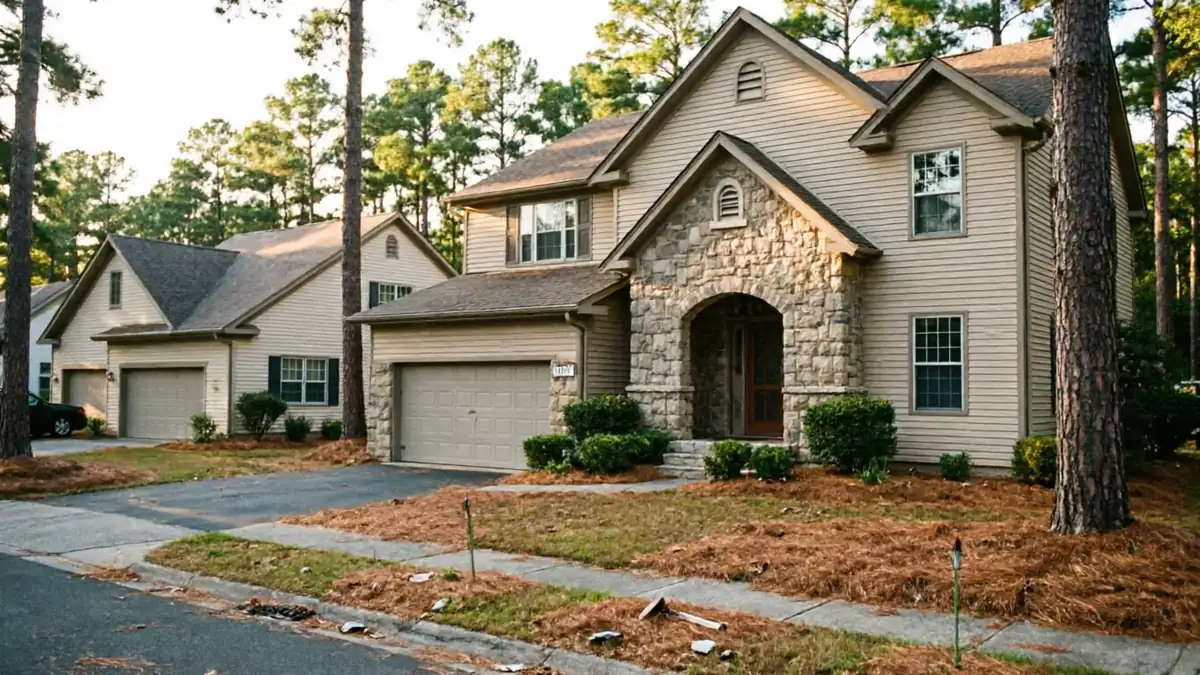
Clayton sits in a cold-moderate climate band, and that matters more for garage doors than people expect. A torsion spring under tension loses a little flexibility every time the temperature drops hard, and the grease packed into the bearing plates stiffens up on the first real cold snap of the season - that's often the exact morning a spring that was already near the end of its cycle count finally snaps. A house built in 1985, the median year for homes in this area, is now pushing forty years on whatever hardware came with it originally. Add in that most of Clayton's stock clusters in the 1980s and 90s across ten-plus named areas built in roughly the same window, and you get a lot of doors hitting end-of-life within the same few years, all tripped by the same cold mornings. It's not bad luck - it's a predictable failure pattern tied to when this town was built out and what the winters here do to aging steel.
How it works
From “it’s stuck” to “it’s fixed”
01
Tell us what’s wrong
Describe the symptom - won’t open, loud bang, opener runs but the door won’t move.
02
On-site diagnosis
A technician tests the door under power and by hand and finds what actually failed.
03
Clear, up-front plan
You get the fix that’s needed and what drives the cost - before any work starts.
04
Repaired & tested
The repair is done, the door is set true and tested, and the work area left clean.
Next step
Not sure which repair your door needs in Clayton, NC? Describe what it’s doing - every job starts with a diagnosis.
Why did my garage door spring break on such a cold morning?
Cold stiffens the grease in the bearing plates and makes the steel in the spring less forgiving right as it's nearing the end of its cycle life. In Clayton's cold-moderate climate, that combination tends to show up on the first hard cold snap of the season, which is why we see a jump in broken-spring calls then.
Is it normal for a 1980s Clayton house to still have its original garage door hardware?
It happens more than you'd think. A lot of Clayton's housing was built in the 1980s and 90s, and if a door hasn't failed yet, nobody's had a reason to replace the springs. By now that hardware is pushing forty years old and well past its rated cycle count.
Should I repair the spring or replace the whole door?
Depends on the door's age and condition beyond the spring. If the panels, track, and opener are sound, a spring replacement is the right call. If the door's from the original build and showing rust or panel damage too, we'll tell you honestly when replacement makes more sense than another repair.
Ready to get your garage door sorted?
Tell us what it’s doing and where you are in Clayton - we’ll take it from there.