What You Are Seeing
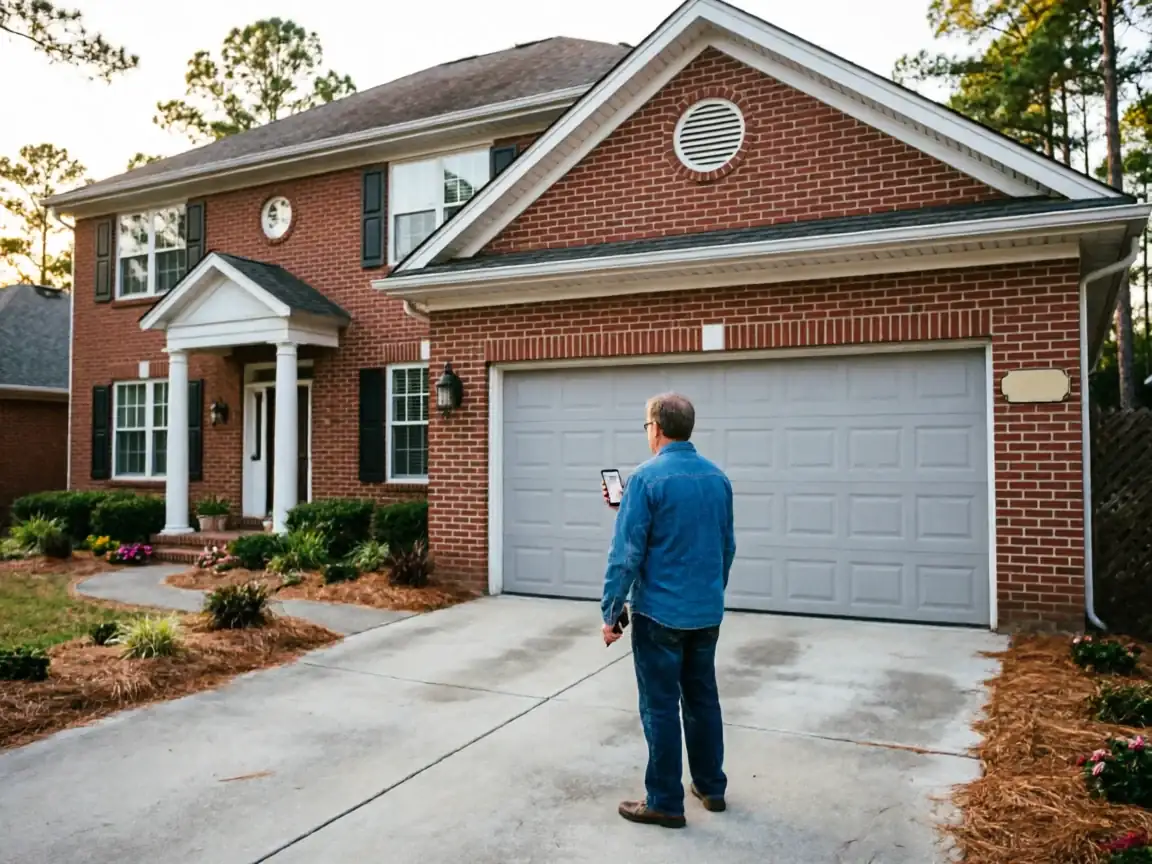
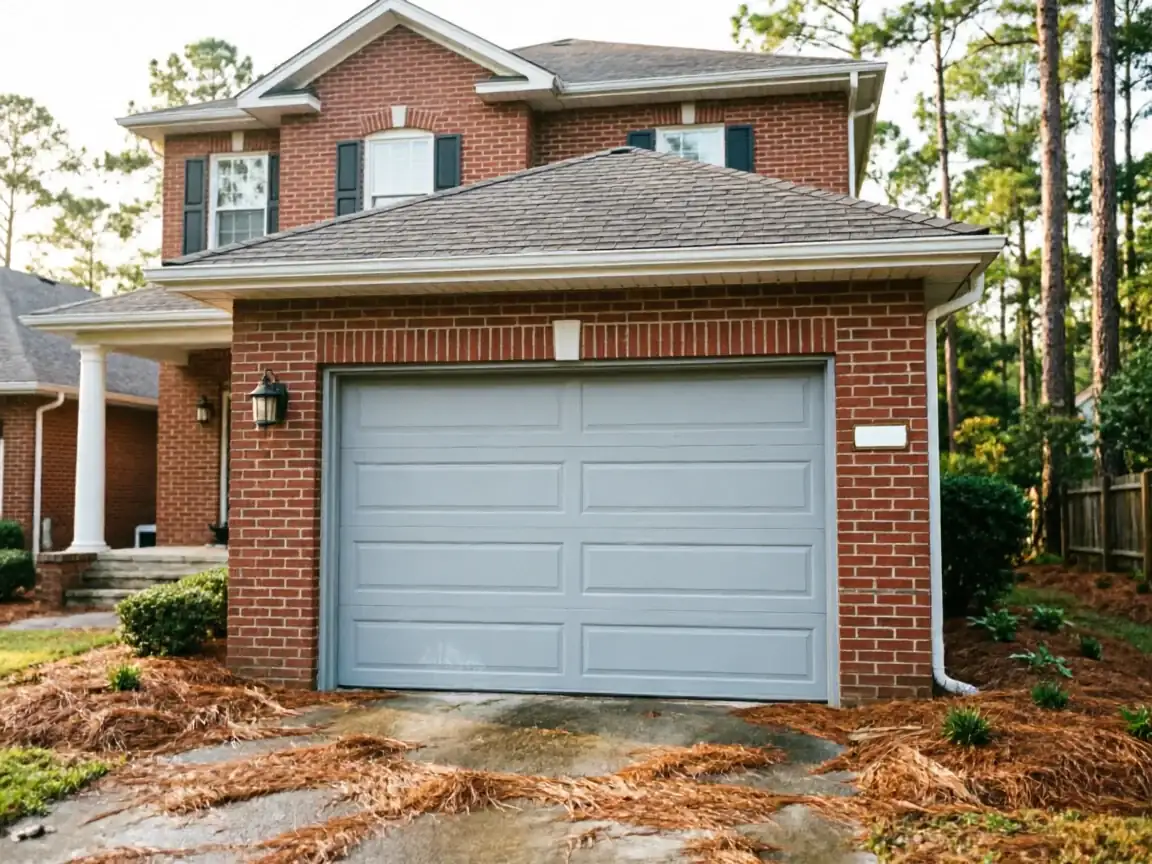
Benson's median house went up in 1978
Which puts it ahead of the 1985 median for the broader territory this crew covers out of Clayton. That seven-year gap matters more than it sounds. A door and opener installed in the late 1970s predates most of the hardware upgrades that came through the 80s and 90s - heavier torsion springs, safety cables, auto-reverse sensors that didn't become standard until later. So when a spring snaps or a cable frays on a Benson door, it's often original or close to it, not a replacement installed sometime in the last fifteen years.
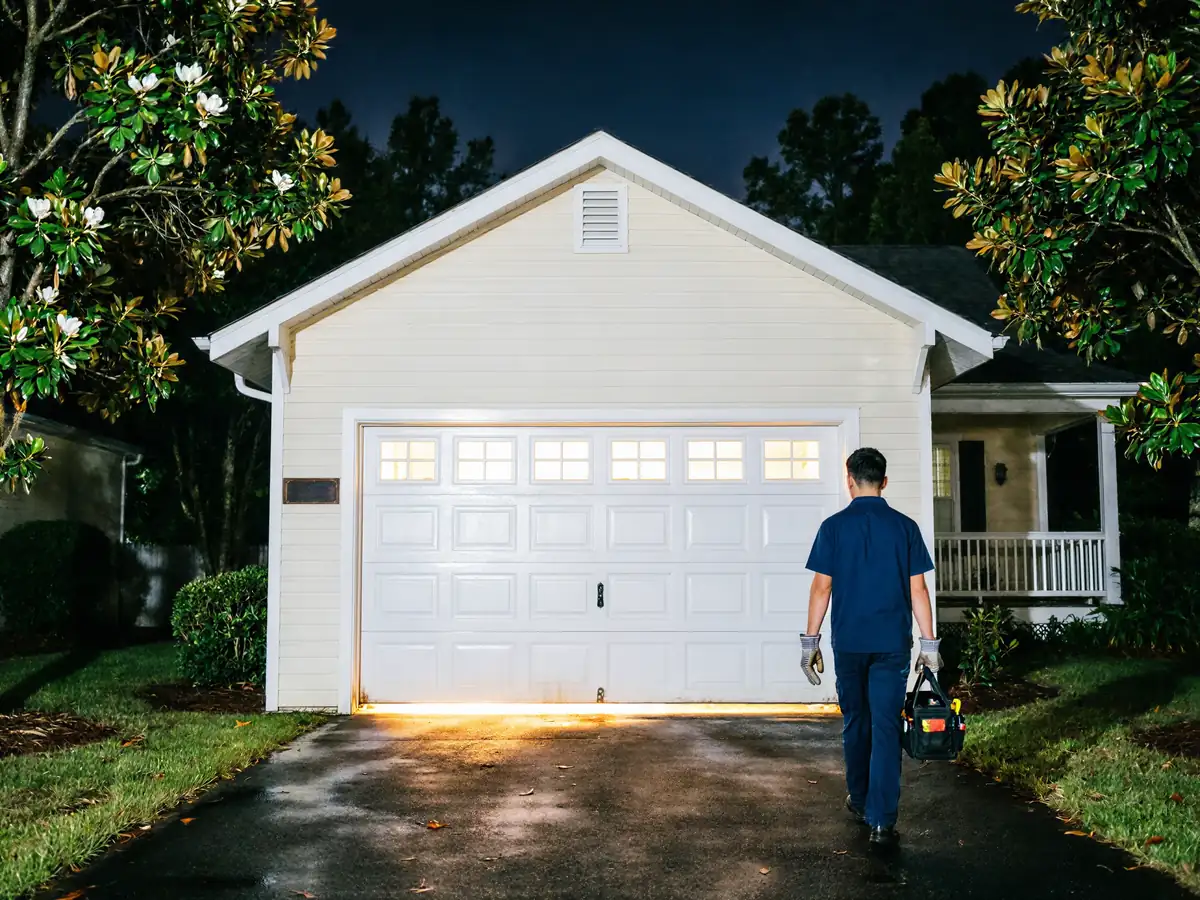
The truck comes from Clayton, 20 miles out
Farther than almost every other town this company reaches. That distance doesn't change what's broken, but it does mean there's no quick run back to the shop mid-job if a part turns out to be the wrong size. The tech loads for what the housing stock actually needs before leaving Clayton, which is why knowing the build year here matters before the truck ever pulls out of the lot.
- 20 miles
What you're usually looking at
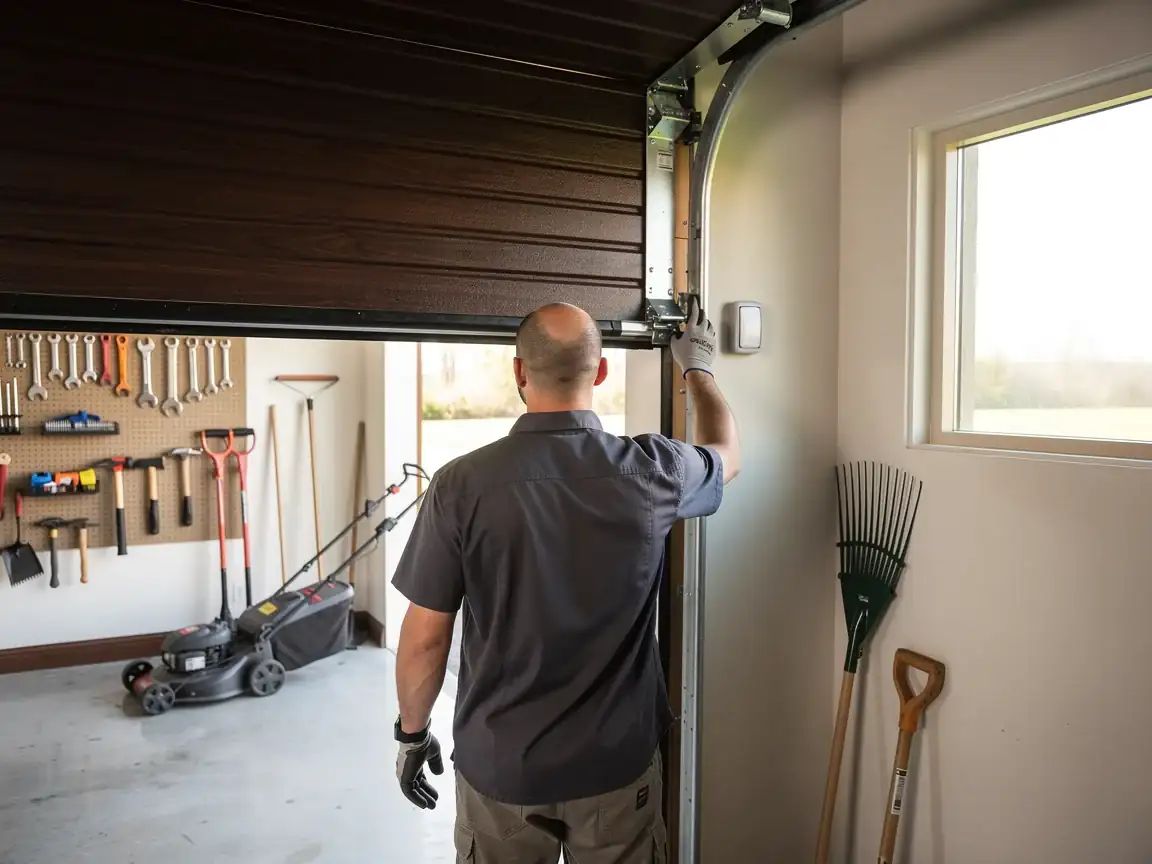
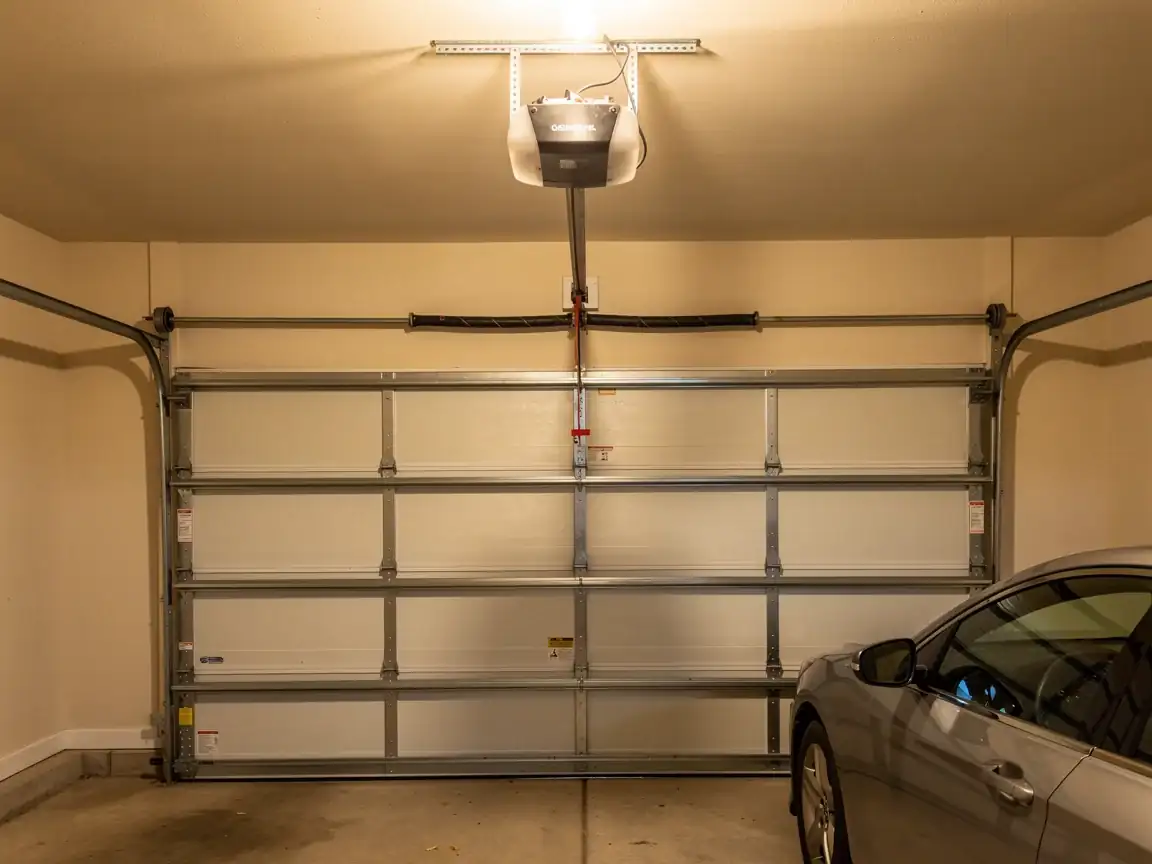
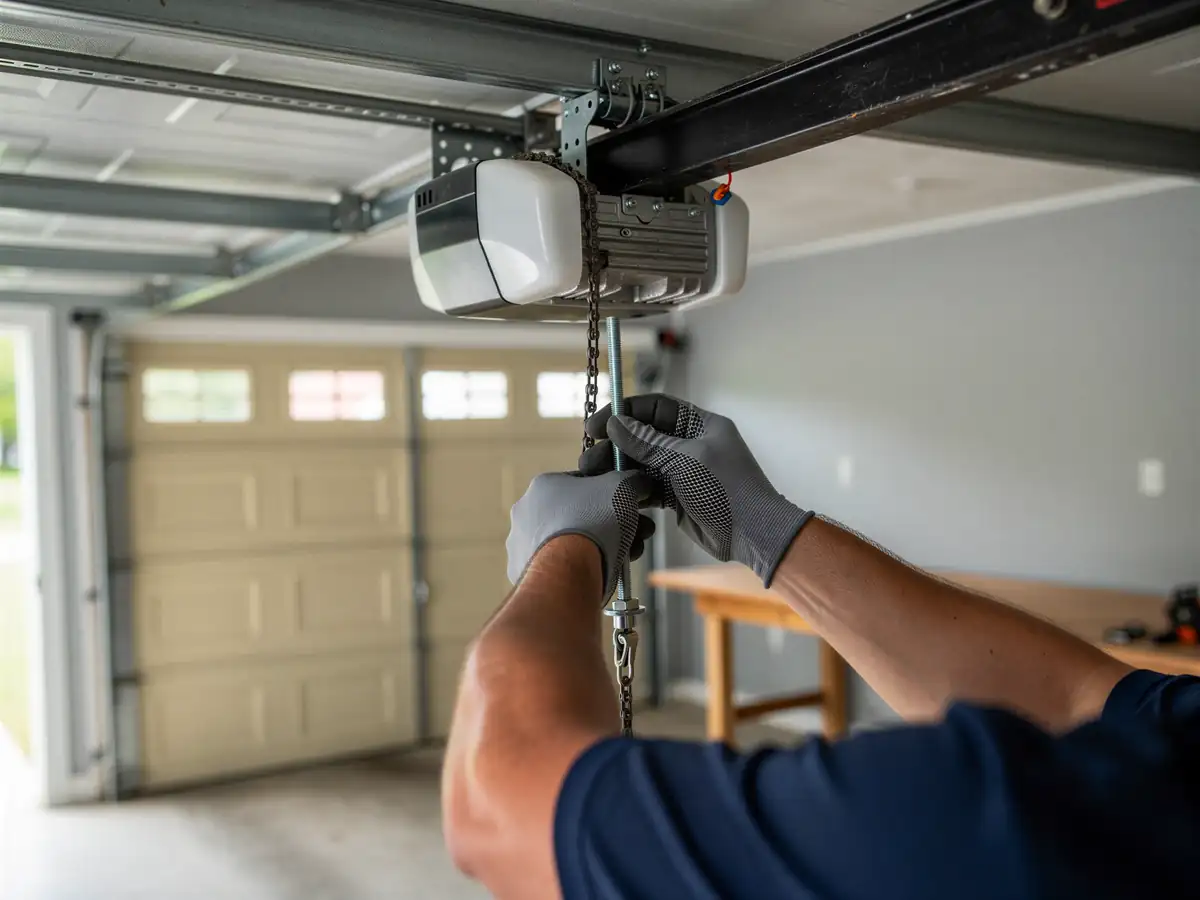
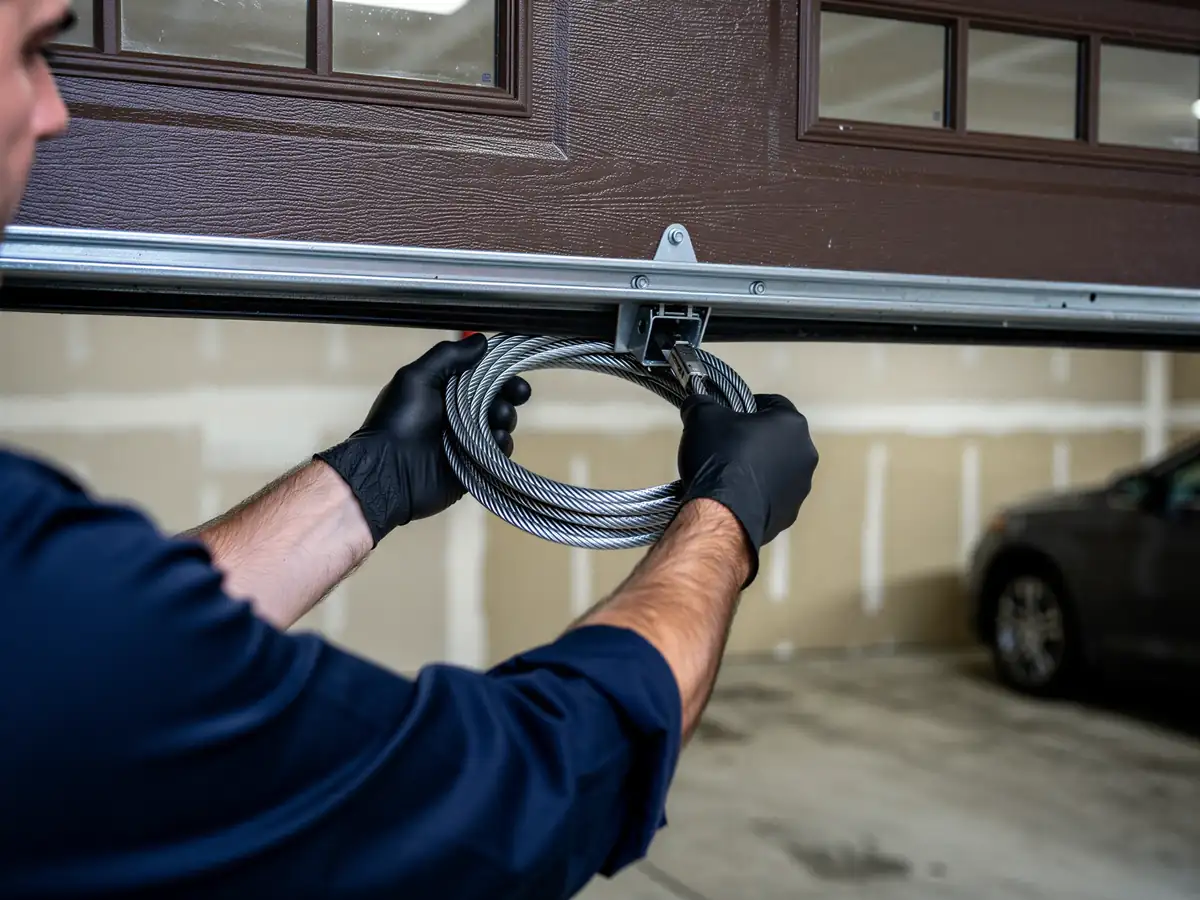
A torn cable, a broken extension or torsion spring, or an opener that's stopped responding because the logic board or sensor wiring is original to a house pushing fifty years old.
Why This Fails Locally
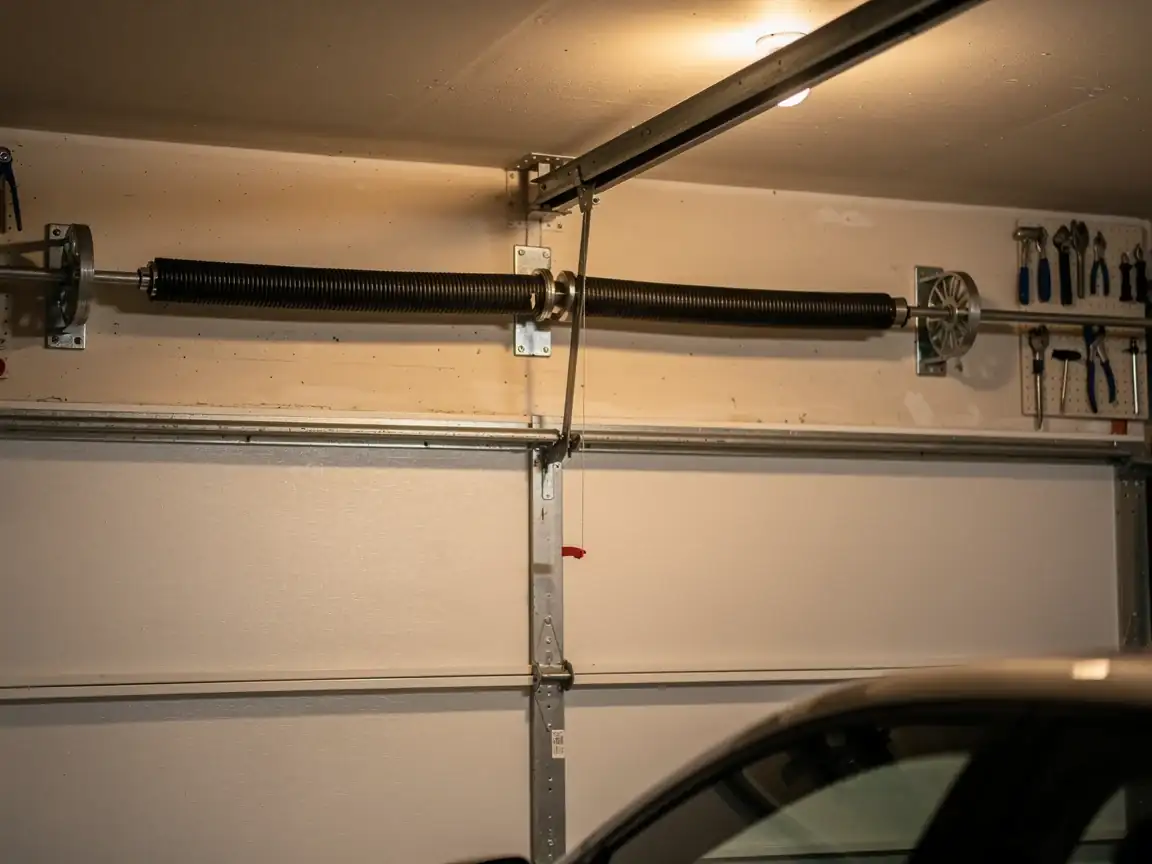
The region sits in a cold-moderate climate band, and that matters more for older steel than for new. Torsion springs wound in the 1970s and early 80s go through more freeze-thaw and humidity swings than a spring installed in the last decade, and galvanizing on older cable doesn't hold up the same way after forty-plus winters. Metal fatigues faster when it's already old going into another cold season.
Benson is a small slice of this territory - about 1,550 households, a fraction of the roughly 30,812 across the whole service area this company runs. That matters for parts stocking: a town this size with houses this age doesn't generate enough call volume on its own to justify carrying every oddball bracket or spring size locally, so the truck has to anticipate it before it leaves Clayton.
The income side tells a different story than you'd expect. Median household income here runs $65,614, well above the $55,051 median for the territory as a whole. That doesn't change the physics of a broken spring, but it does mean more Benson homeowners choose full hardware replacement over a patch job when a tech lays out both options - something worth knowing going in.
What Is on the Truck
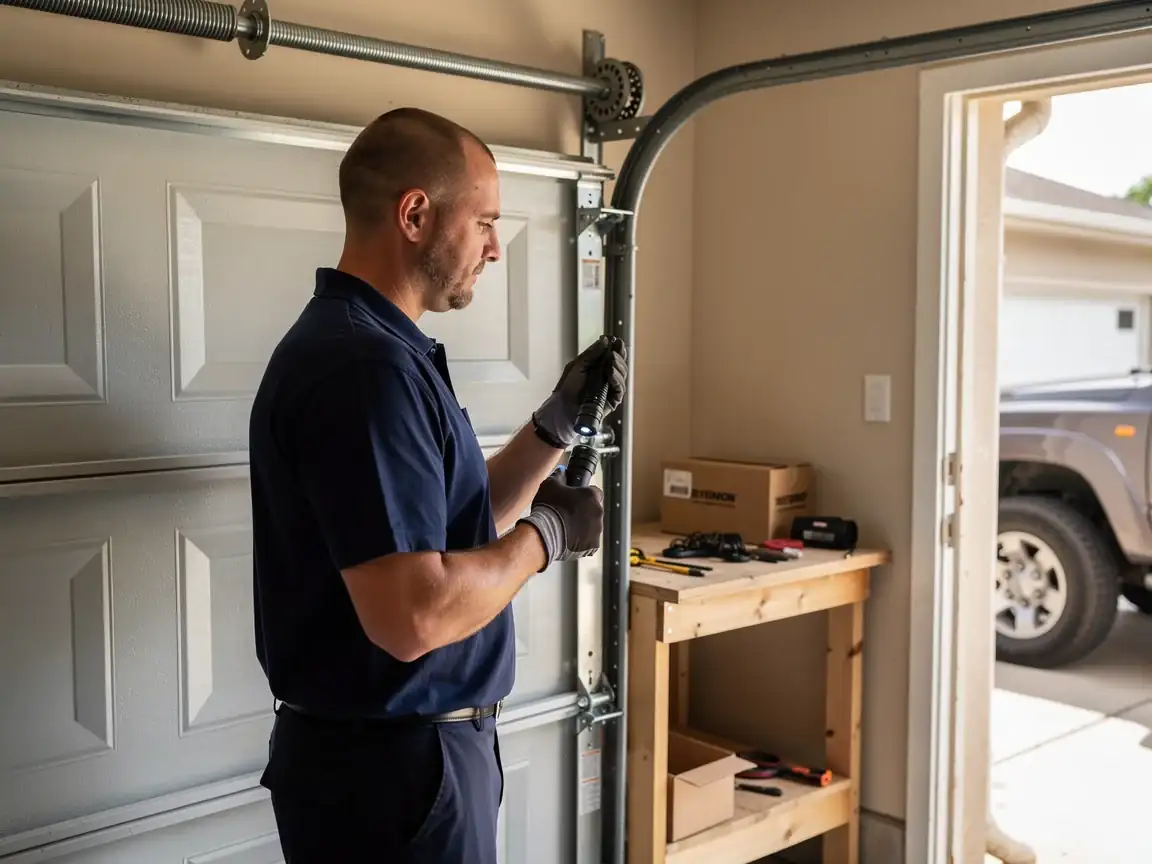
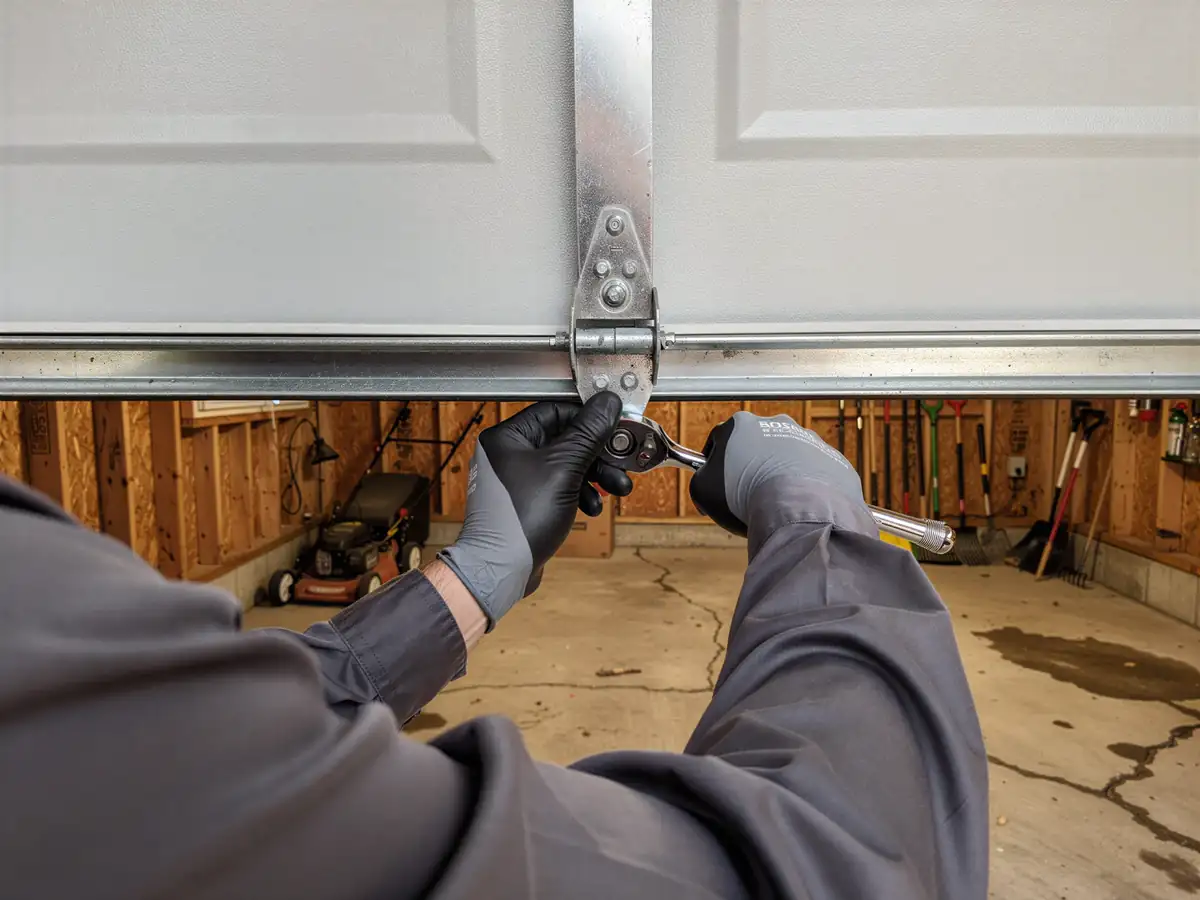
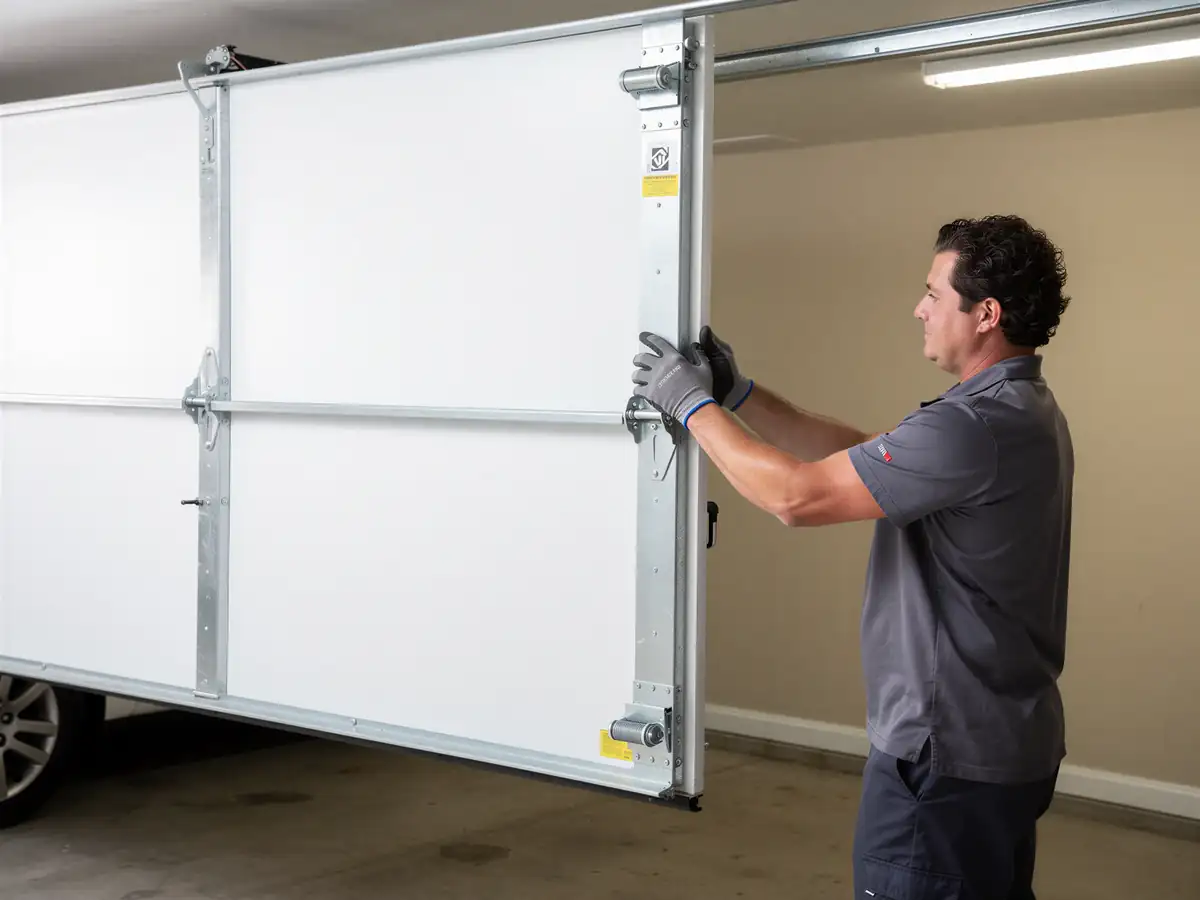
Because the housing stock here runs seven years older than the territory median, the truck carries standard torsion spring sizes that fit 1970s and early-80s track systems, along with extension spring kits for the houses that still run that older configuration instead of torsion. Safety cable retrofit kits come along too, since a lot of doors this age were installed before safety cables were routine and never got one added later.
Roller and hinge stock skews toward galvanized steel rather than the newer nylon rollers you'd stage for a 2005 build. Opener parts are limited - circuit boards and logic panels from the 1970s and 80s aren't something any truck carries, original or aftermarket, and that's worth saying plainly rather than promising a fix that isn't realistic on the spot.
Given the 20-mile run from Clayton, the tech loads for the most likely fix on the first trip rather than counting on a quick second run. That's planning around the drive, not a guess about what's wrong with your door before anyone's looked at it.
Can You Do This Yourself
A torn cable or a dead opener remote - those are fair for a homeowner to look at
Swap batteries, check the wall switch, make sure nothing's blocking the sensor eyes. That covers a decent share of calls before they need a truck at all.
A broken torsion spring is not a DIY repair, on a 1978 door or a 2018 one
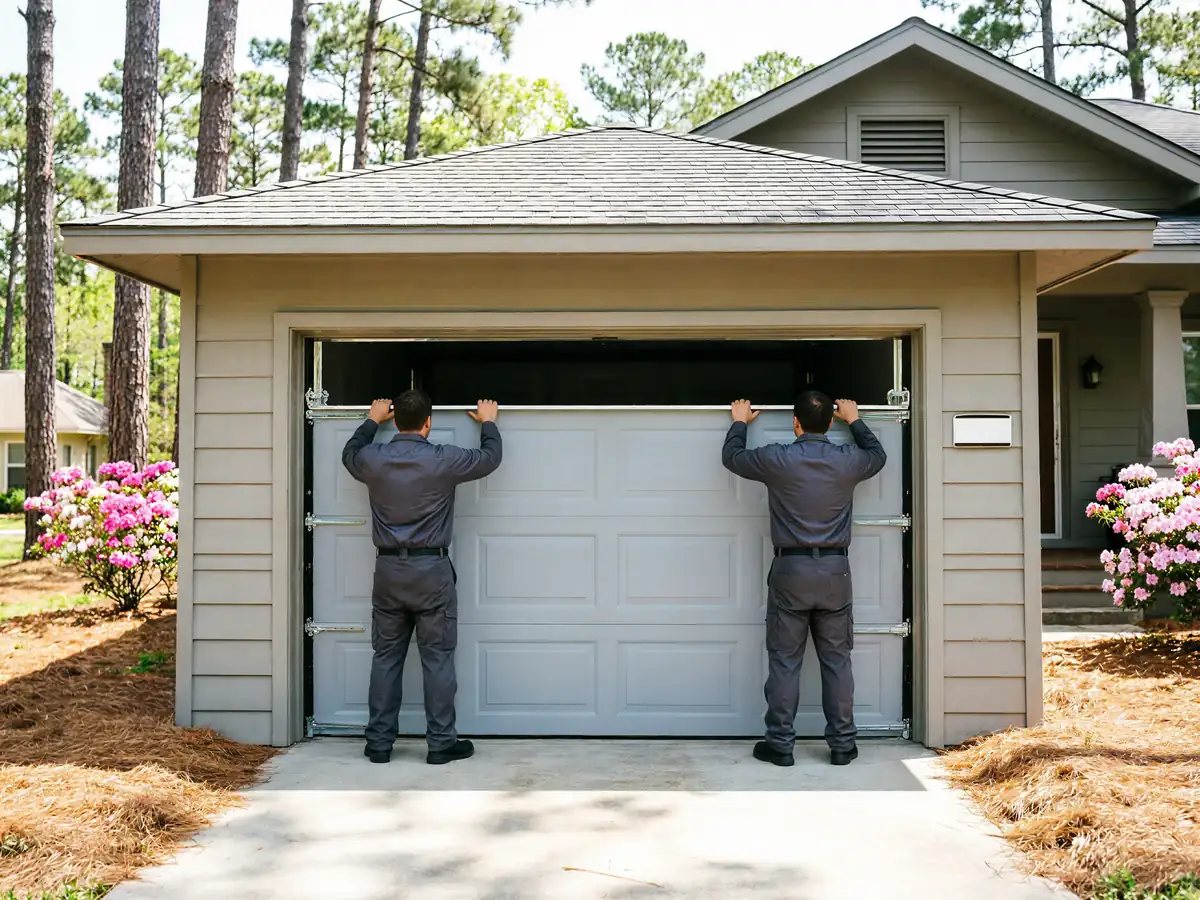
The spring is under enough tension to break a wrist or worse, and on older systems the winding cones and shafts have had decades to corrode or wear in ways that aren't obvious until the spring is unwound under load. This is the honest limit here: we don't talk anyone through doing that themselves over the phone, and we wouldn't recommend a video tutorial do it for you either.
Given the distance from Clayton, there's also no quick fallback if a DIY attempt goes wrong mid-repair
That's a real reason to call before starting rather than after.
The Cost of This Job
The honest answer depends on what's actually failed, and on a house this age that's not always obvious until a tech has the door open. A frayed cable or a single broken extension spring is a smaller job than a full torsion conversion, and a door that's lost its safety cable retrofit entirely is a different scope than one that just needs a spring swapped.
What tends to drive cost up here specifically is parts matching: a torsion system sized for a 1978 door isn't always a stock size, and finding the right spring weight for an opener and track combination that old can take longer than it would on newer hardware. That labor is part of the job, not an add-on surprise.
The 20-mile trip from Clayton is built into how the job gets scheduled and loaded, not billed as a separate line. We'll give a real number once we know what's actually broken - not before, and not as a flat rate that ignores what the door is doing.