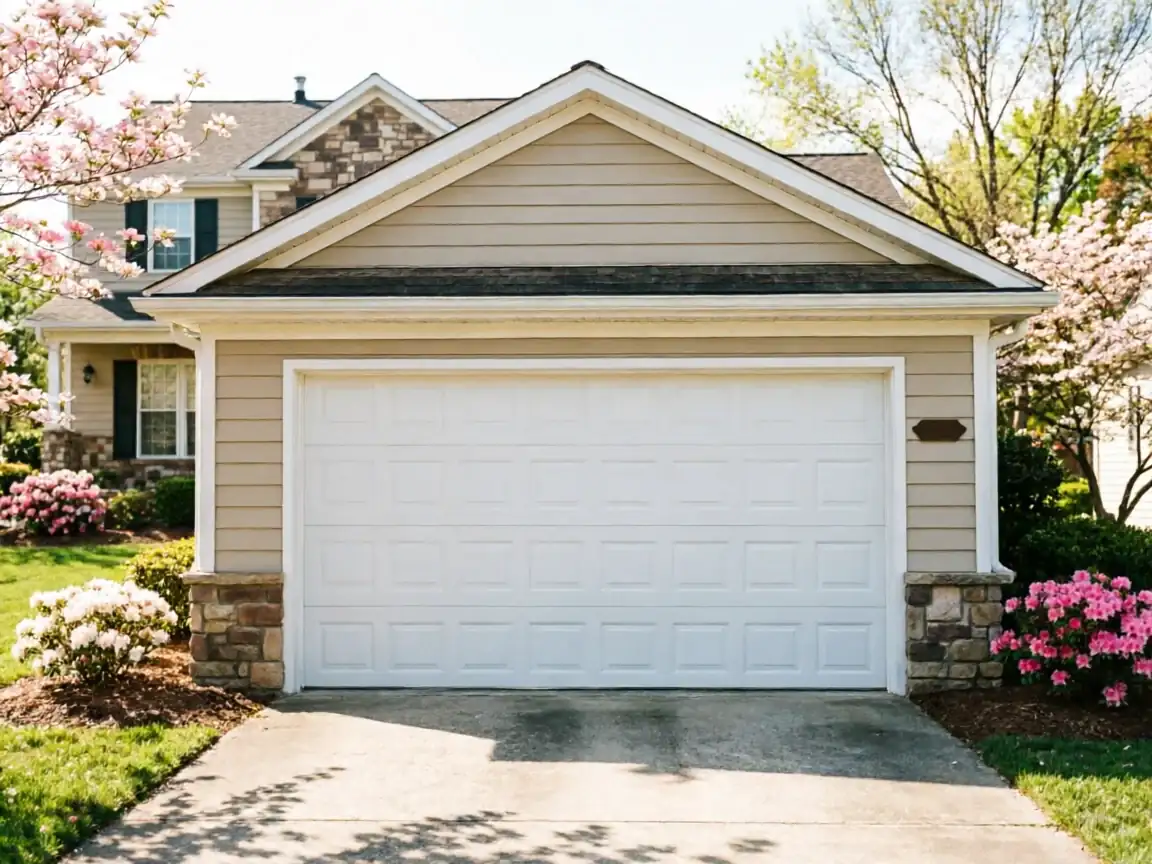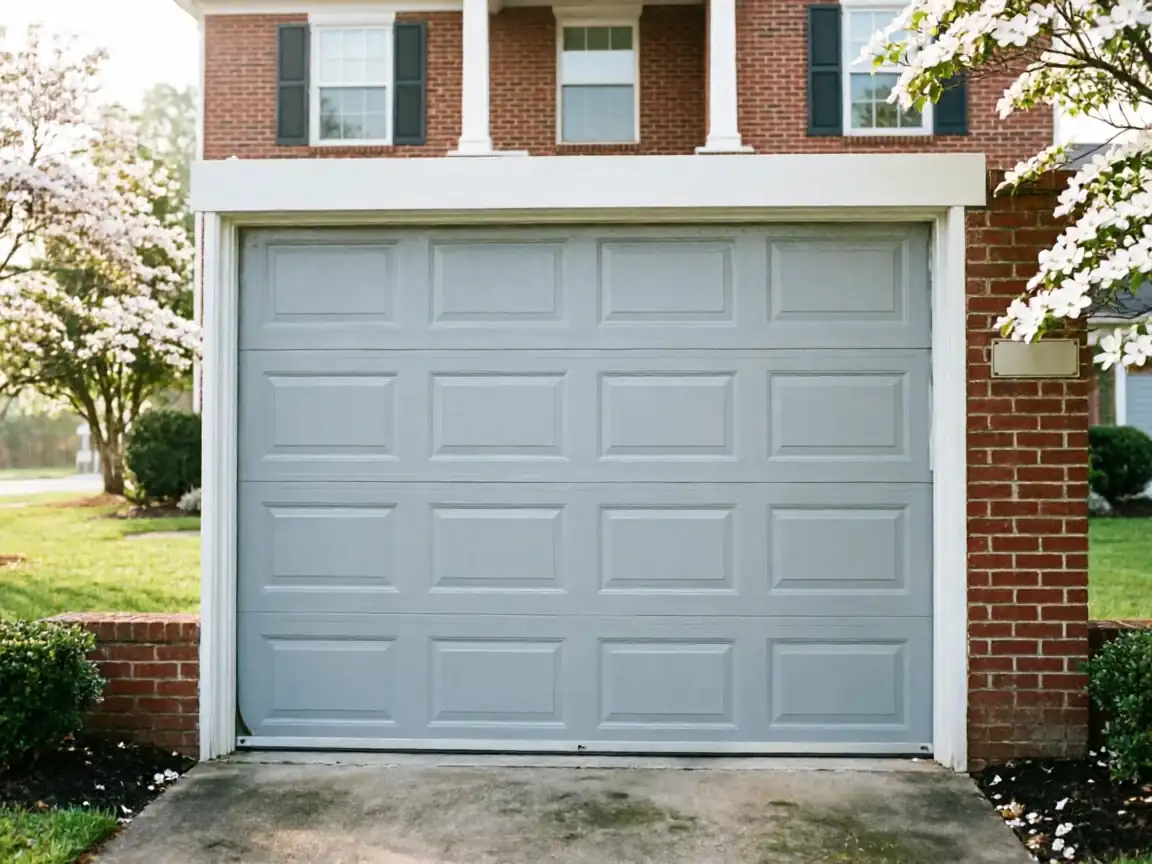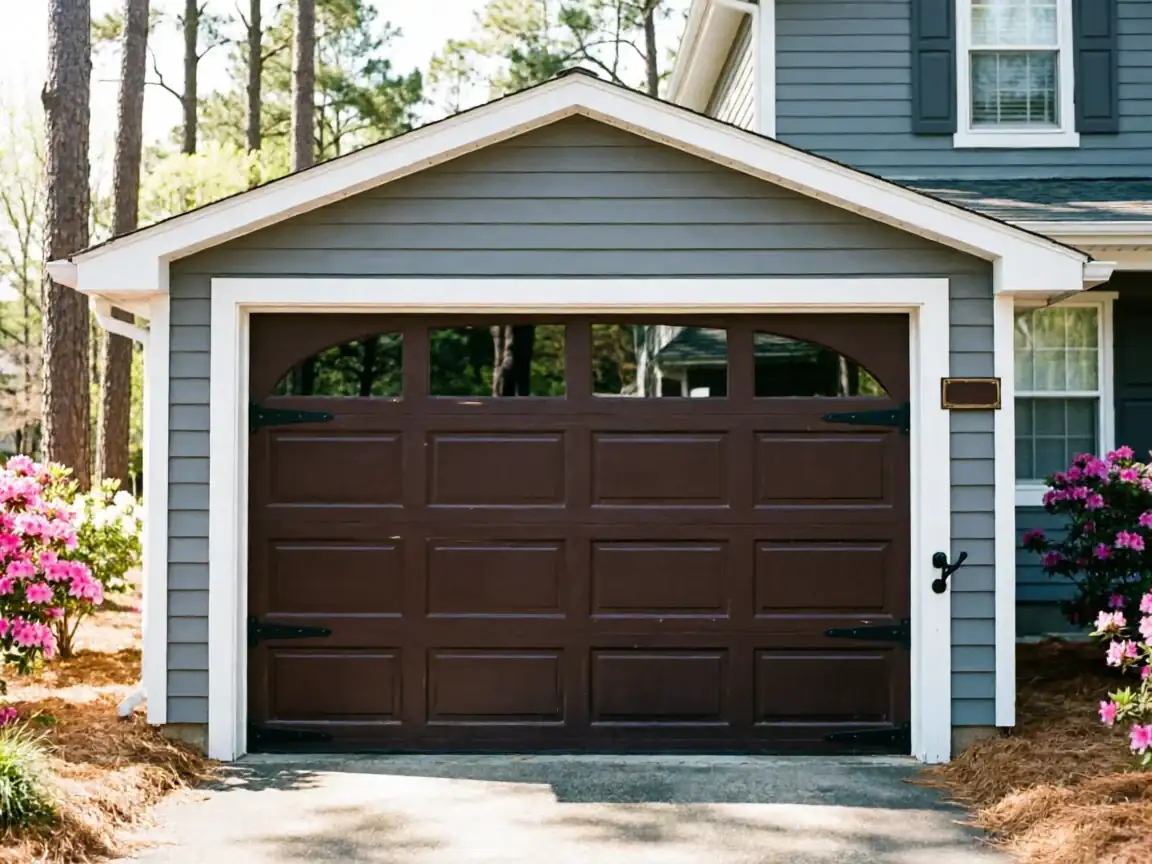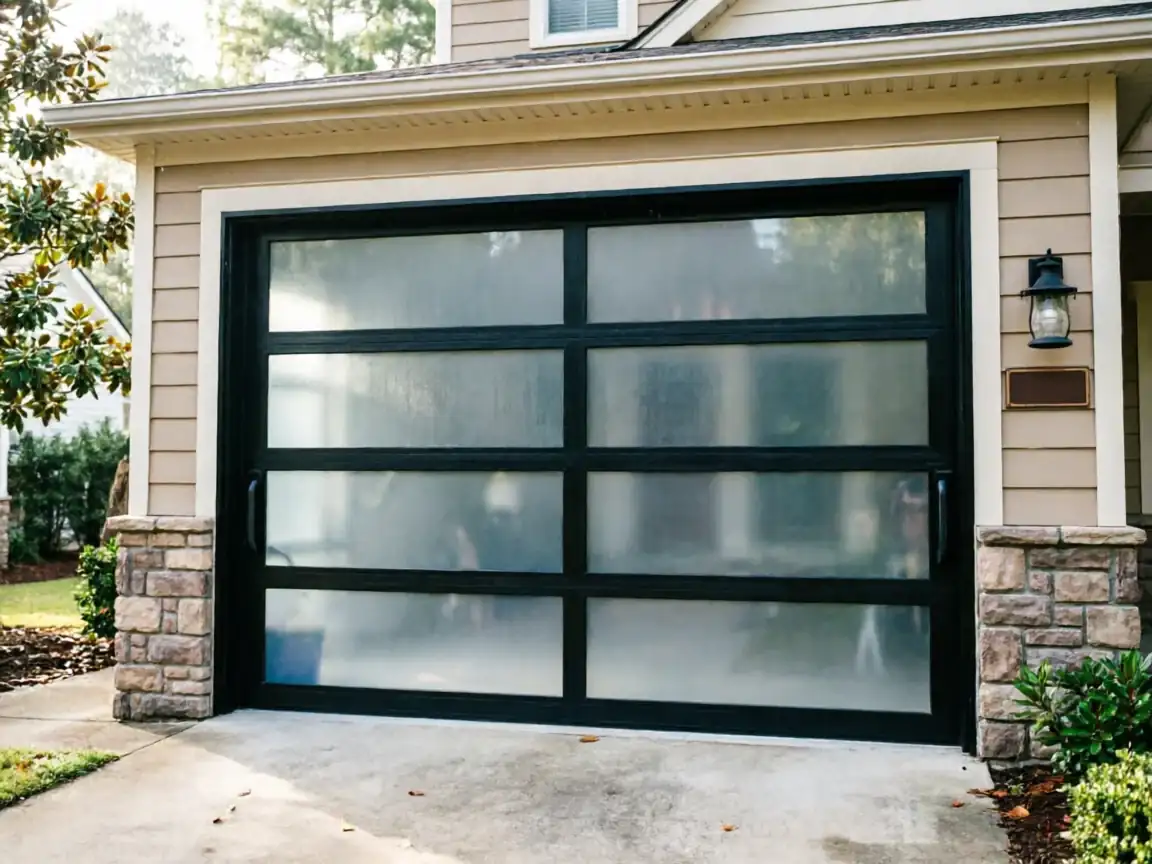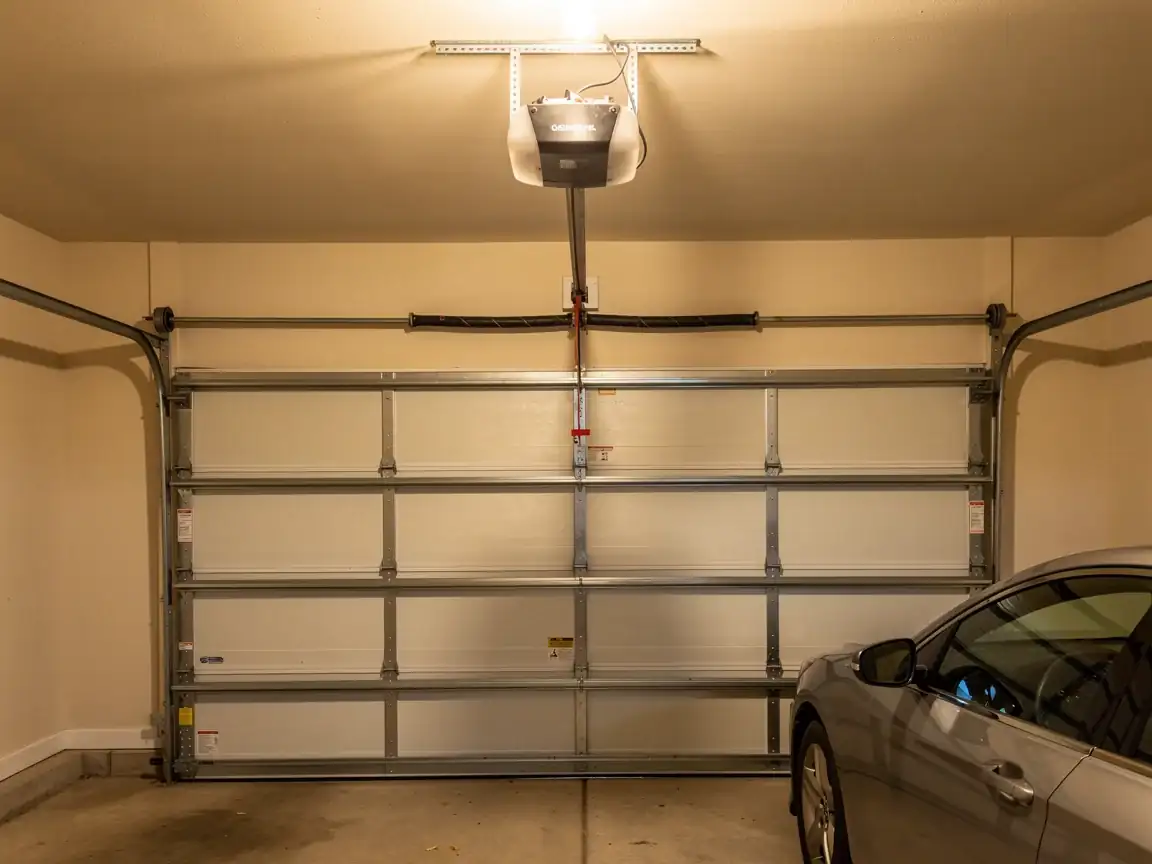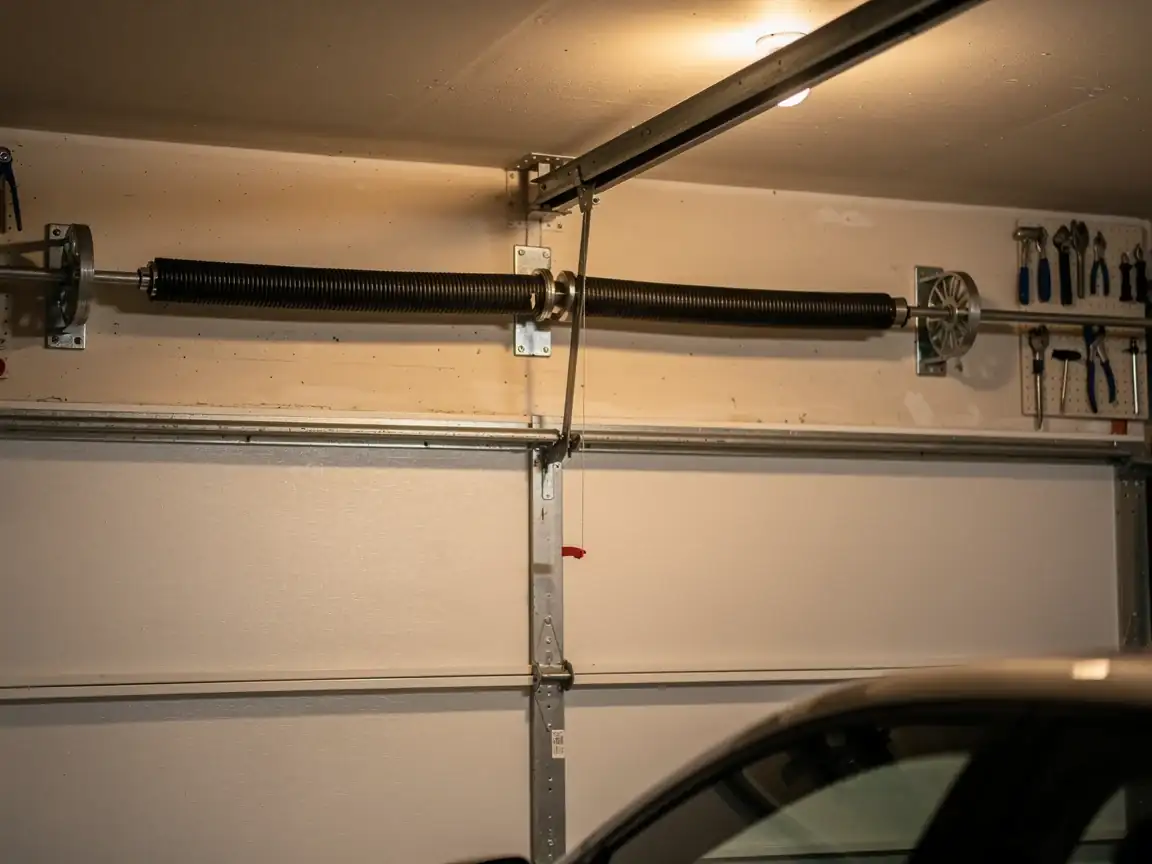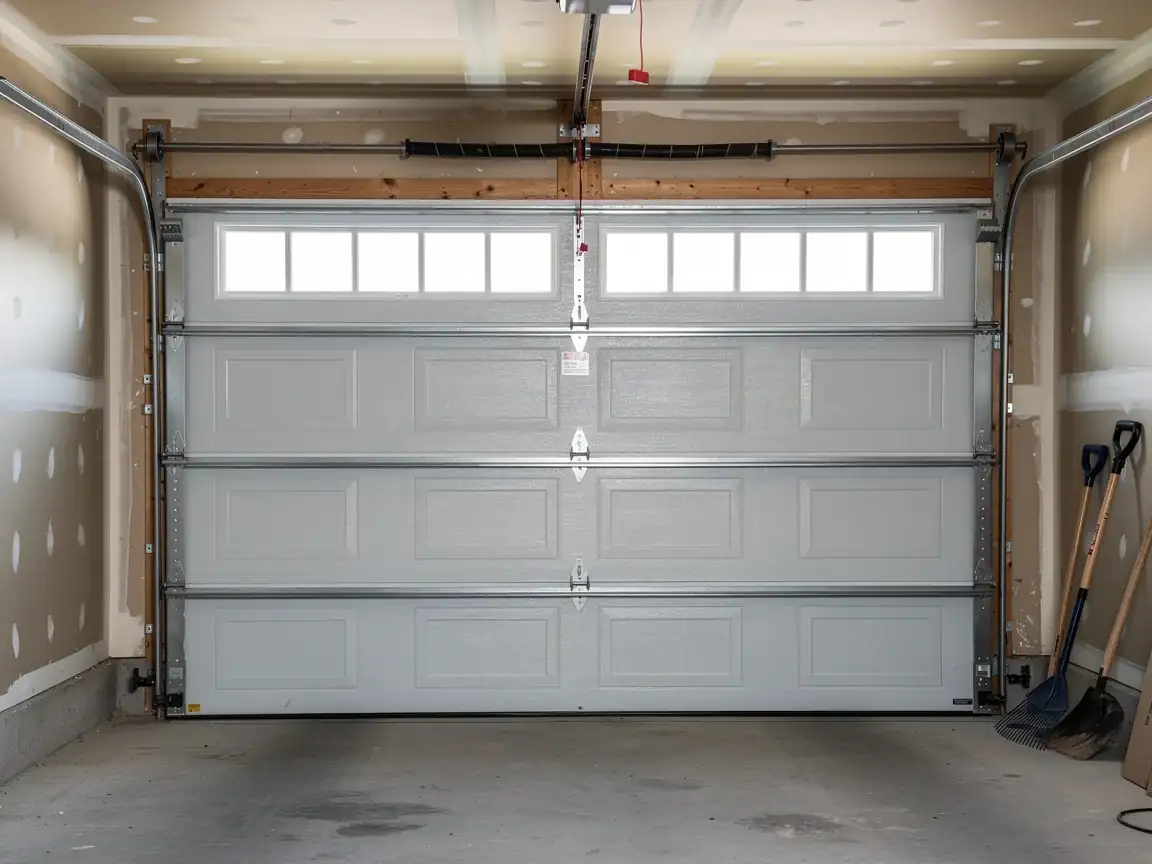
What You Are Seeing
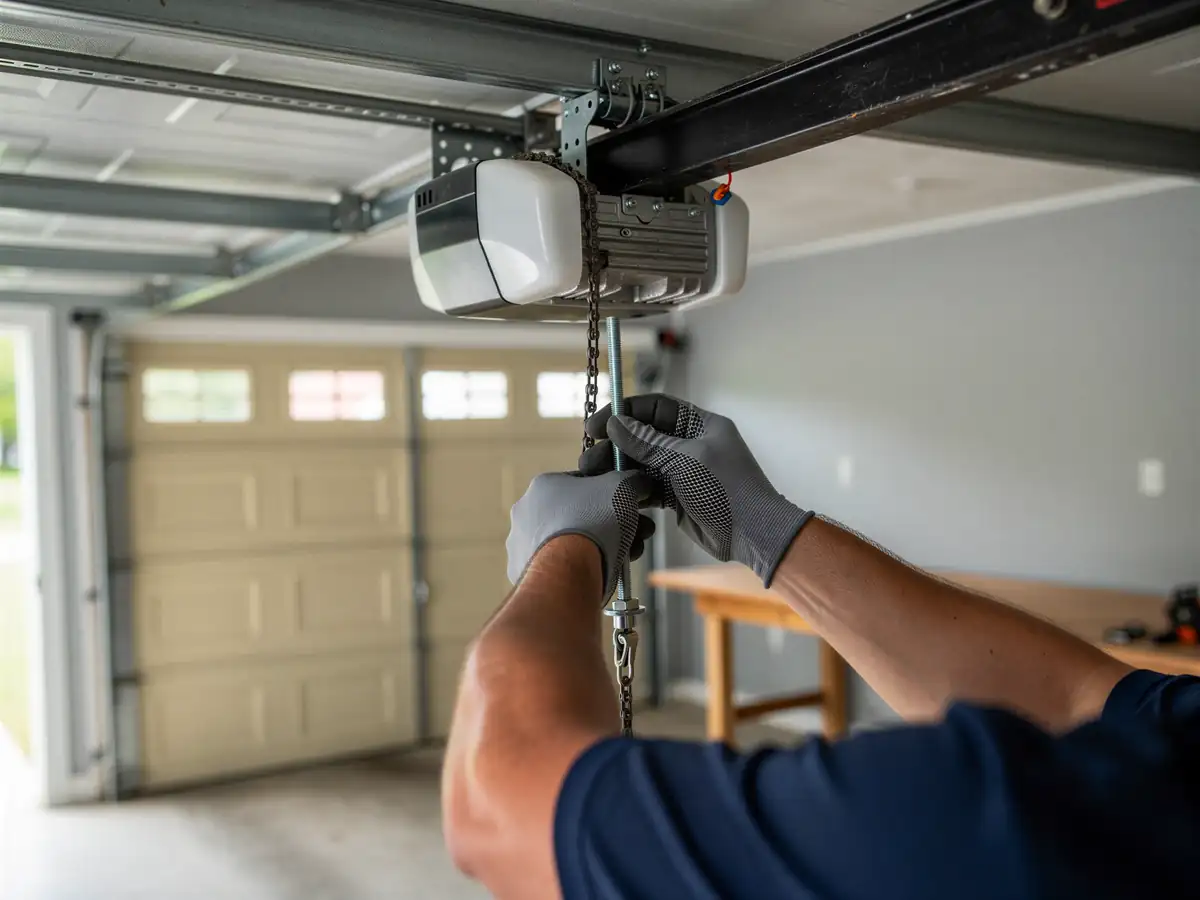
The complaint we hear most from Benson is a door that groans on the way up
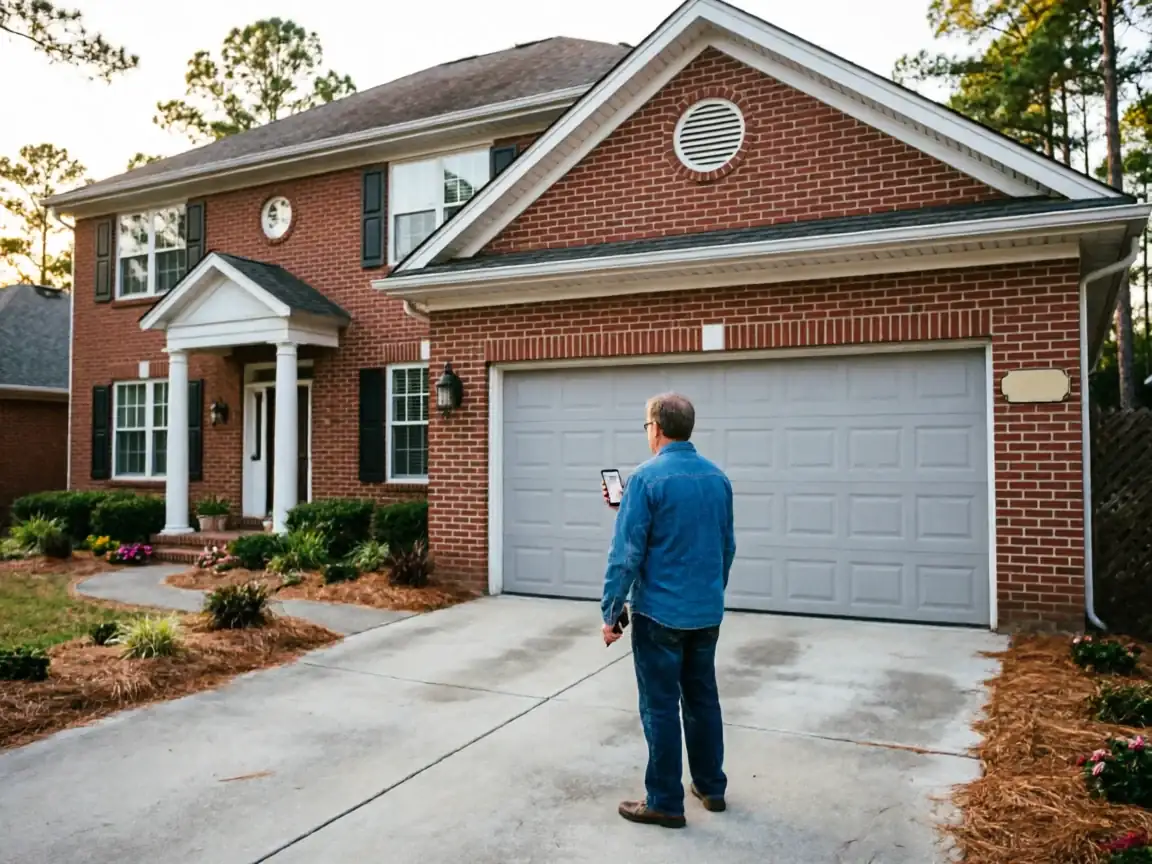
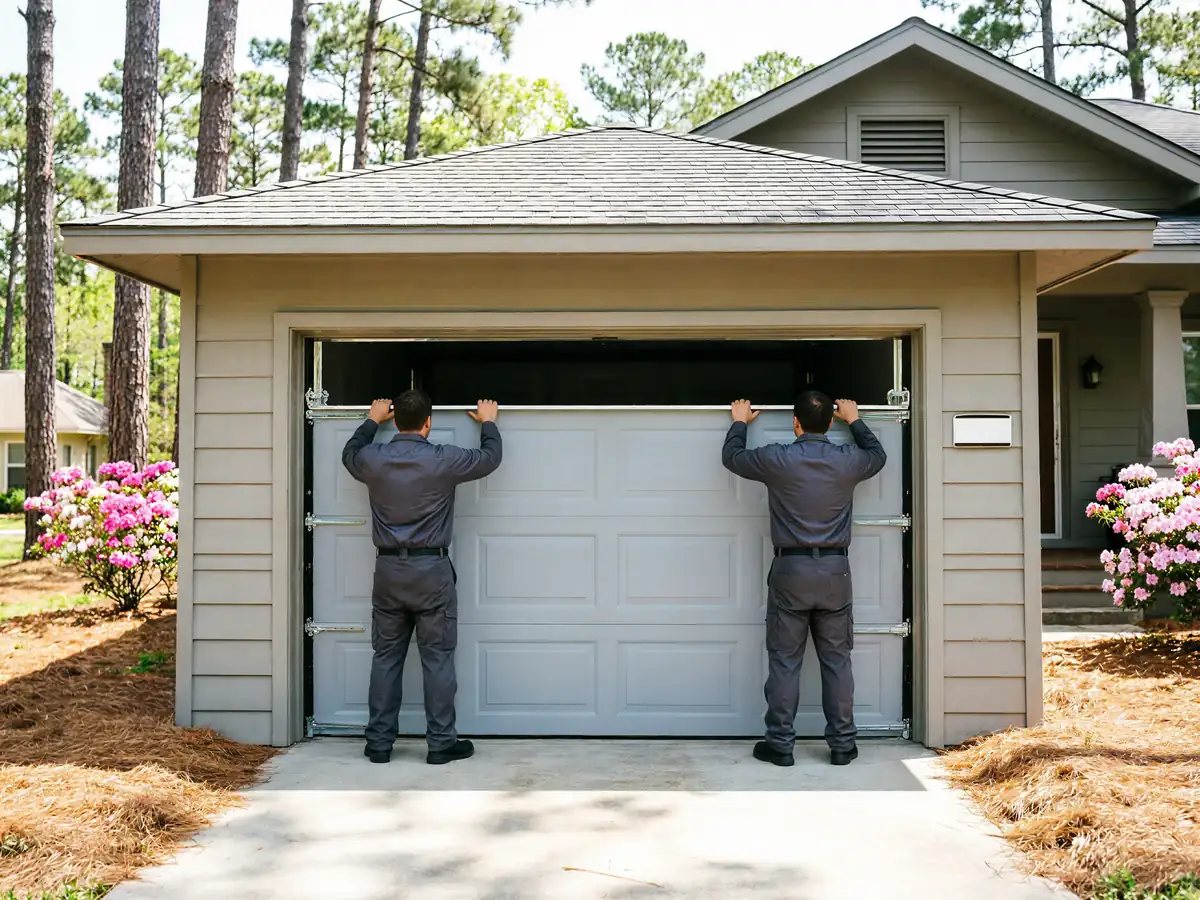
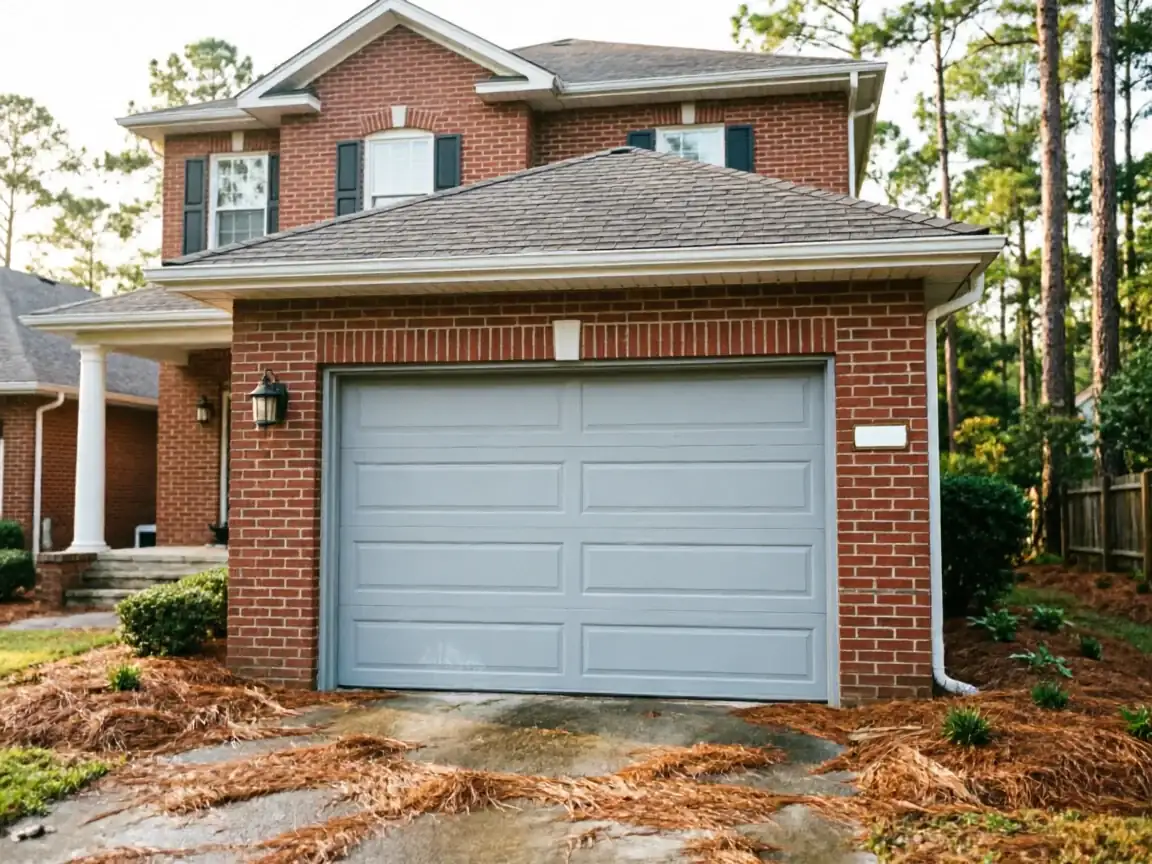
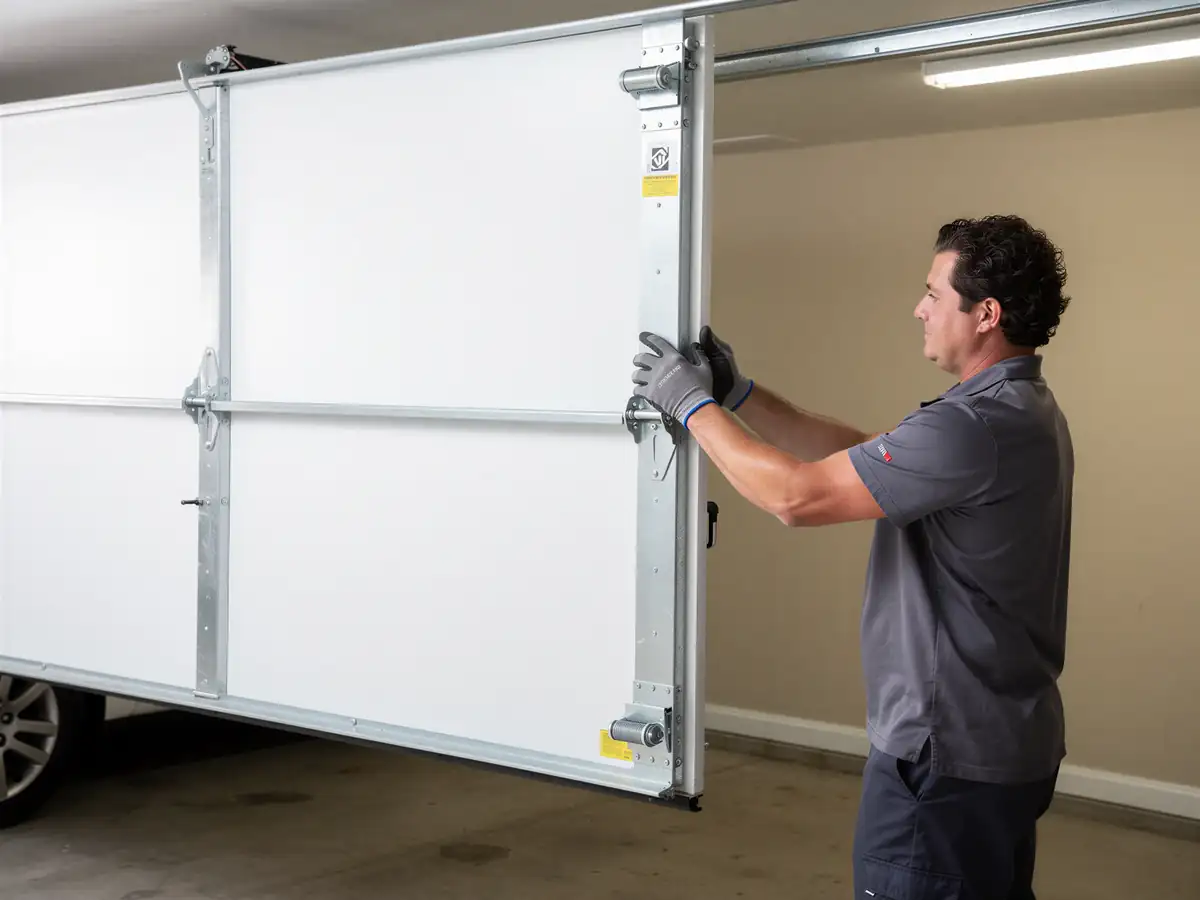
Then lurches the last foot before it seats. That's not random wear - it's the age of the hardware talking. Benson's housing stock centers on 1978, a good decade or more older than a lot of what we service closer to Clayton, and doors from that era were built with extension springs running along the horizontal tracks rather than the torsion setups that became standard later.
Extension springs from the late 1970s don't fail gracefully
They stretch, lose tension unevenly side to side, and the door starts binding in the tracks because one side is pulling harder than the other. You'll notice it first as noise, then as the opener straining and tripping its own safety reversal, then - if nobody looks at it - as a cable jumping its drum. None of this is dramatic until it is. A door that's been complaining for months can come off one side of the track in an afternoon.
Why This Fails Locally
Two things stack against Benson doors that don't stack the same way everywhere in the service area. First is the age: a door installed when the house was built in 1978 is pushing 45+ years old if nobody's ever replaced the springs, and steel fatigue in a spring doesn't announce itself with a warning light. Second is the climate band this whole area sits in - cold-moderate, with real swings between summer humidity and winter cold snaps. That swing works on lubricant and on the galvanized coating on older cable, drying one and pitting the other faster than a mild, stable climate would.
Put those two together and you get a specific failure pattern: stiff, dry rollers in winter that chew up the track edges, paired with springs that were never rated for this many open-close cycles in the first place. We're not guessing at this from a brochure - it's what shows up on the truck when we're out this way. The fix isn't exotic, but it has to match what's actually installed, not what's standard on a door built ten years later.
What Is on the Truck
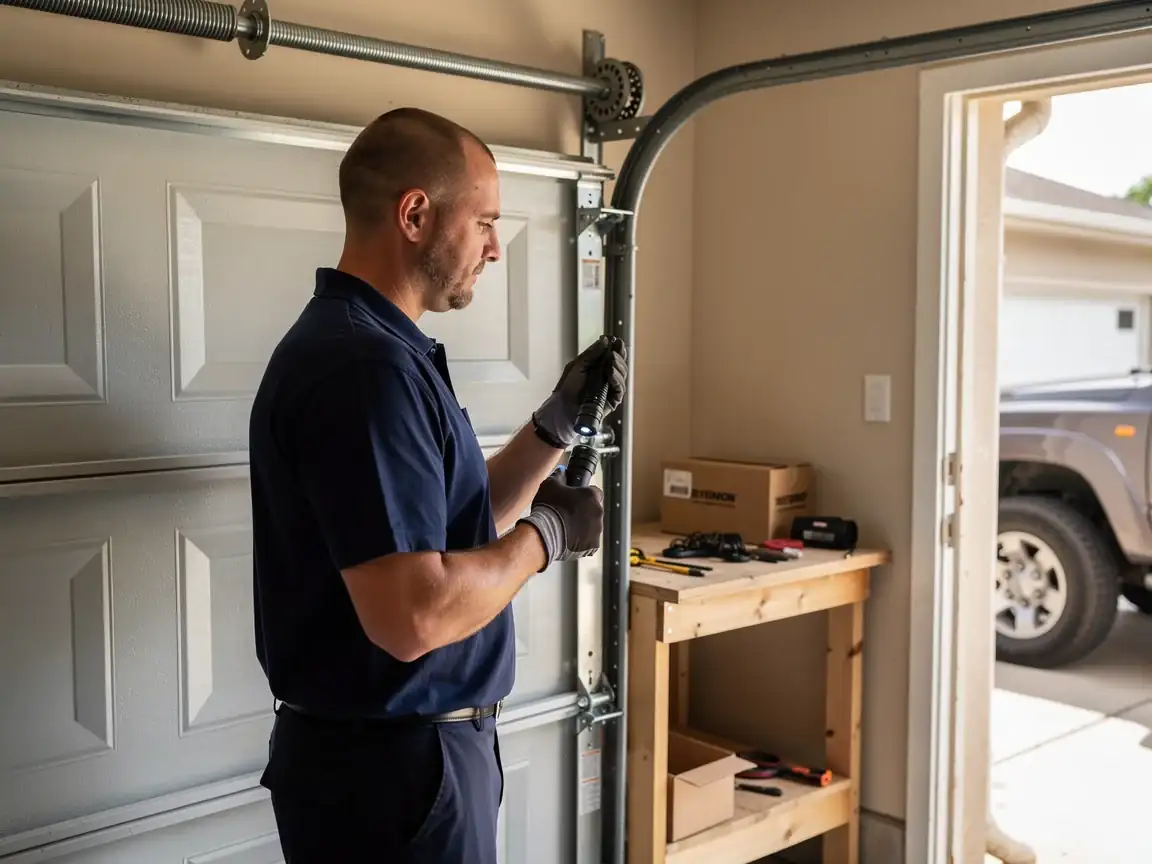
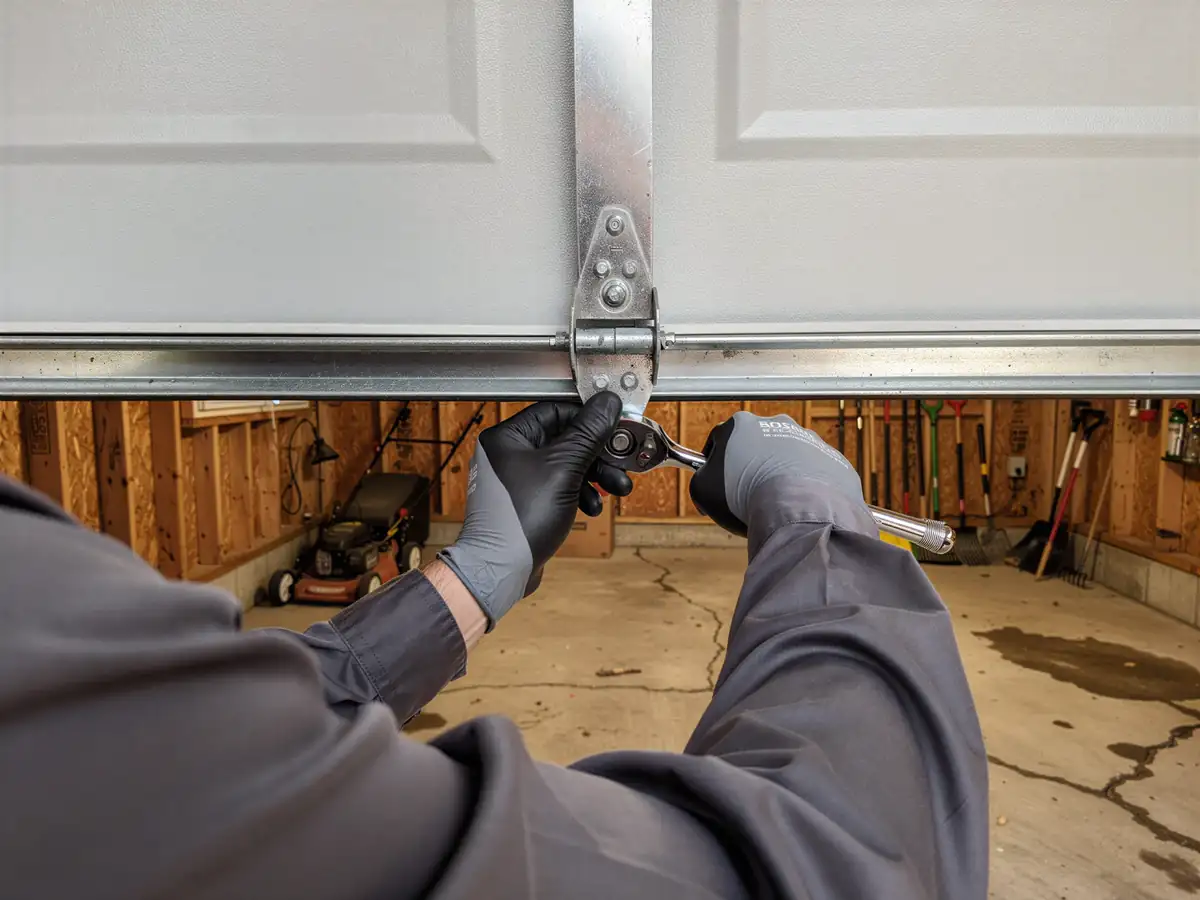
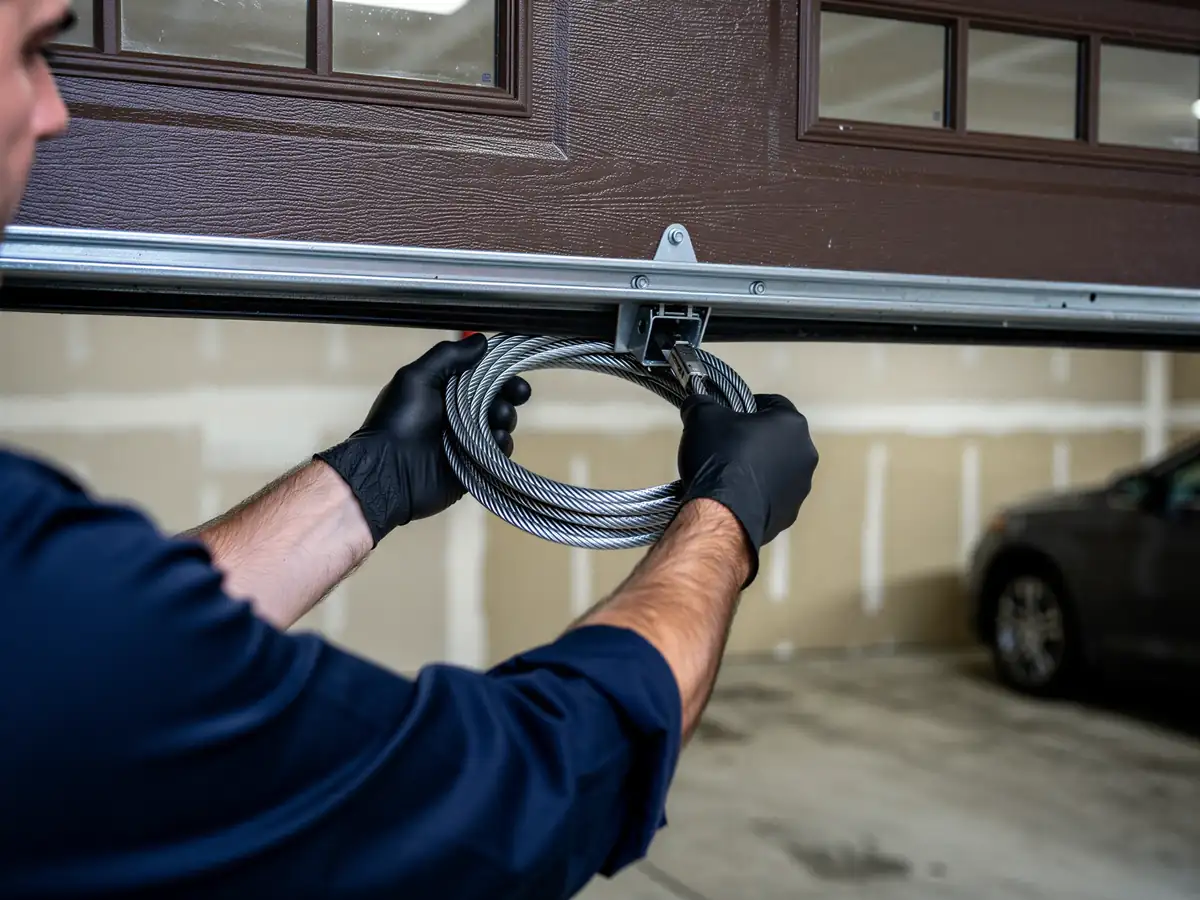
Because Benson skews older than a lot of what we see closer in, the truck carries extension spring sets and the safety cables that should have shipped with them in 1978 but often didn't. Older installs without containment cables are one of the more common gaps we find on a maintenance visit here - if a spring lets go, there's nothing stopping it from snapping across the garage.
We also carry track rollers in a couple of sizes, since late-70s doors sometimes used hardware that's not an exact match for what a big-box store sells today, lubricant rated for the swing between summer humidity and winter cold this area gets, and cable to re-terminate a drum before it frays through. What we don't carry, and won't pretend to, is a replacement panel that matches a 45-year-old door's exact profile - if a panel's dented or rusted through, that's a conversation about partial or full replacement, not a maintenance fix.
Can You Do This Yourself
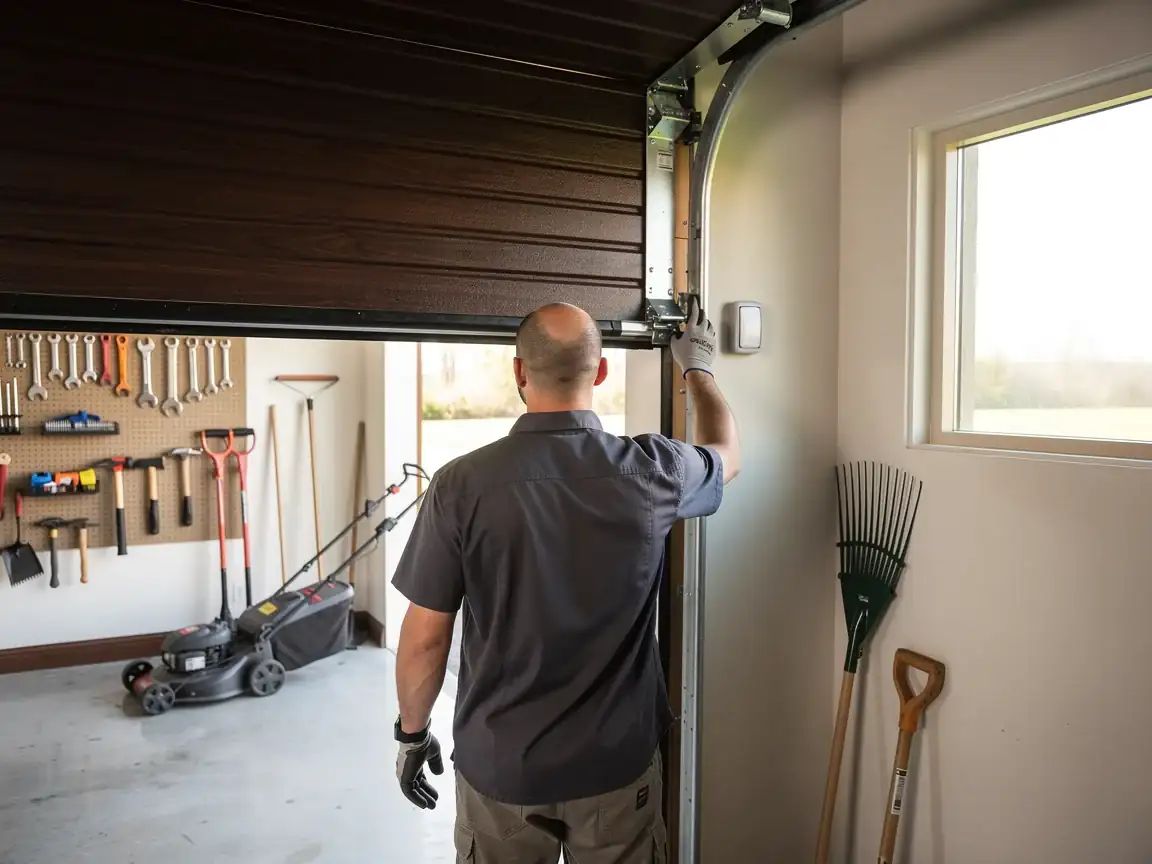
Lubricating hinges and rollers, vacuuming out the tracks
And checking that the auto-reverse still trips when it hits resistance - all of that is reasonable to do yourself, and it's worth doing every few months regardless of who installed the door. Tightening the bolts on the wall brackets is fine too, as long as you're not forcing anything that's already stripped.
What we'd steer you away from on a house this age is touching the spring system
Extension springs under tension, especially older ones without a containment cable, are the single most common source of serious garage injuries, and a 45-year-old spring doesn't give you much warning before it lets go. If the door's noisy, slow, or pulling to one side, that's a call-us job, not a Saturday project.
The Cost of This Job
We don't have a published price list for Benson specifically, and we're not going to make one up here. What we can tell you is what drives the number: whether it's a standard maintenance visit (lube, adjustment, inspection) or a visit that turns up a spring or cable that needs replacing once we're already out there. Houses built around 1978 more often need the second kind, simply because the original hardware has had more decades to wear out.
Benson is about 20 miles from our Clayton base, which is worth knowing up front since travel is a real part of the job out this far - it's not the same as a call around the corner. We'll always tell you what we're seeing and what it'll run before we start any work, and if a repair doesn't make sense against a full spring and cable replacement, we'll say so instead of nickel-and-diming a door that needs the bigger fix.