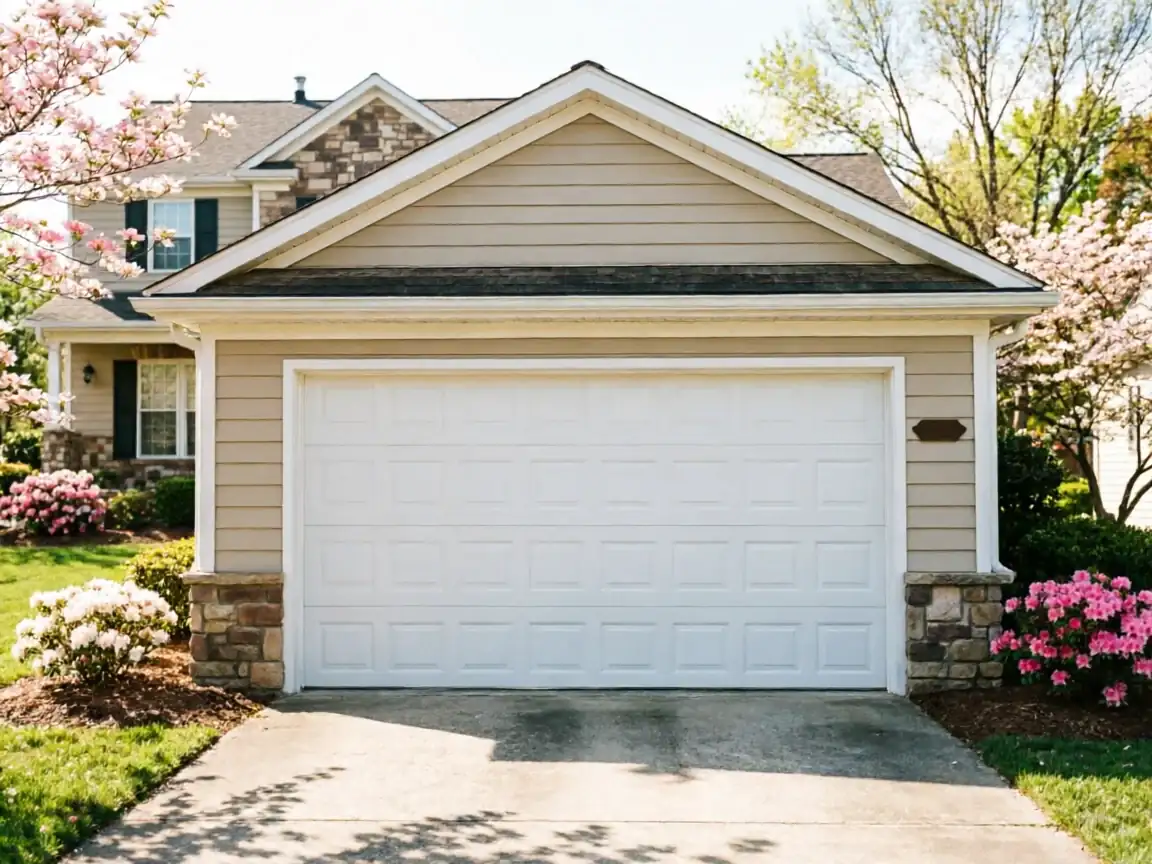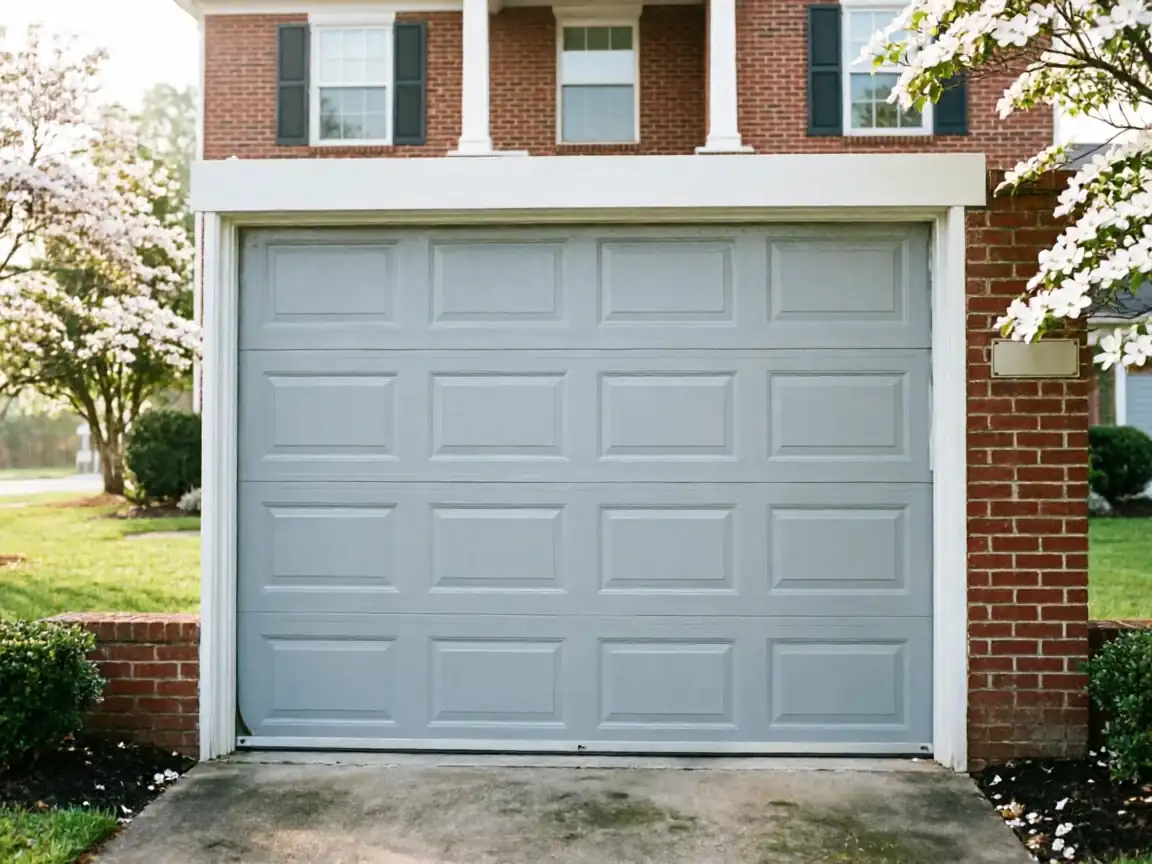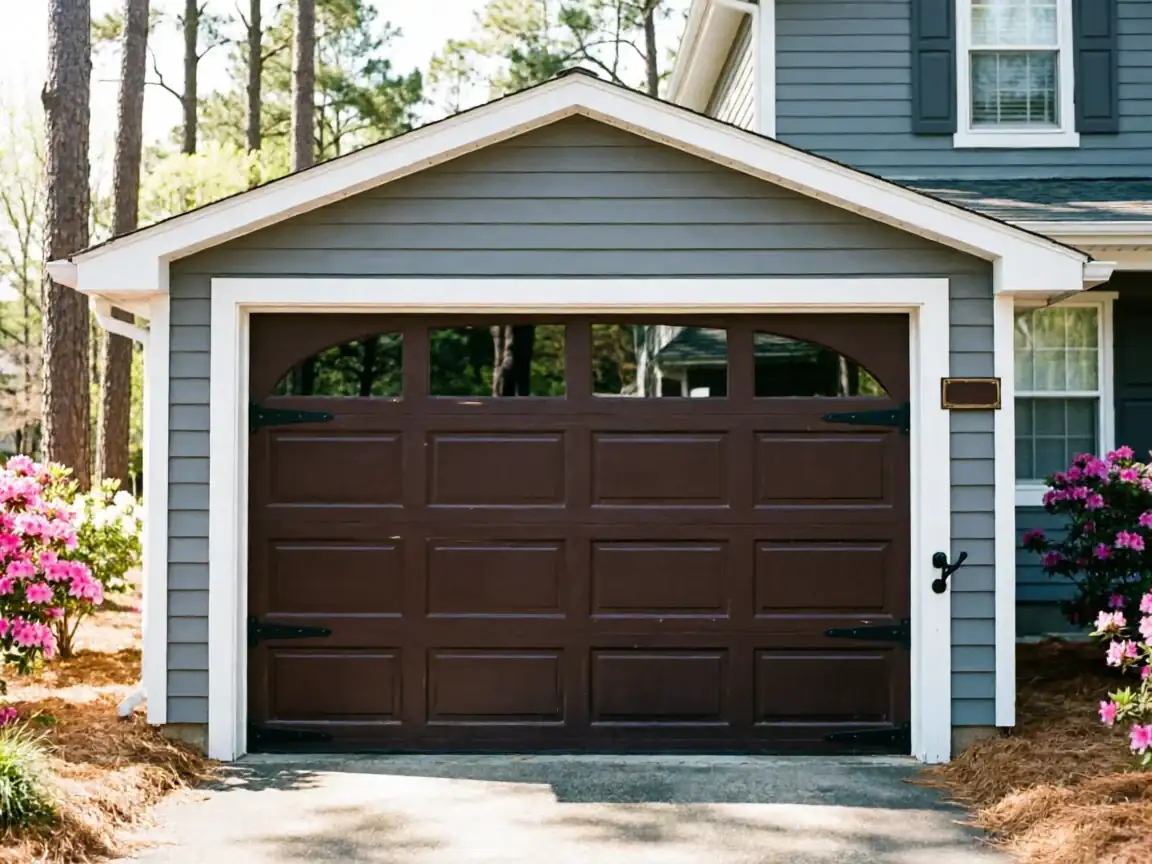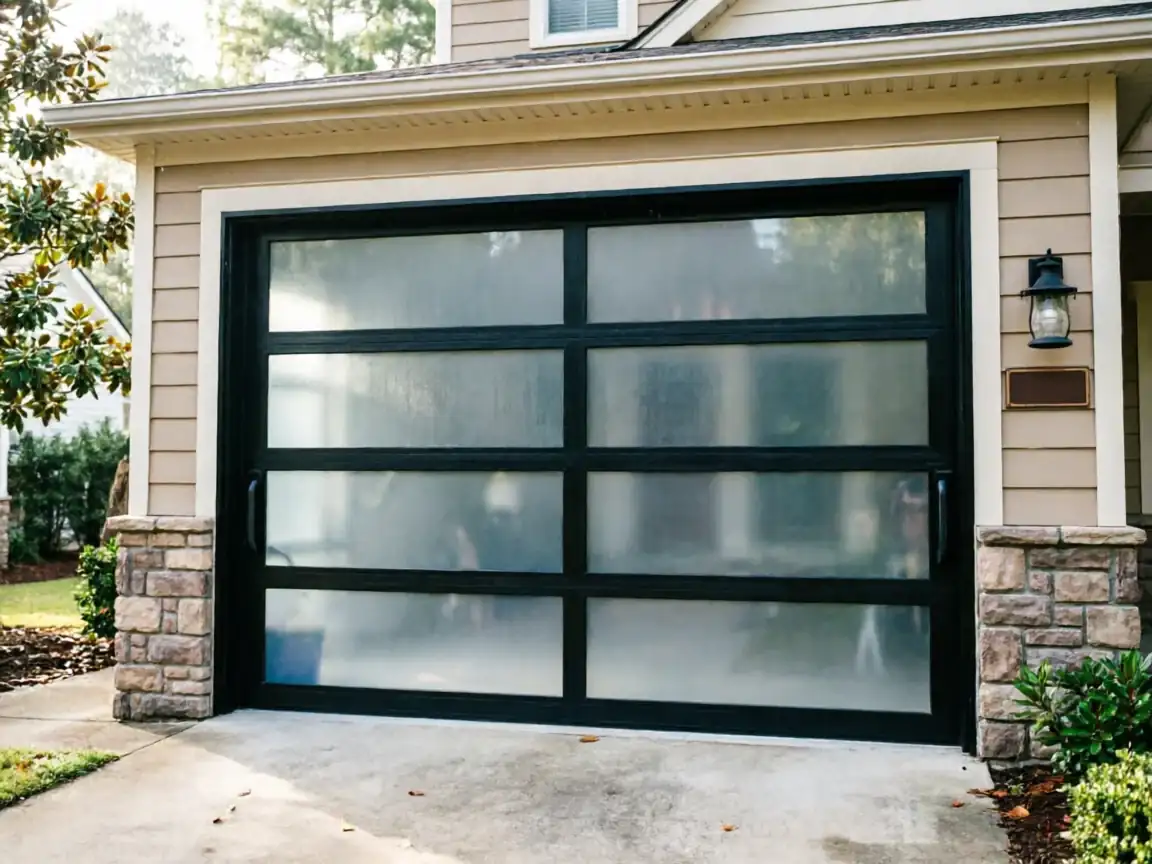
What You Are Seeing
Benson's median home was built around 1978
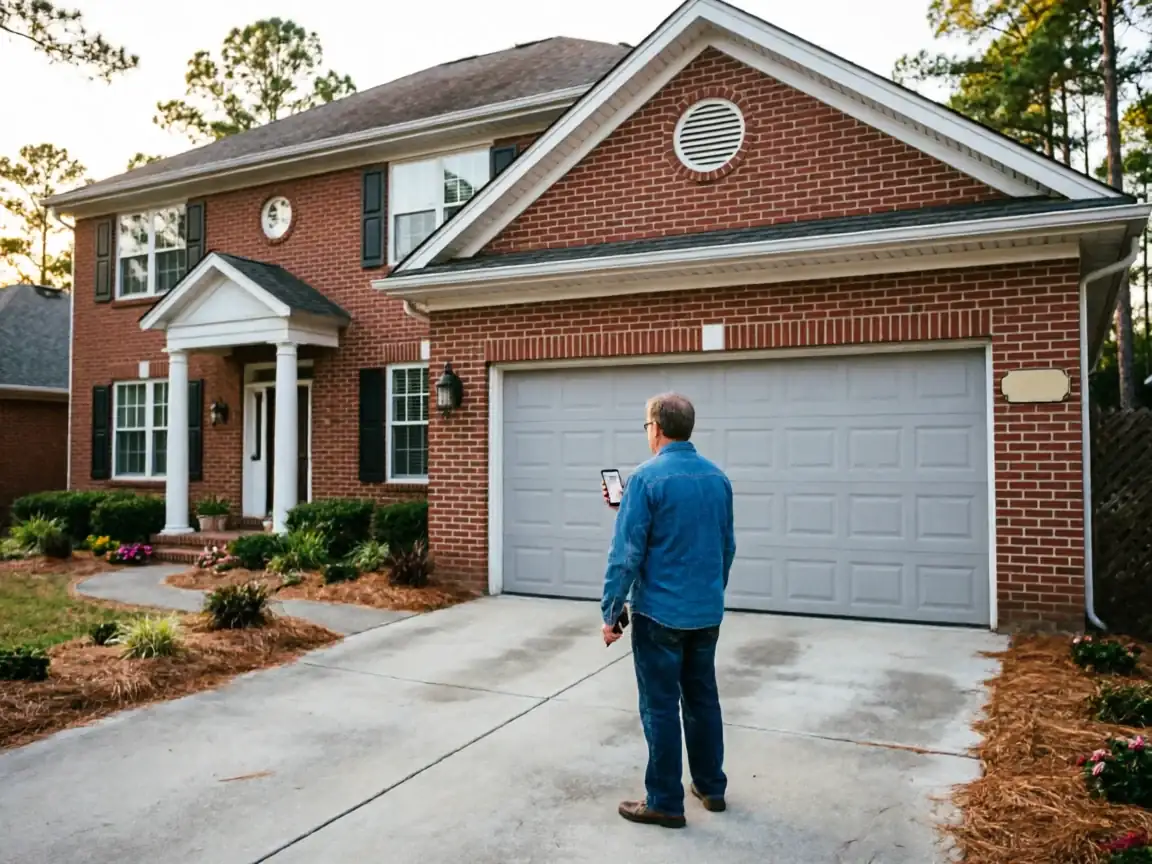
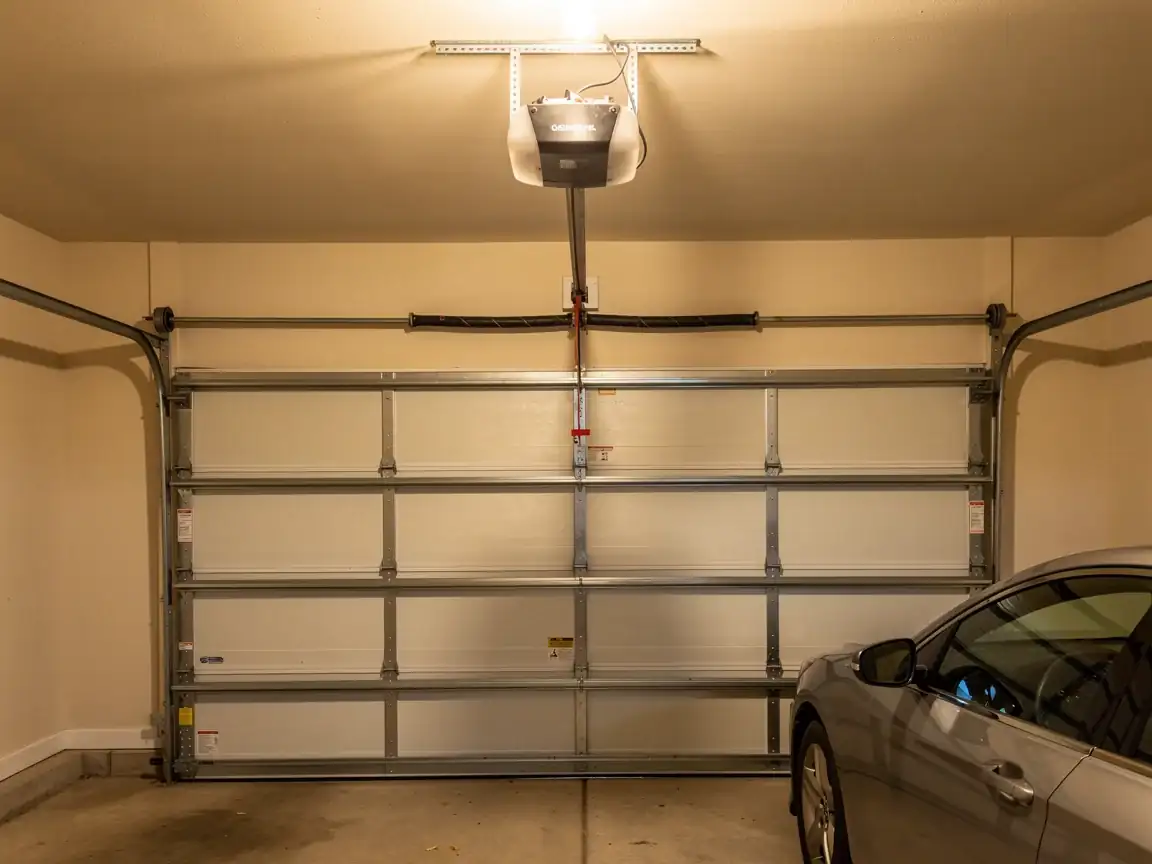
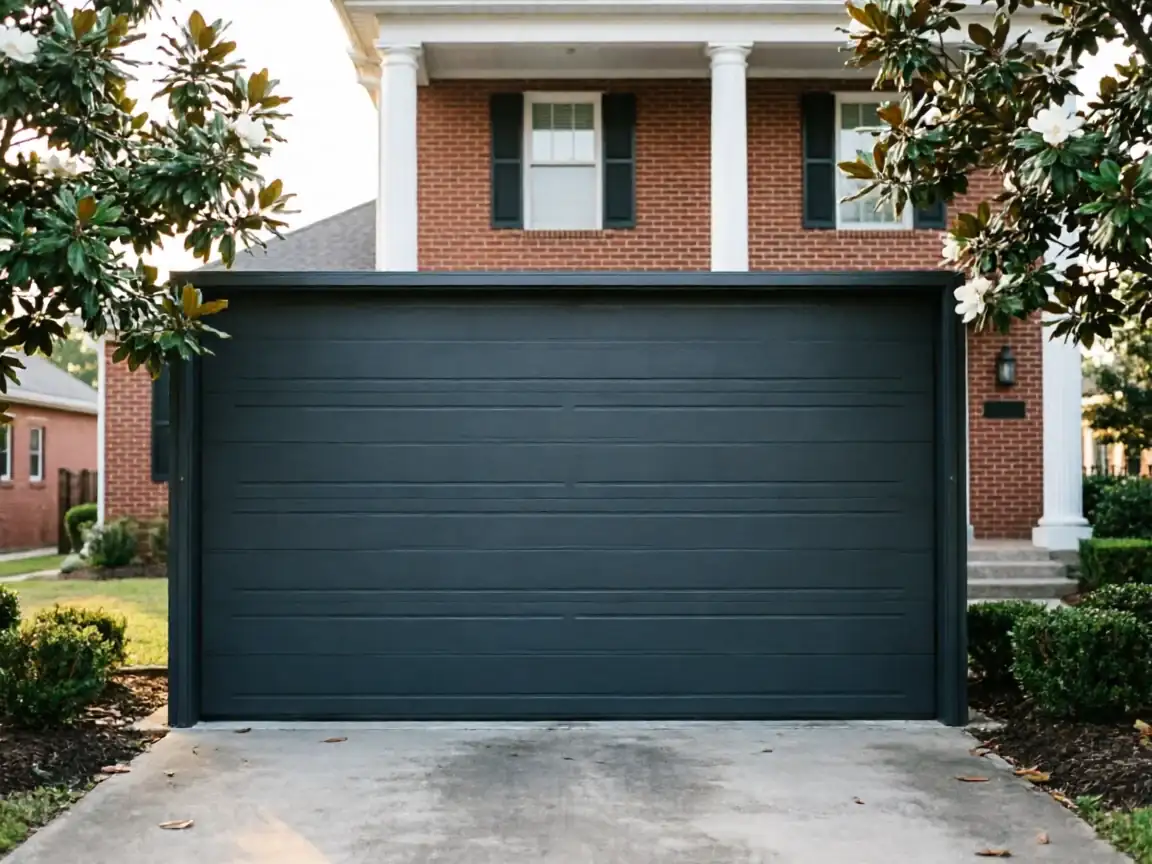
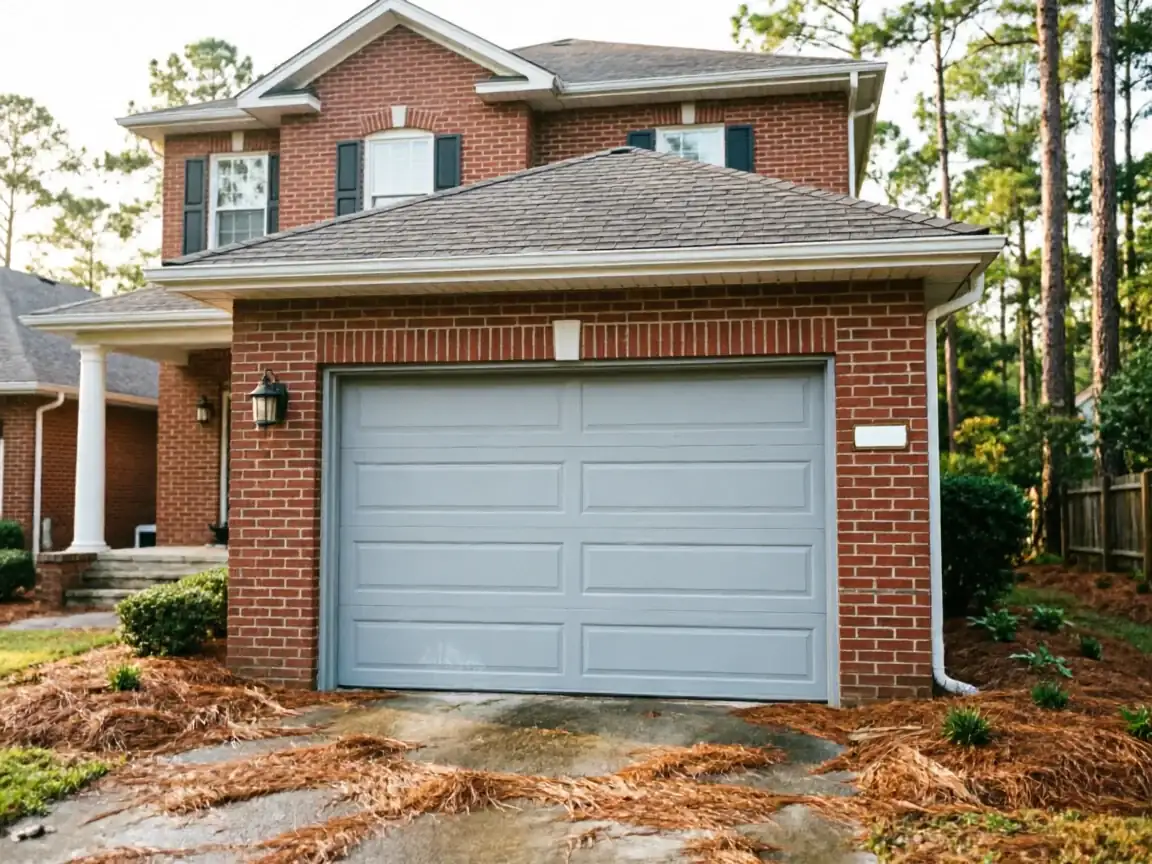
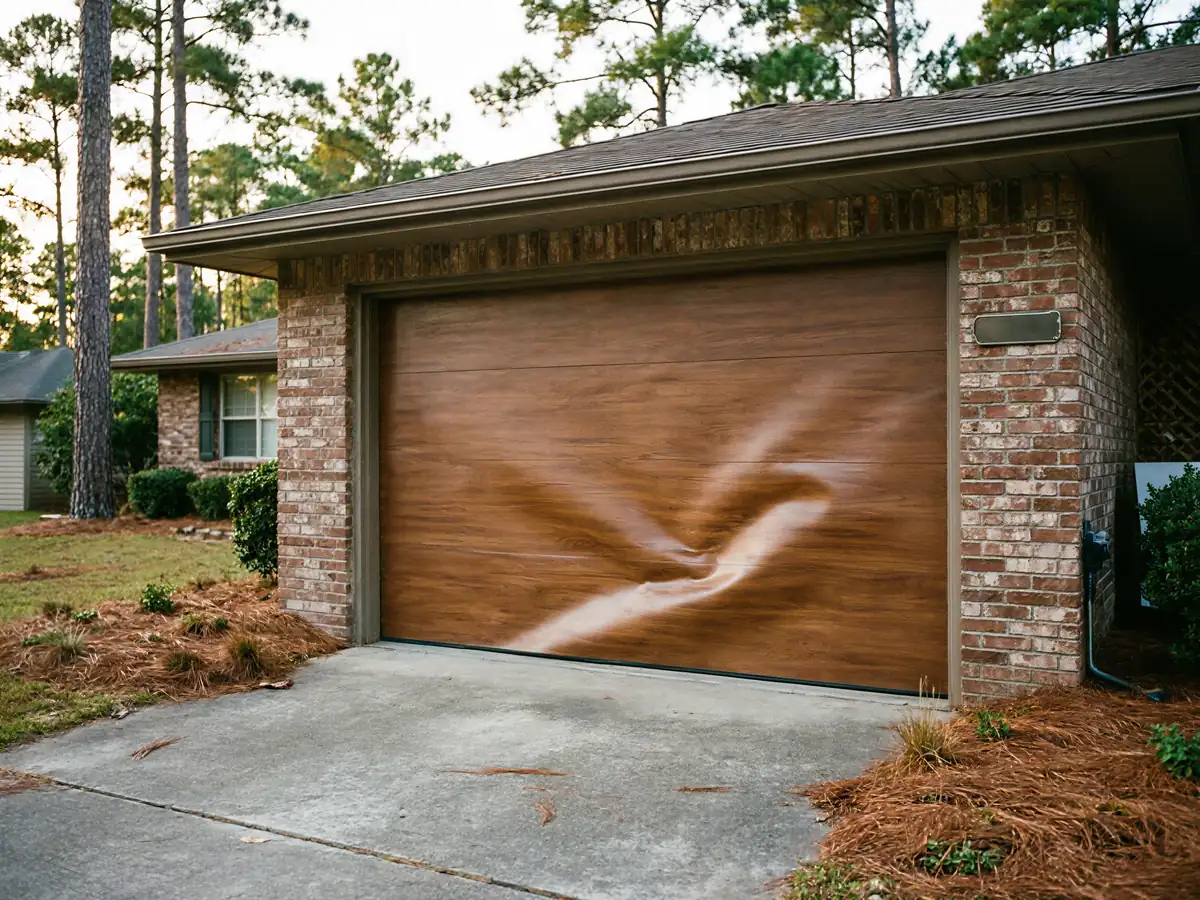
Which puts most garage doors here in the first wave of mass-produced steel sectional doors - plain flat or lightly ribbed panels, no foam core, single layer of 24 or 25 gauge steel over a wood or light steel frame. These were sized for the cars of the day, usually a single 9x7 or a double at 16x7, nothing wider. The steel on a door that age has had over forty years of expansion and contraction, and it shows up as a dent that won't pop back, a seam that's started to separate, or a panel that's rusted through at the bottom where water sits against the slab. On a street of houses built the same year, you'll often see the same door fail in the same spot, because it's the same door.
This isn't a cosmetic problem you can live with indefinitely
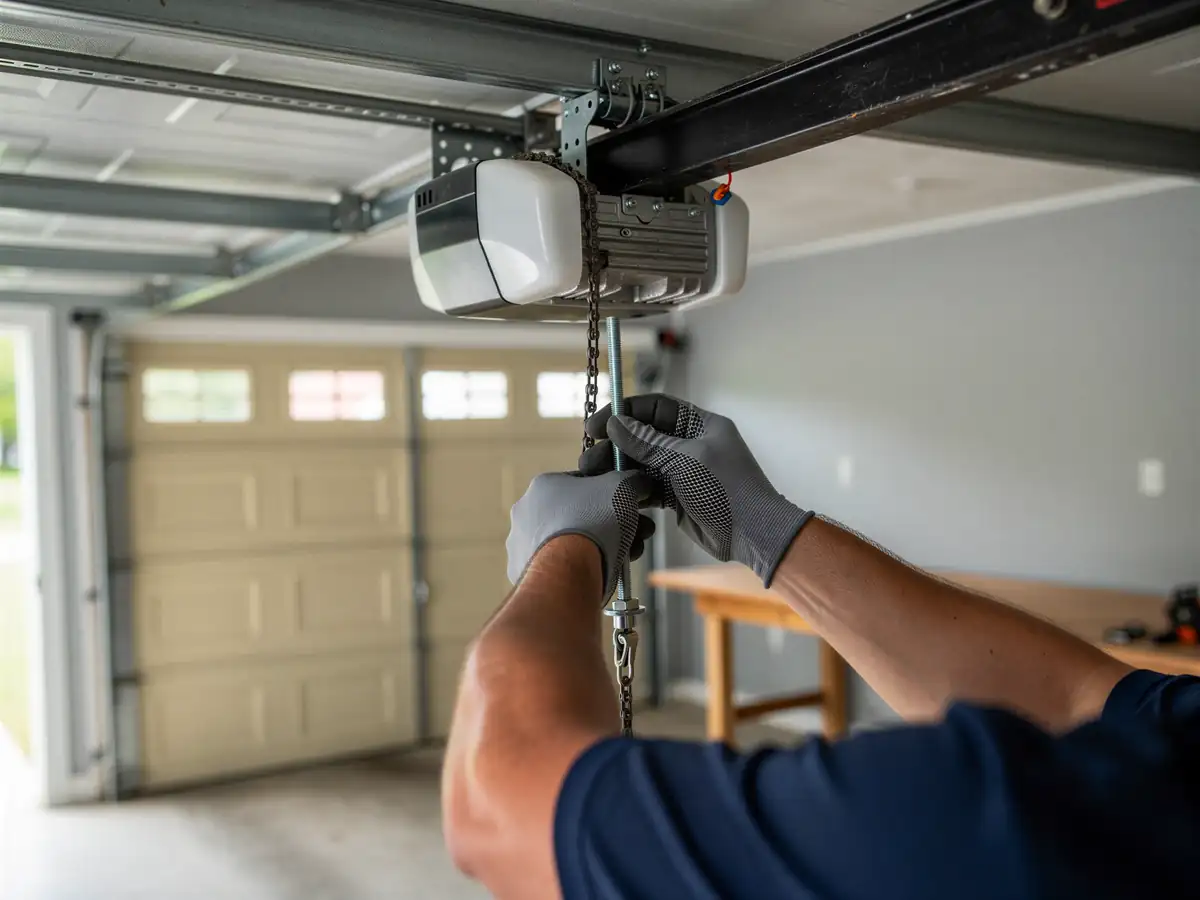
A caved panel changes how the door tracks in the rollers, and a double door missing structural integrity on one panel puts more load on the opener and the spring than they were built to carry.
Why This Fails Locally
Clayton's service area sits in a cold-moderate climate band, and Benson gets the same freeze-thaw cycle every winter - steel contracts in the cold, expands again when it warms, and over four decades that cycling works the seams of a 1978-era panel loose faster than it would on a newer door built with better coatings. Add in the fact that older steel in this area often wasn't galvanized to current standards, and rust starts from the inside of a dent before it ever shows on the painted face.
The other issue is panel availability. A door built in the late 70s or early 80s predates most of the panel profiles still in production, so a single damaged panel on an otherwise sound door often can't be special-ordered to match - the stile spacing and the lock seam don't line up with what's made today. That's not a Benson-specific supply problem, it's an age problem, but Benson's housing stock means you run into it here more often than in neighborhoods built after 2000.
What Is on the Truck
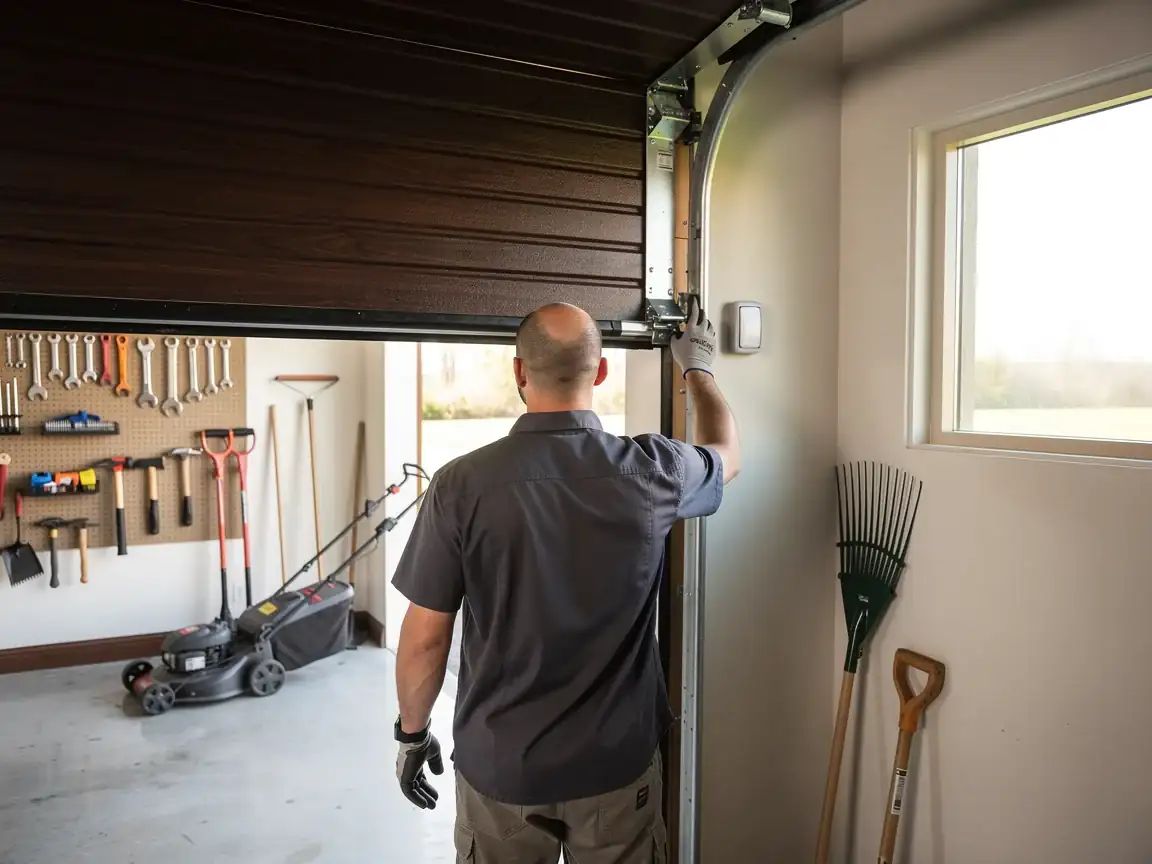
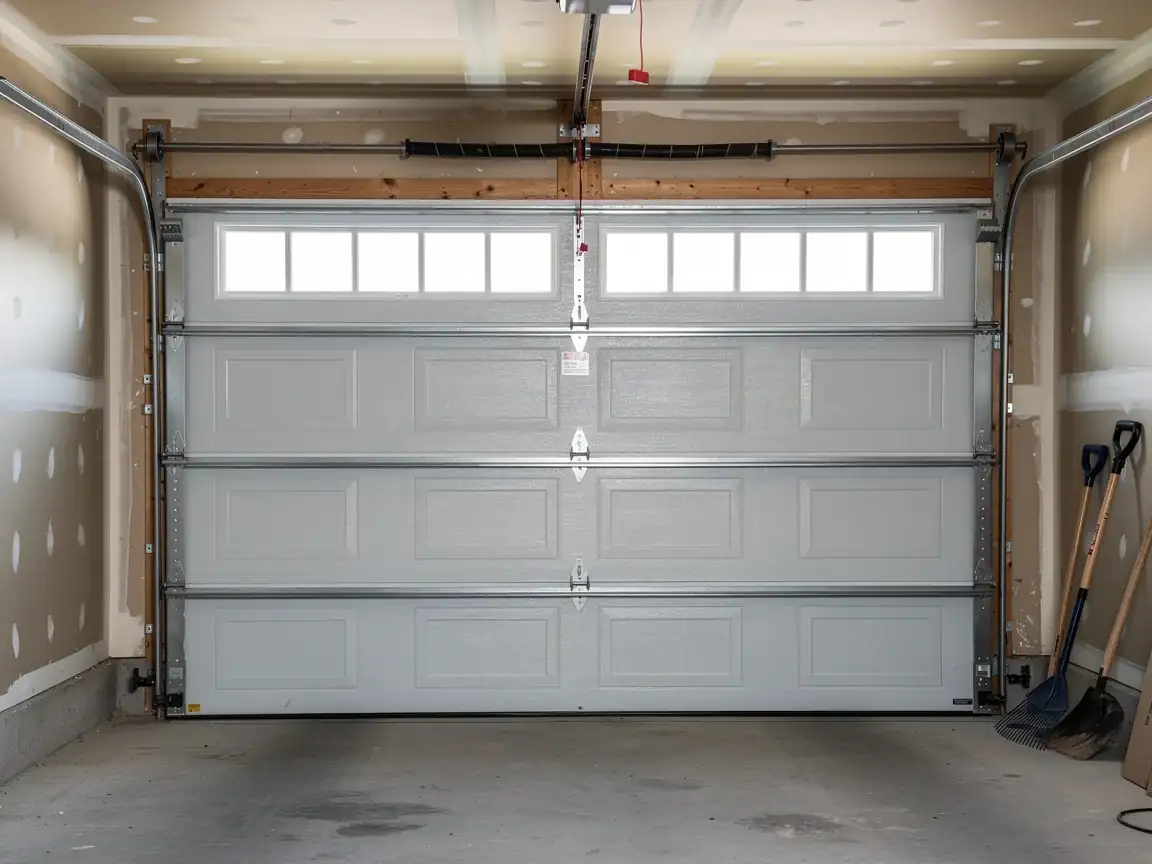
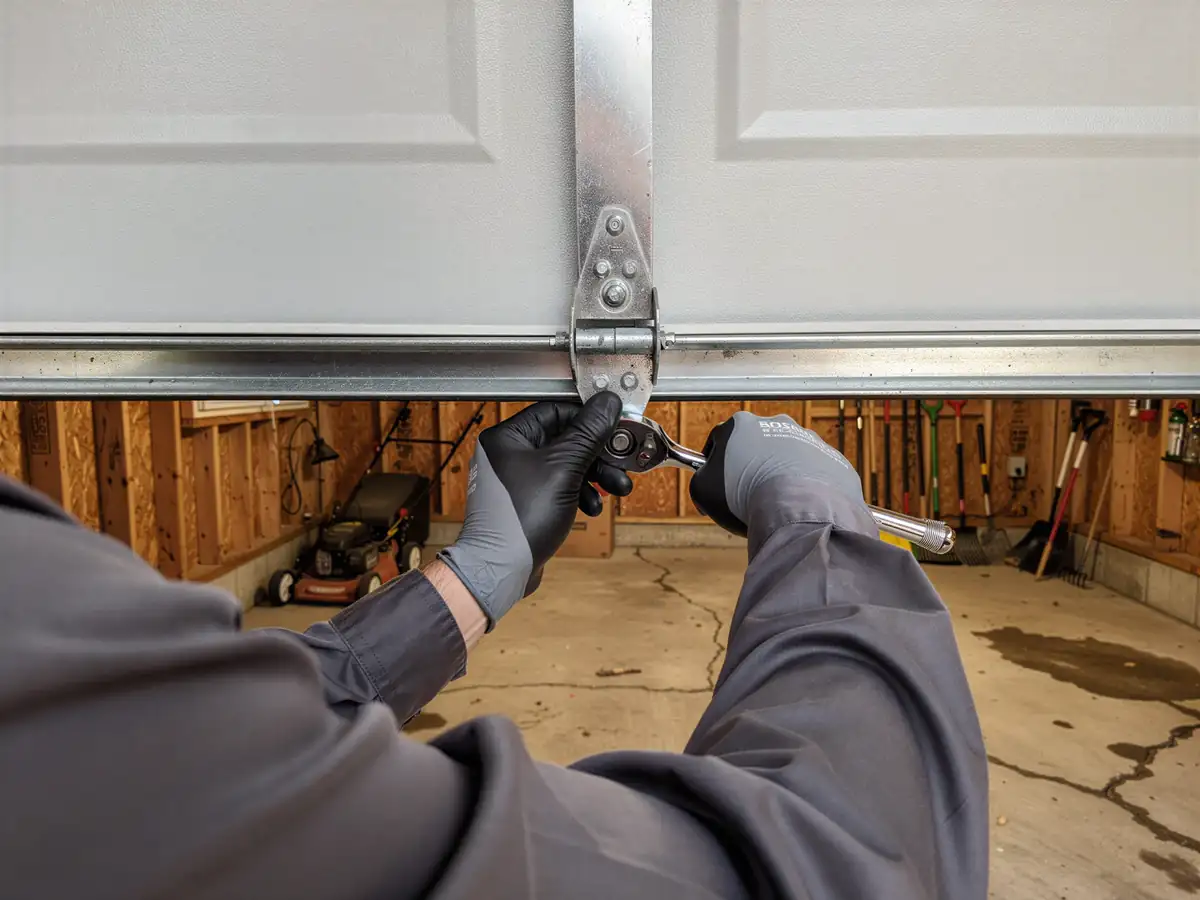
For a panel job on a door this old, the truck needs to carry options, not a single fix. Sometimes a close-enough replacement panel exists and a section swap is the whole job - cut the old panel loose, fit the new one, adjust the hinges and rollers to seat it square. Other times, with household incomes in this area running higher than they did when these doors went in, replacing the full section - or the whole door - ends up being the more sensible call, because a patched 1978 door still has 1978 hardware underneath it.
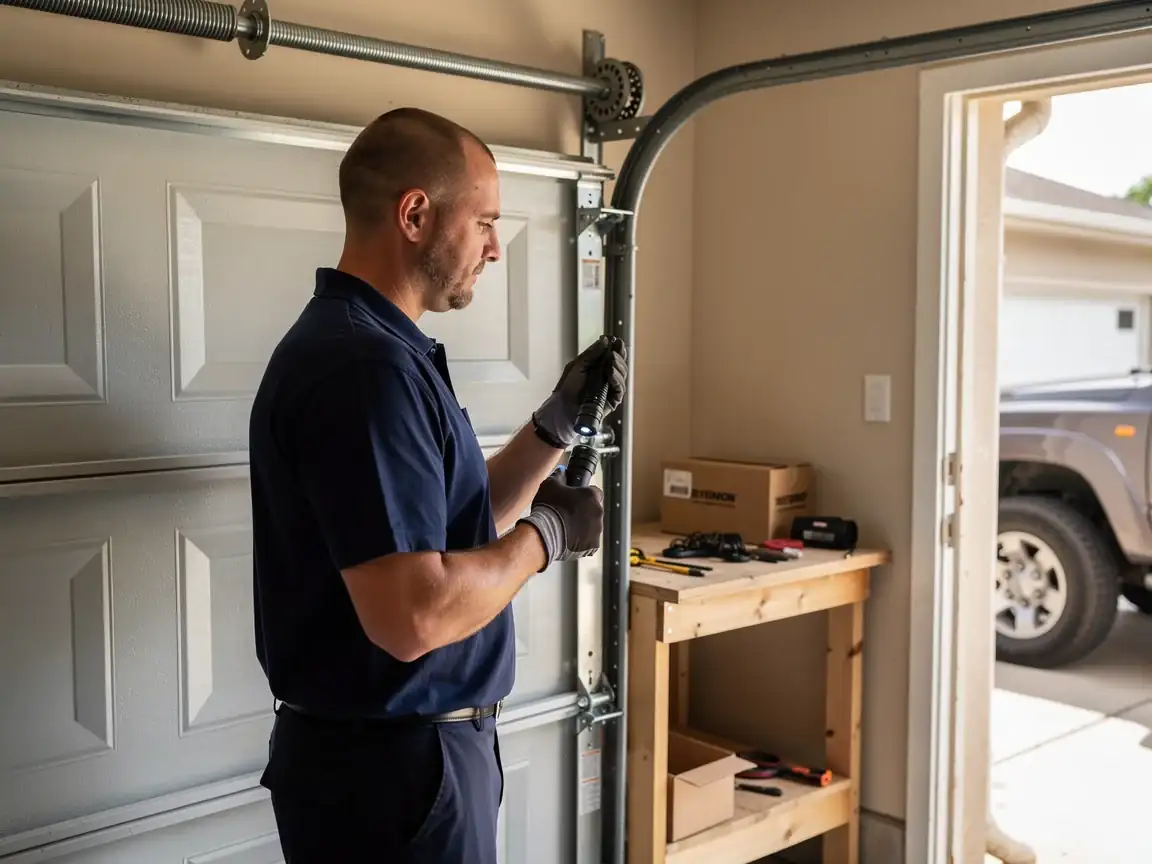
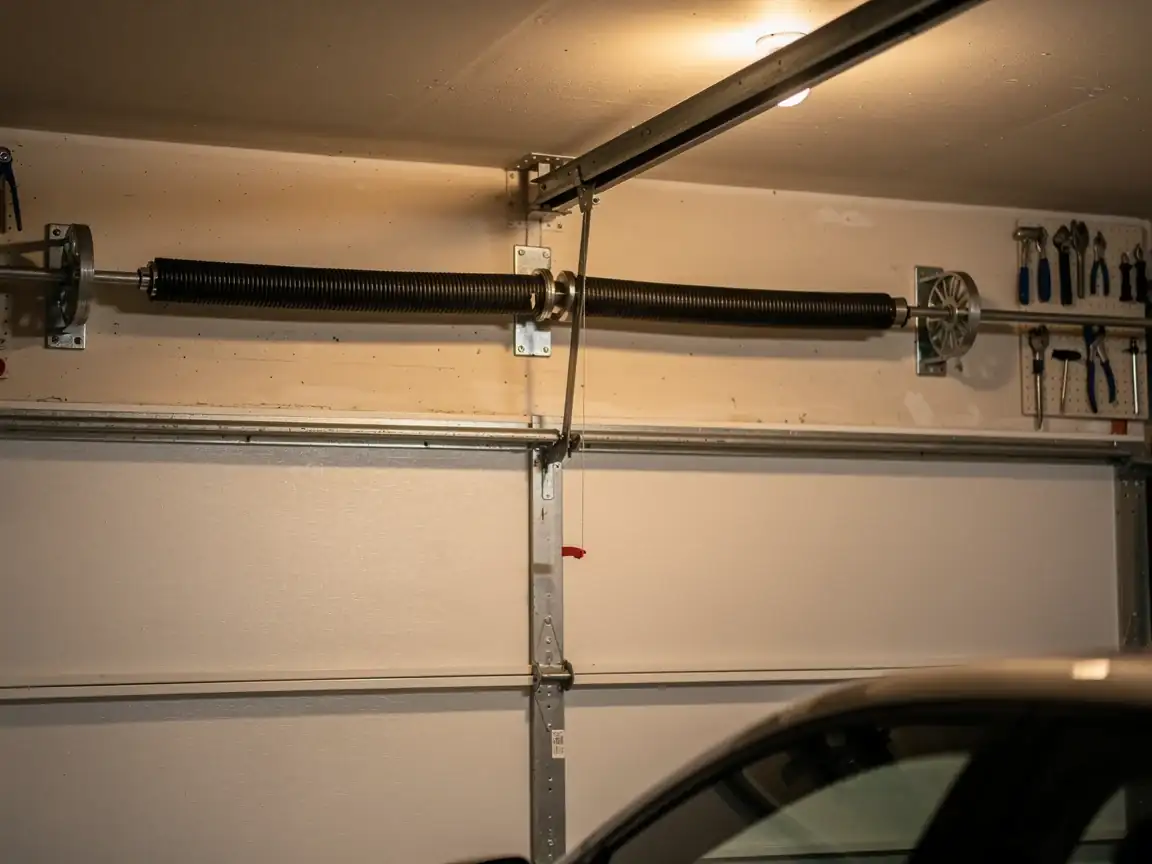
We travel the 20 miles from Clayton with torsion and extension spring stock, standard roller and hinge sets, and the tools to true up a track that's been pulled out of alignment by a bowed panel. What we don't carry is a factory-exact match for a discontinued 1970s panel profile - if the manufacturer stopped making it, no truck in the state has it, and the honest answer is a new section rather than a repaired one.
Can You Do This Yourself
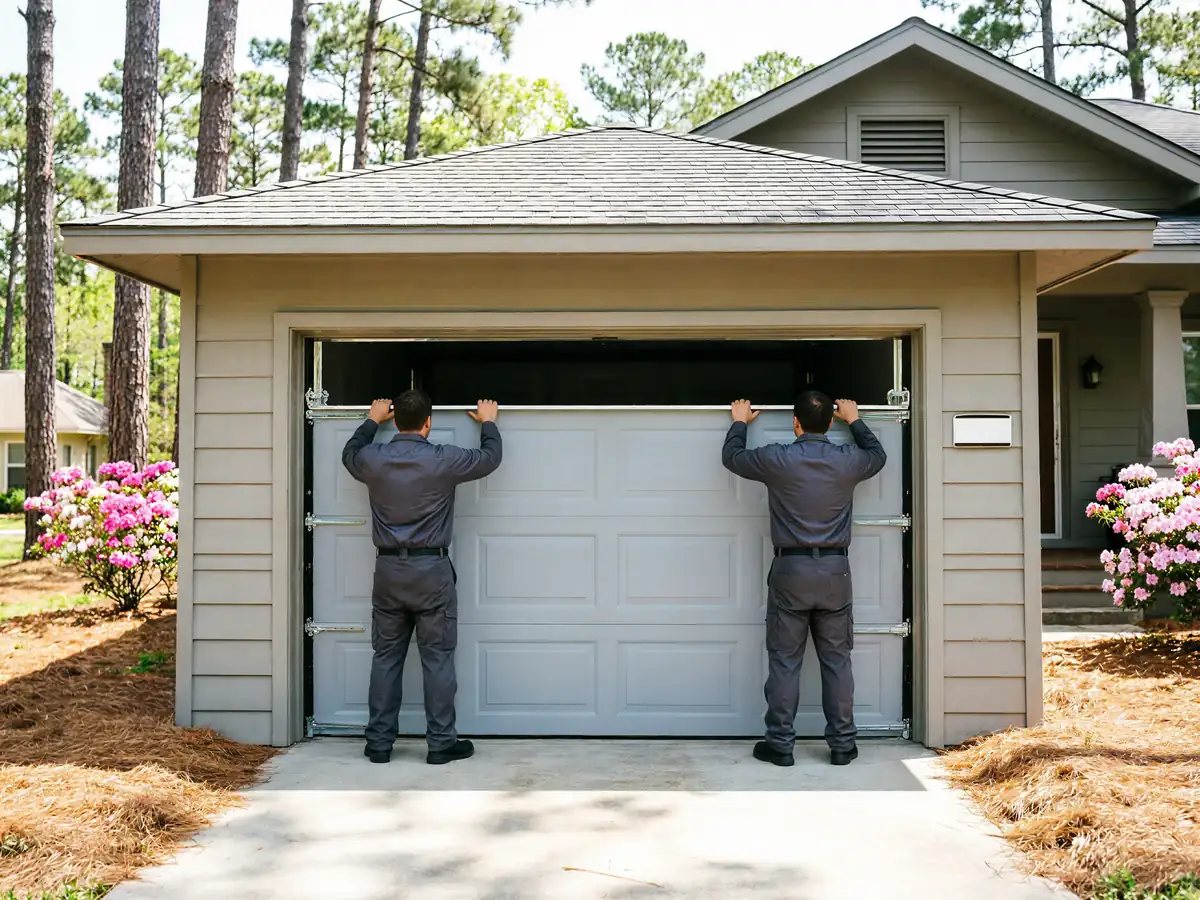
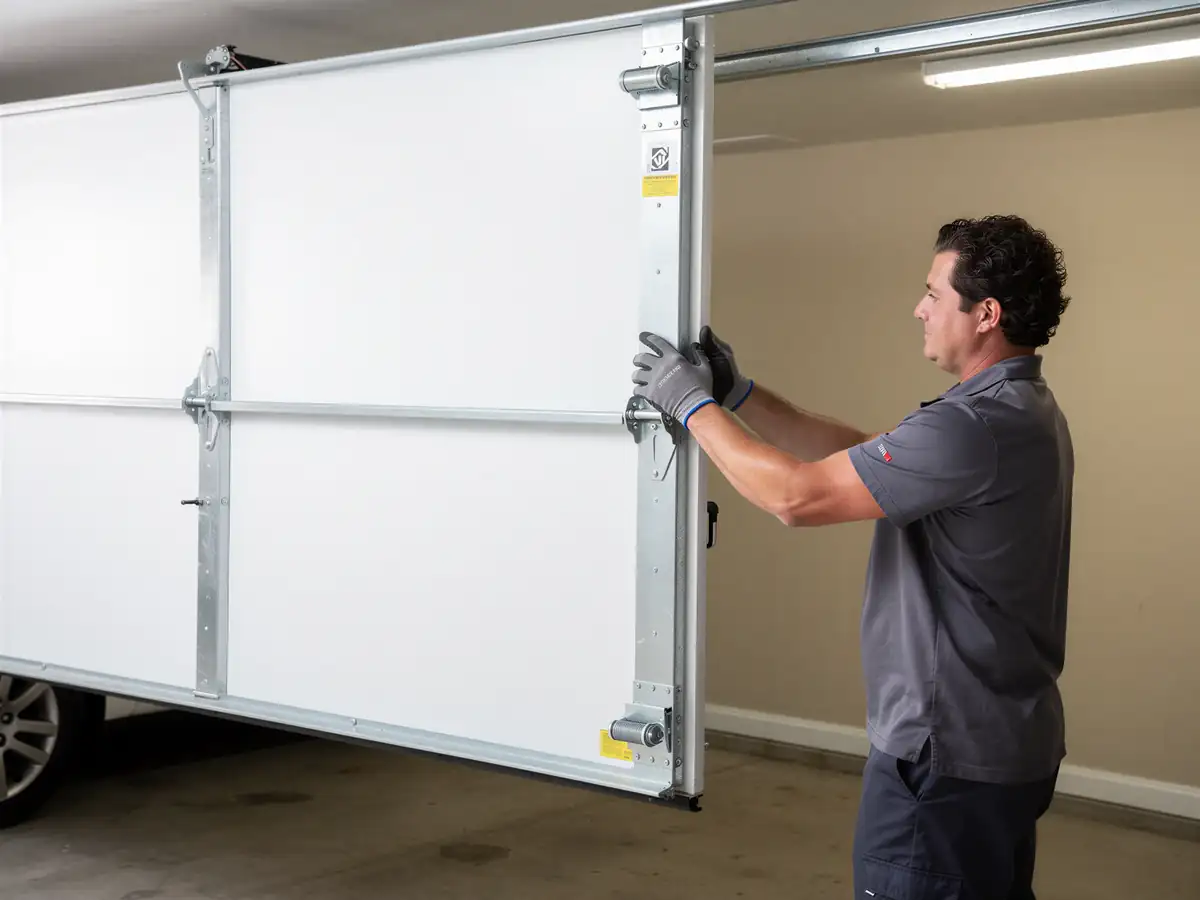
Swapping a single panel on a double steel door looks straightforward until the door is apart
The panels are connected to the track system through the hinges and roller brackets, and on a door this age, the fasteners are often rusted or stripped from four decades of seasonal movement. Pull one panel wrong and you can rack the whole frame, which then won't track true no matter how well the new panel fits.
If the door is a single lightweight panel with no connection to the opener's travel limits
And you're comfortable working with a door under spring tension, a bottom panel swap is within reach for someone handy. Anything involving the top panel, the opener arm, or a double door with a center post is not a weekend project - the risk of a panel or the whole door coming down on you is real, not theoretical.
The Cost of This Job
We don't post a flat price here because panel work on a door this old splits into two very different jobs: a matched-panel swap, which is a few hours of labor and parts, or a full section/door replacement when no match exists - which runs closer to a new door install. With roughly 1,550 households in Benson and incomes a bit above the wider Clayton service area's median, most of what we see here is homeowners choosing to replace rather than patch once they hear there's no panel match - it holds up longer and it's often not far off in total cost once travel and labor are the same either way.
Ask for a firm number when we're on site and can see the panel, the track condition, and whether the hinges and rollers need replacing along with it.