Can You Do This Yourself
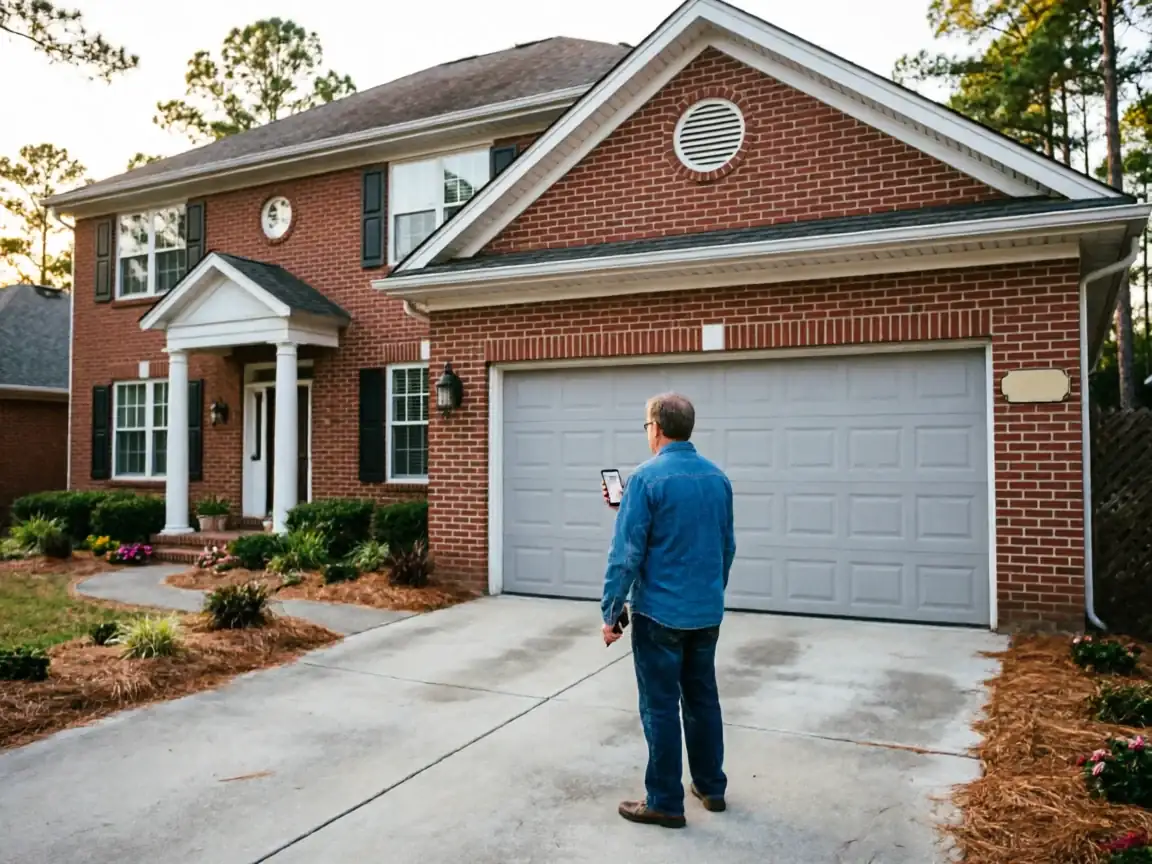
A lot of Selma homeowners try to reset a garage door themselves before calling anyone
And some of that is fine. You can clean and lubricate rollers and tracks. You can check that the photo-eye sensors are aligned and free of dust. You can tighten the bolts on the track brackets if they've worked loose, which happens a lot on doors that have been in service since the 1960s and 70s.
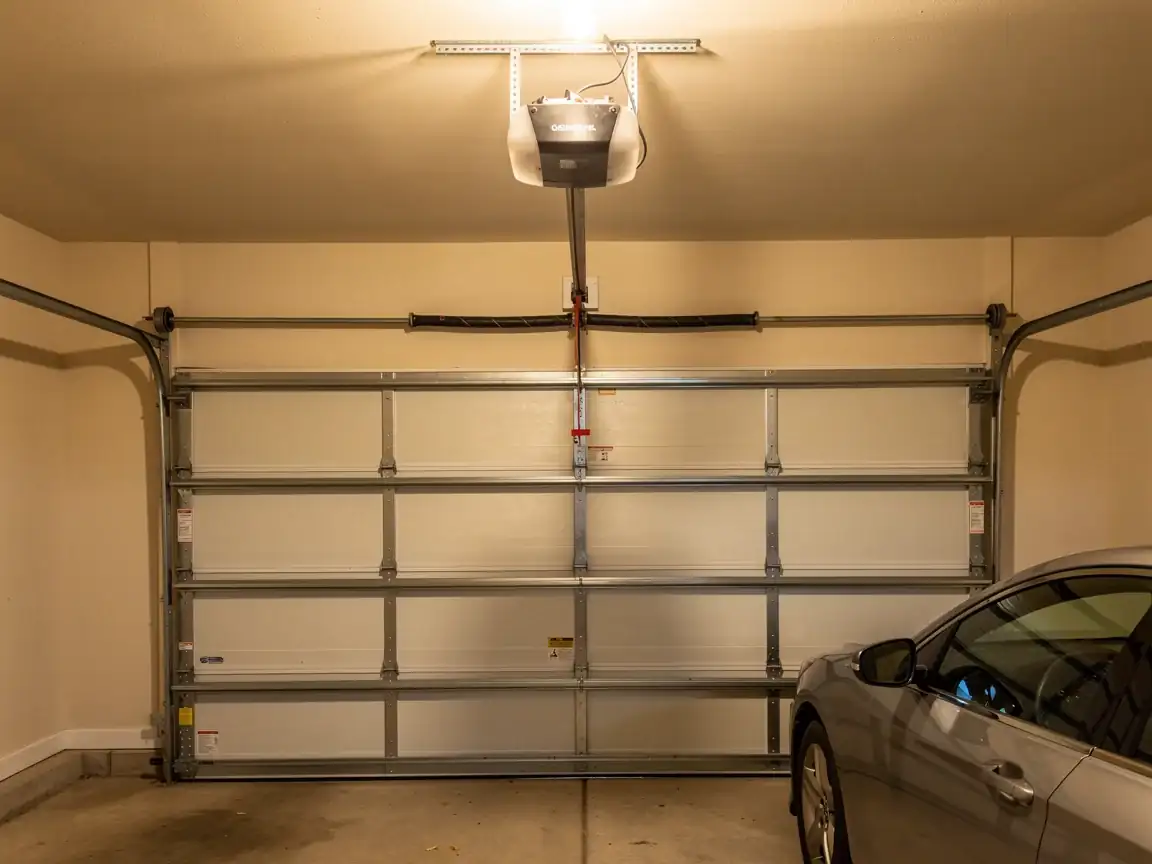
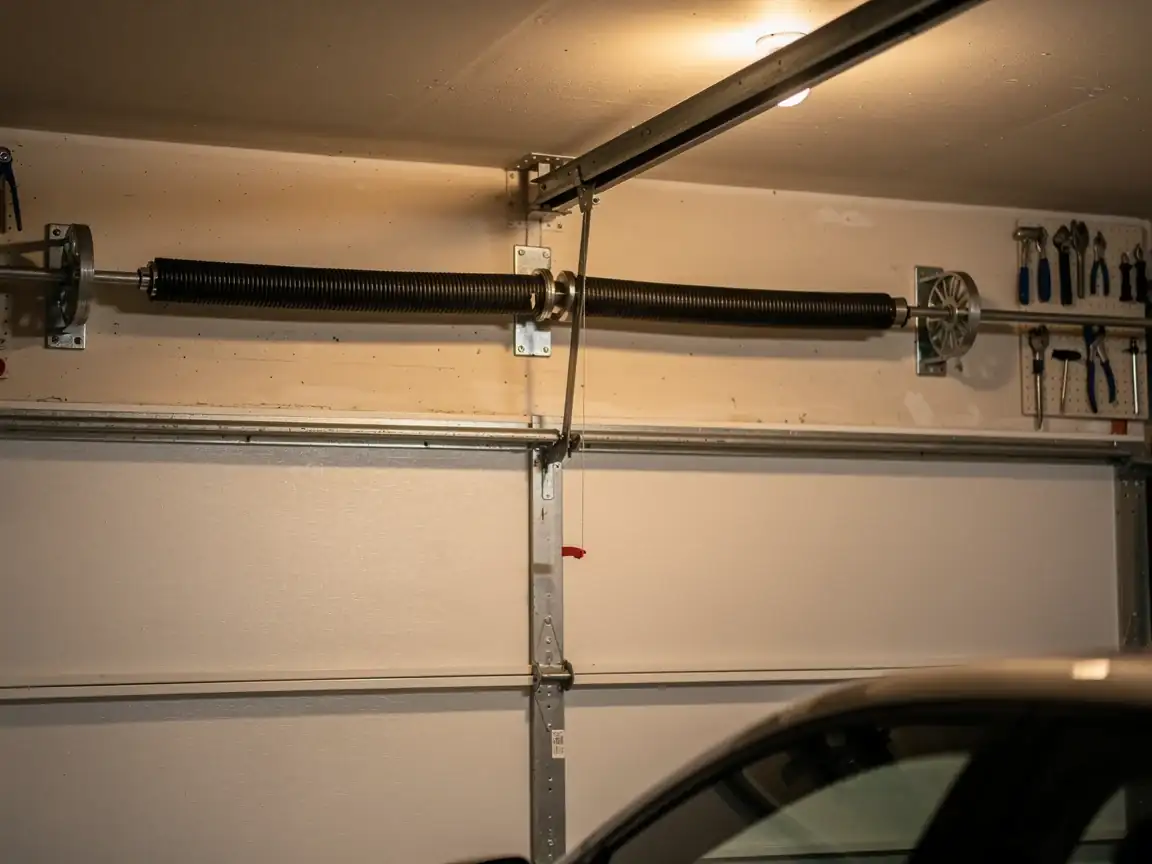
What you should not touch is the torsion spring system
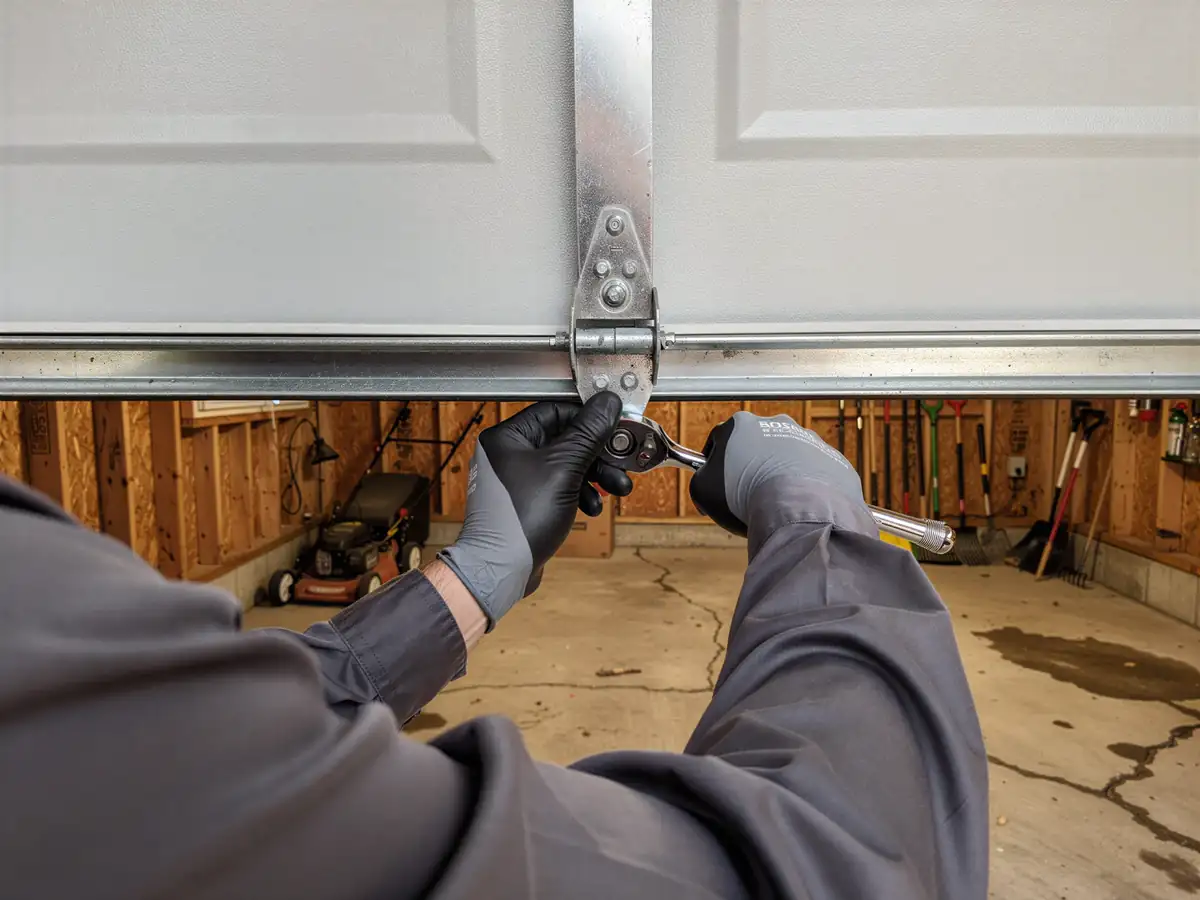
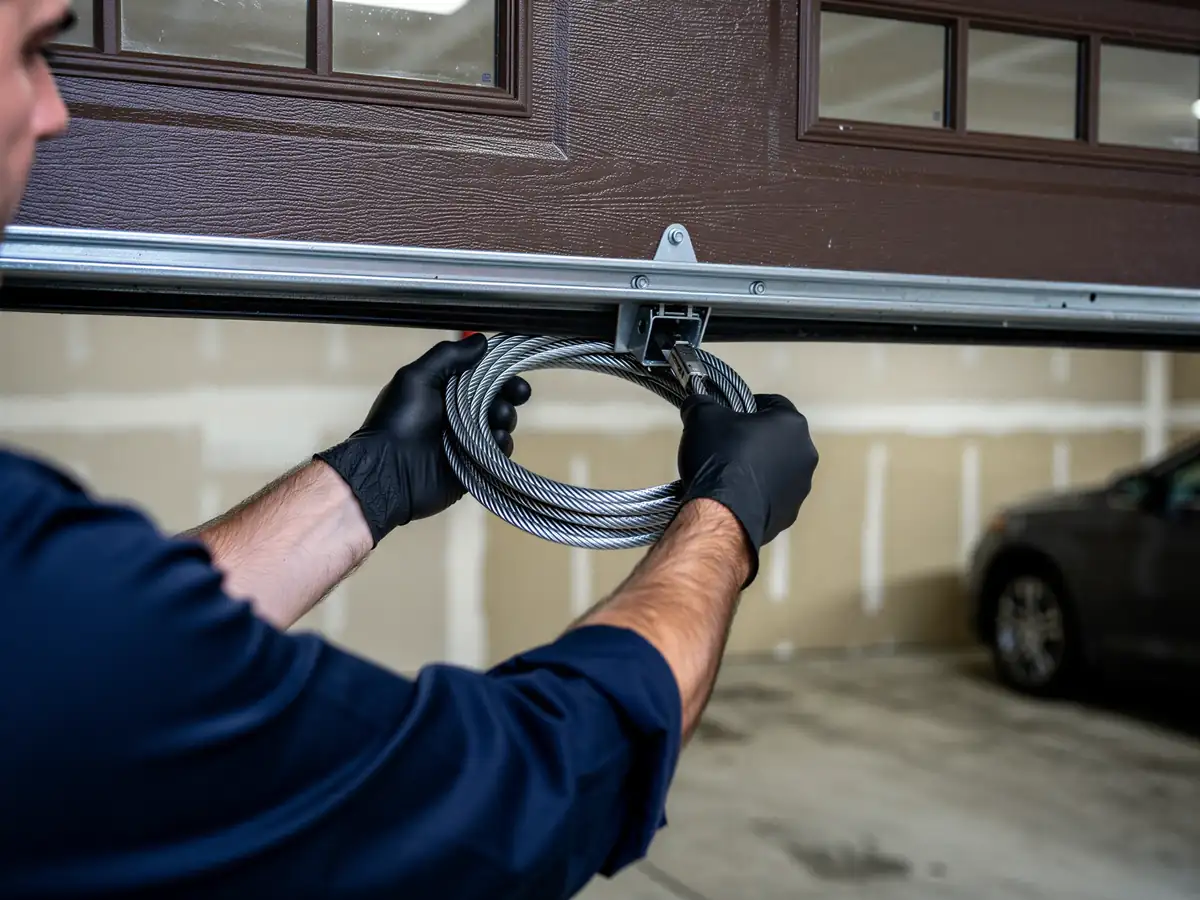
On a door this old the spring is often original or close to it, under full tension, and the winding cones were set up decades ago using hardware that doesn't match what's sold today. We've seen attempts at DIY spring adjustment on older Selma doors end badly - not because the homeowner was careless, but because the parts on the door no longer match any standard chart. If your door was installed before 1985 or so, treat the spring, the cable drums, and the bottom brackets as a call-a-pro job, full stop. Everything else on the door is yours to maintain.
What Is on the Truck
Because Selma sits about 12 miles from our Clayton base, the trucks that come out here are stocked for the job before they leave, not restocked on site. That means torsion springs in a range of wire sizes, since Selma's older housing stock runs a wider spread of spring diameters than newer subdivisions where everything matches. We carry standard-width tracks and the brackets that fit 1960s and 70s door openings, along with newer sectional hardware for houses that have already been upgraded.
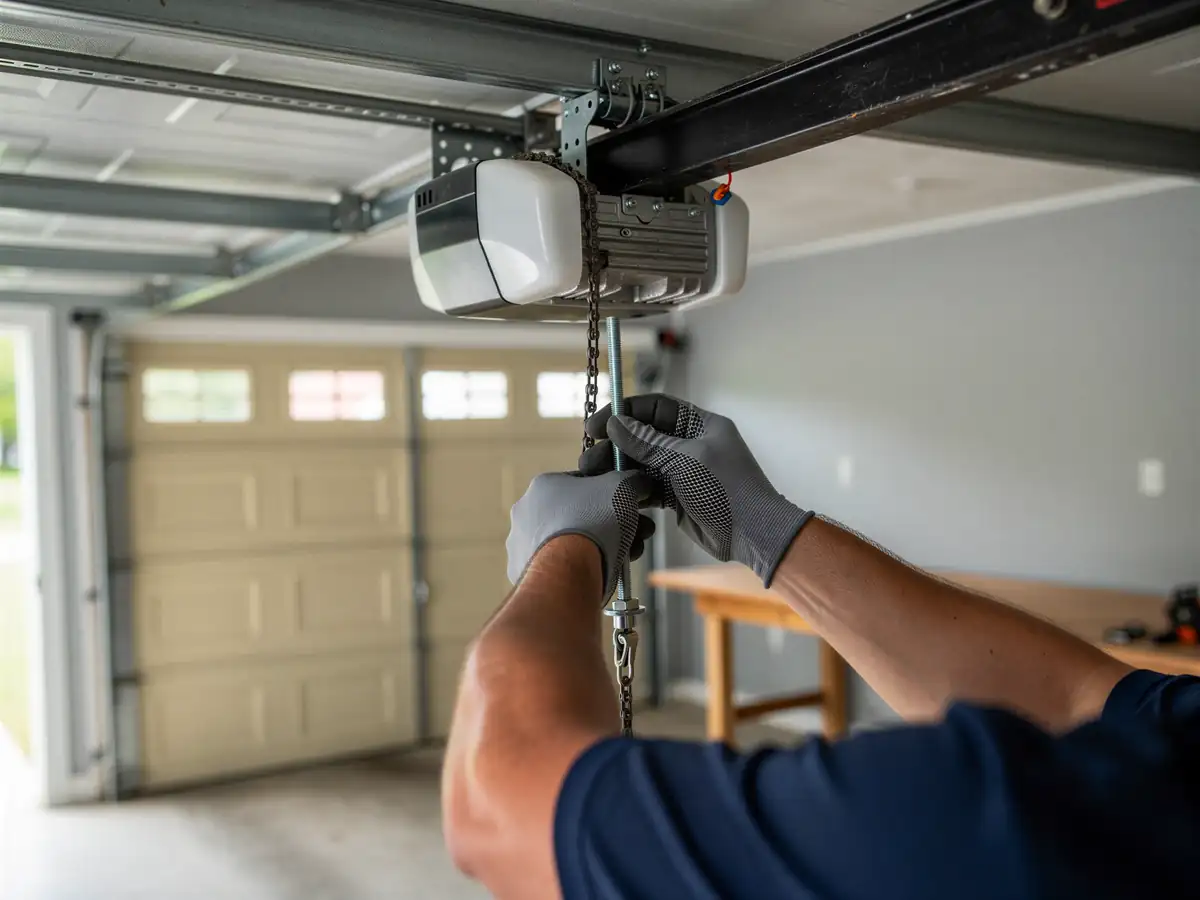
We also carry both belt and chain drive openers, because a service call out this far is more efficient if the swap can happen on the first visit rather than a second trip. What we don't carry is every obsolete part for a fifty-year-old door - some of those one-piece doors and their track hardware were made by manufacturers that no longer exist, and matching that exact part sometimes means a short order wait rather than a same-day fix. We'll tell you straight if that's the case before we start.
What You Are Seeing
If your garage door in Selma is sagging on one side, binding partway up, or making a loud bang followed by the door going dead, you're probably looking at spring failure on a door that's older than its hardware was ever rated for. The median home here dates to 1968 - a good seventeen years ahead of the 1985 median across the wider service area - which means a lot of doors are running original or first-replacement torsion springs well past the number of cycles they were built for.
Other common calls: a door that reverses right after it starts closing, usually a misaligned or dirty photo eye rather than anything structural; a door that's slow and groans going up, which is often a dry or bent track rather than the opener; and openers that run but don't move the door, which on older installations is frequently a stripped gear inside the unit itself, not the chain or belt.
How to Book
Call and tell us what the door is doing
Sagging, stuck, loud, or dead - and roughly how old the house is if you know it. That second piece matters more in Selma than in newer parts of the service area, since the age of the house tells us a lot about what hardware we're likely to find before the truck even leaves Clayton. We'll ask for your address to route the job, since every call out here is a 12-mile trip, not a local stop.
We don't keep a branch or drop-in counter in Selma itself
Every job is dispatched from Clayton, which means we schedule by truck route rather than by neighborhood, so the exact time we land can shift depending on what else is on the board that day. If the repair turns out to need an ordered part, we'll say so on the first visit and give you a straight answer on what's next rather than leaving you guessing.
How We Fix It
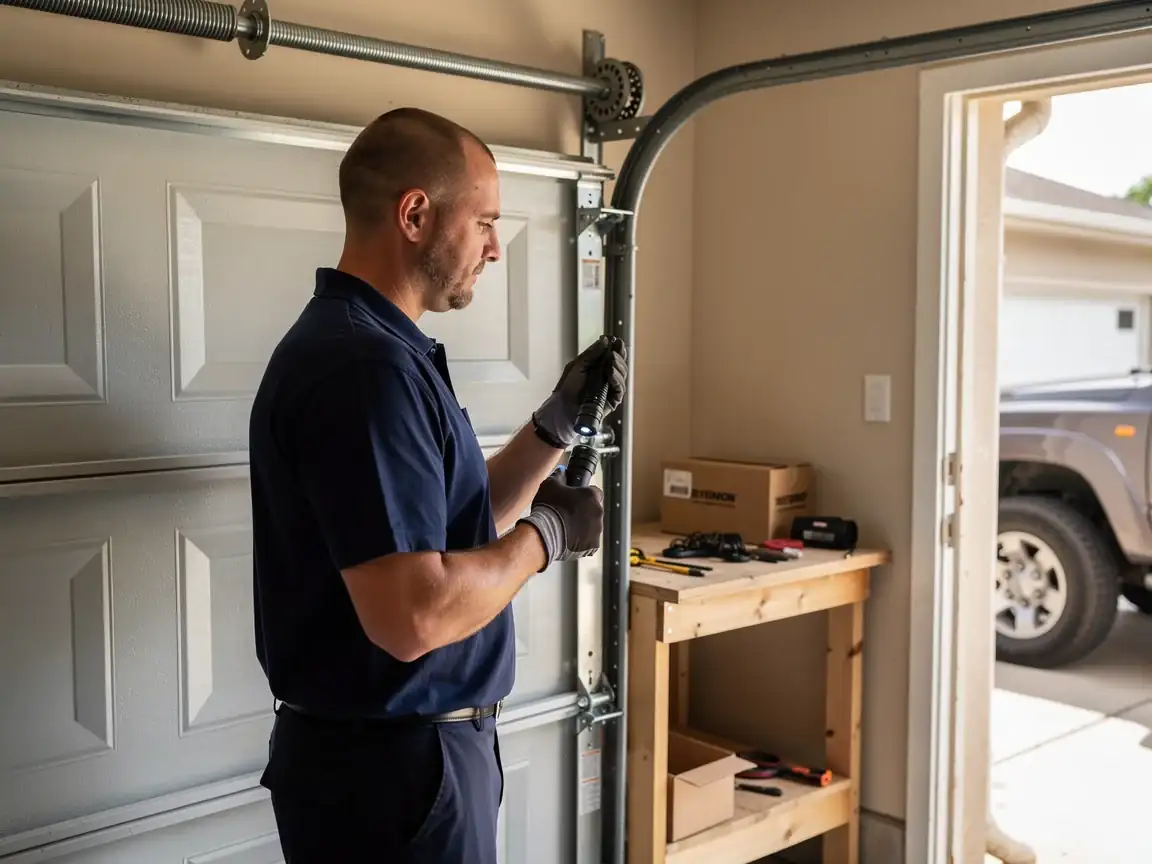
For spring failures on older Selma doors, we replace both springs as a pair even if only one broke, because a torsion spring sitting next to a snapped one is almost always close behind it - this matters more here given how many doors are still on original springs from a 1968-era build. We measure the shaft and drum setup rather than assuming anything matches a catalog chart, since a lot of the hardware on these older doors was installed before today's standard sizing existed.
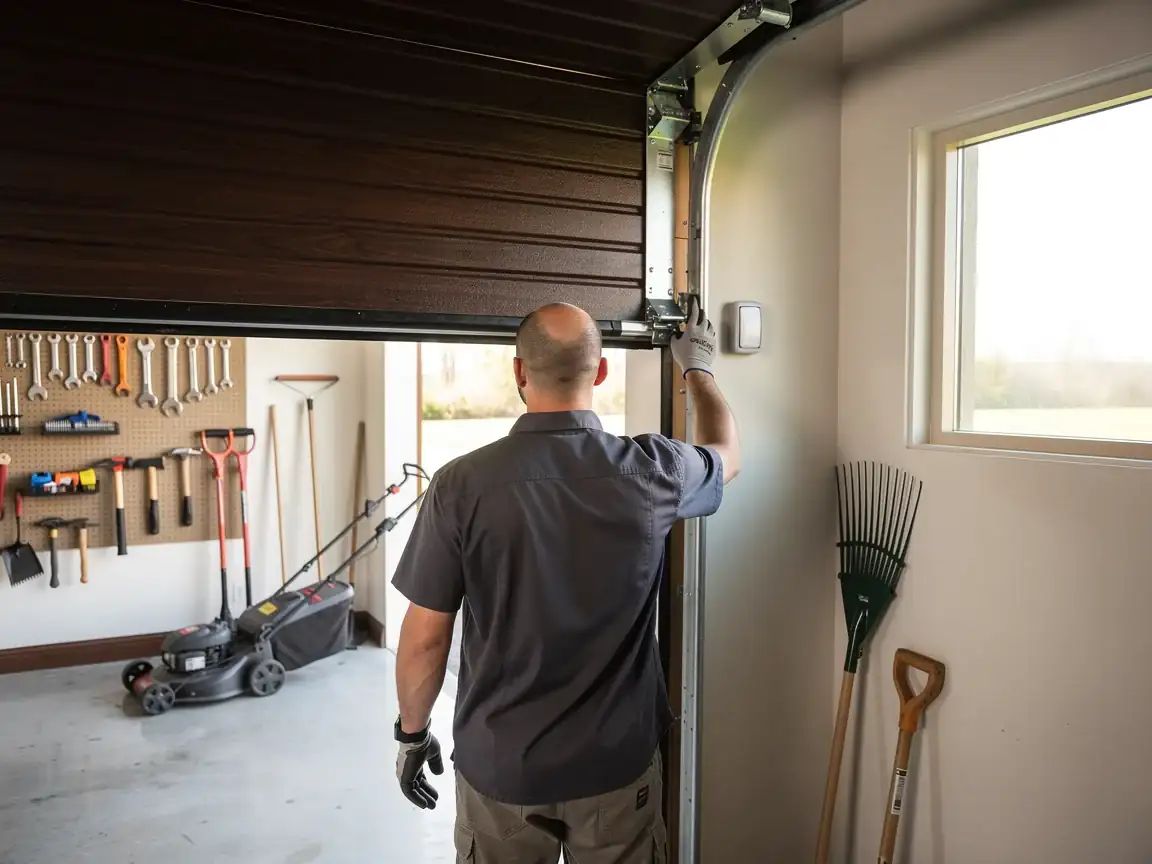
For opener issues, we test the logic board, the gears, and the sensors separately before replacing anything, so you're not paying for a new opener when the fix is a ten-dollar sensor bracket. For track and roller problems, we true the track to the frame rather than just swapping rollers, because on a house this age the frame itself has usually settled a little over fifty-plus years, and ignoring that just brings the same bind back in a year.
The Complications
The biggest complication in Selma is parts availability for the oldest doors - anything installed before the mid-1980s sometimes uses track width, drum size, or bracket spacing that isn't stocked anywhere nearby, Clayton included. When that happens, we tell you up front: either we source the specific part, which can take a few days, or we talk about whether replacing the whole door section makes more sense than chasing discontinued hardware.
The area's household income, at $37,440 median, runs well under the $55,051 median across the full service area, and we keep that in mind when we lay out repair-versus-replace options - we'd rather fix a door that can be fixed than push a replacement nobody asked for. We also won't pretend a response time we can't back up: every Selma call travels from Clayton, so timing depends on the day's route, not a local crew sitting idle nearby.