What Is on the Truck
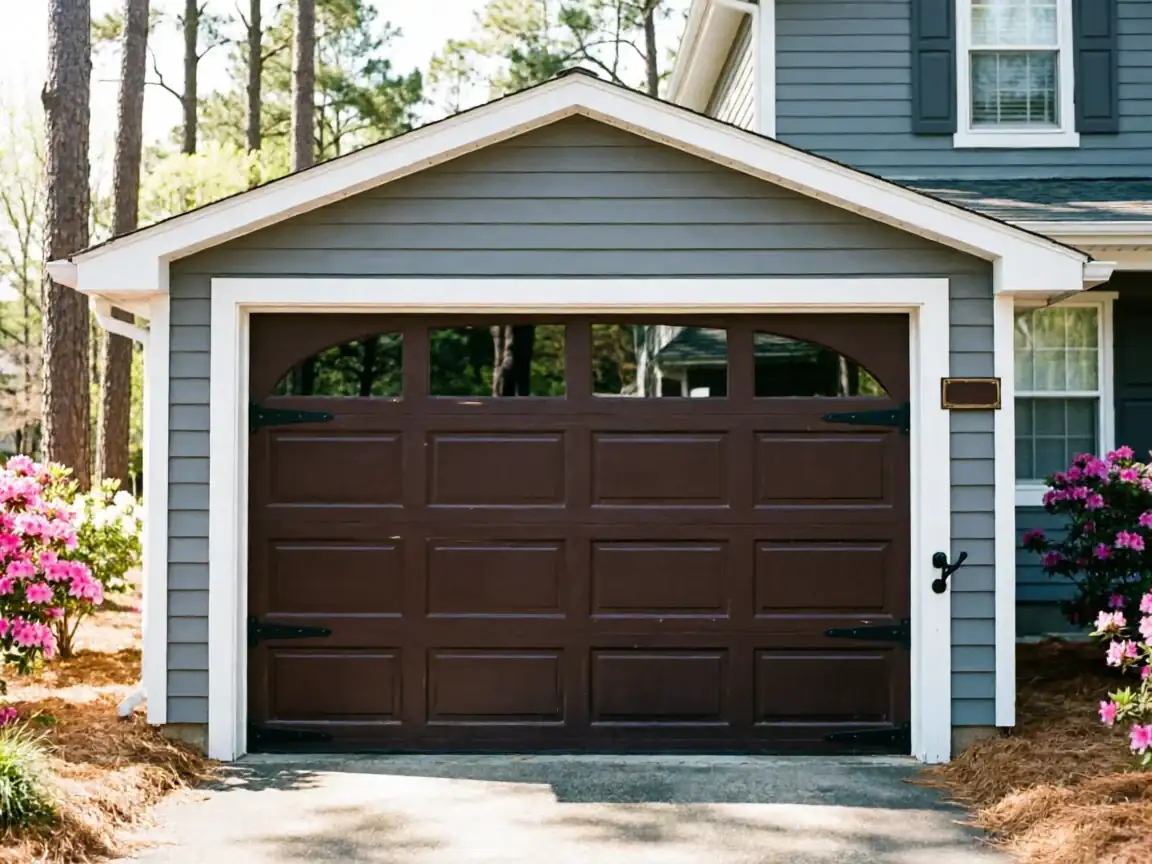
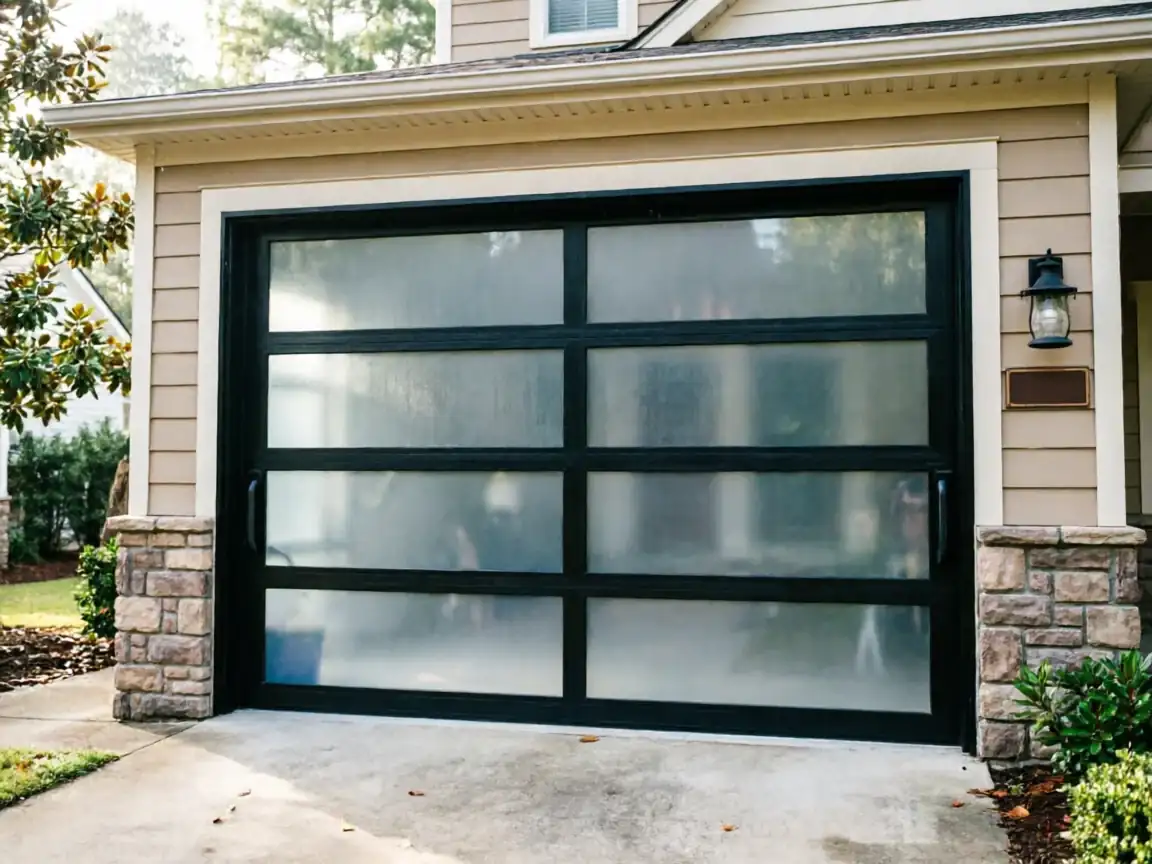
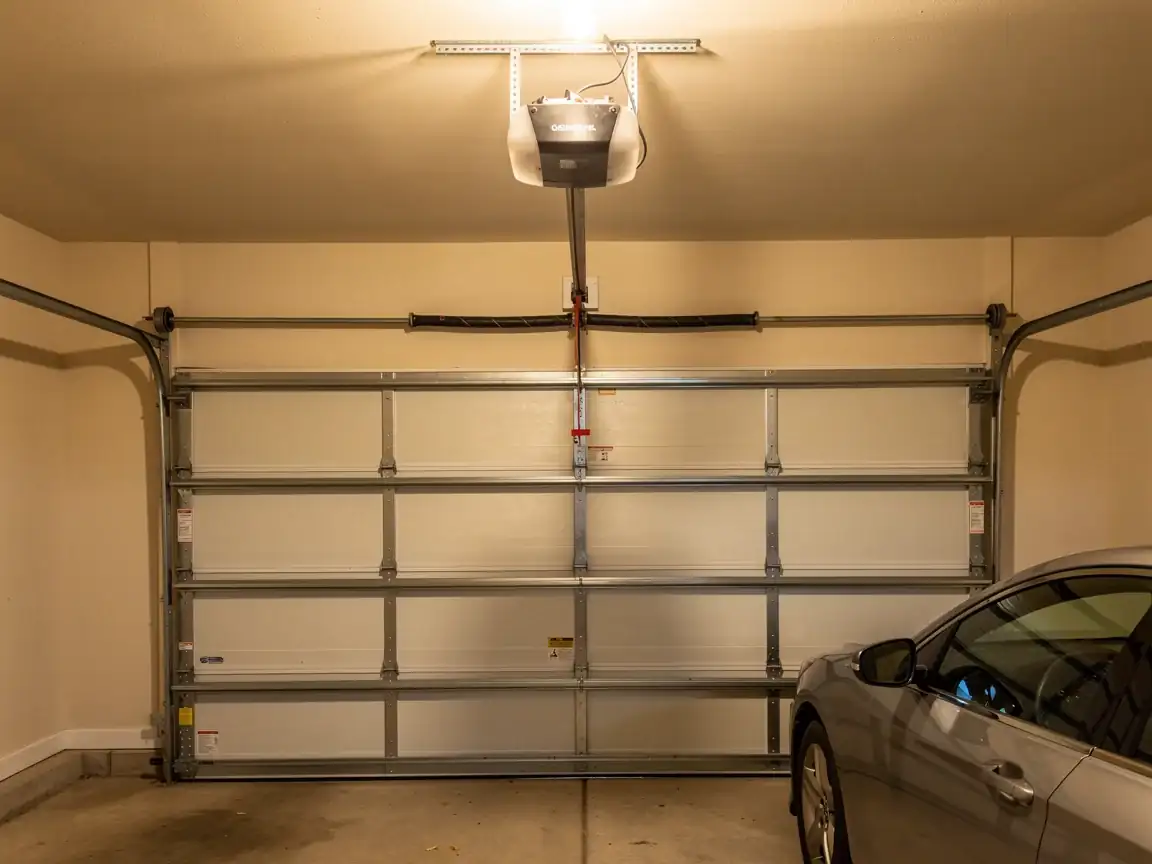
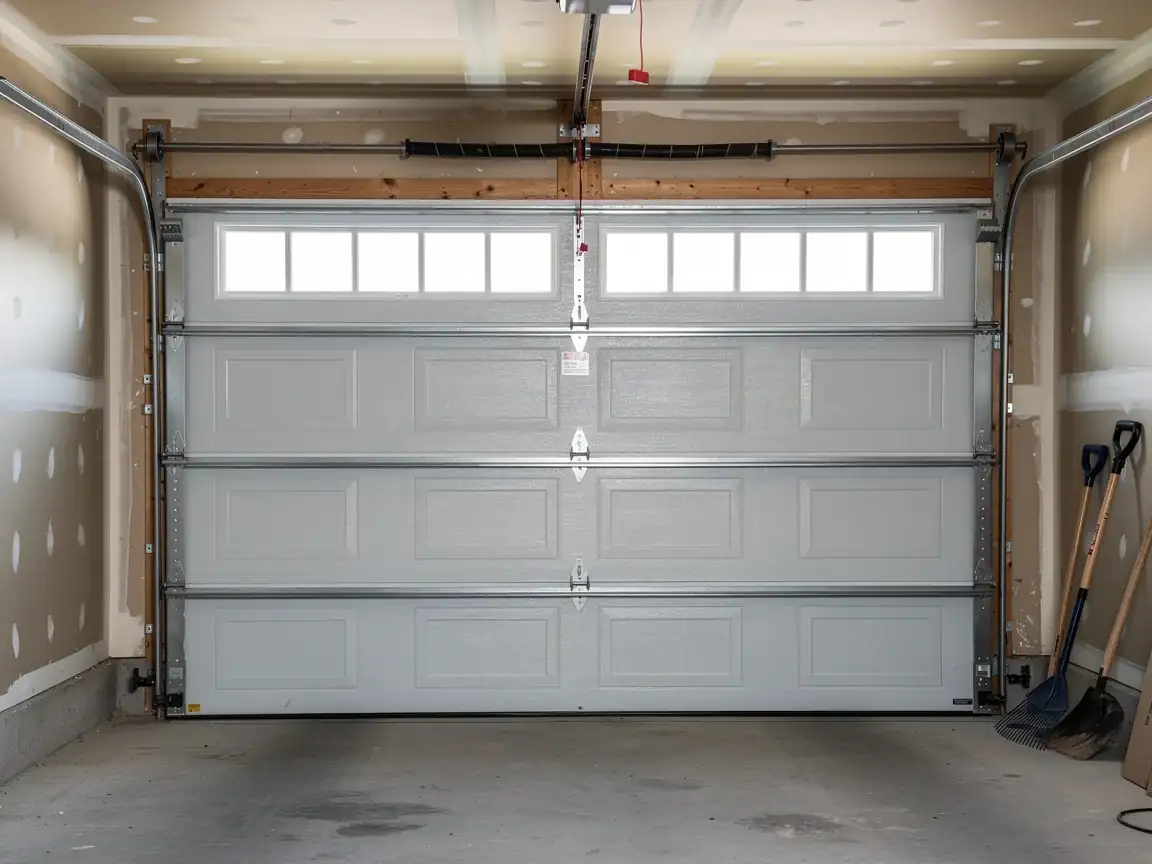
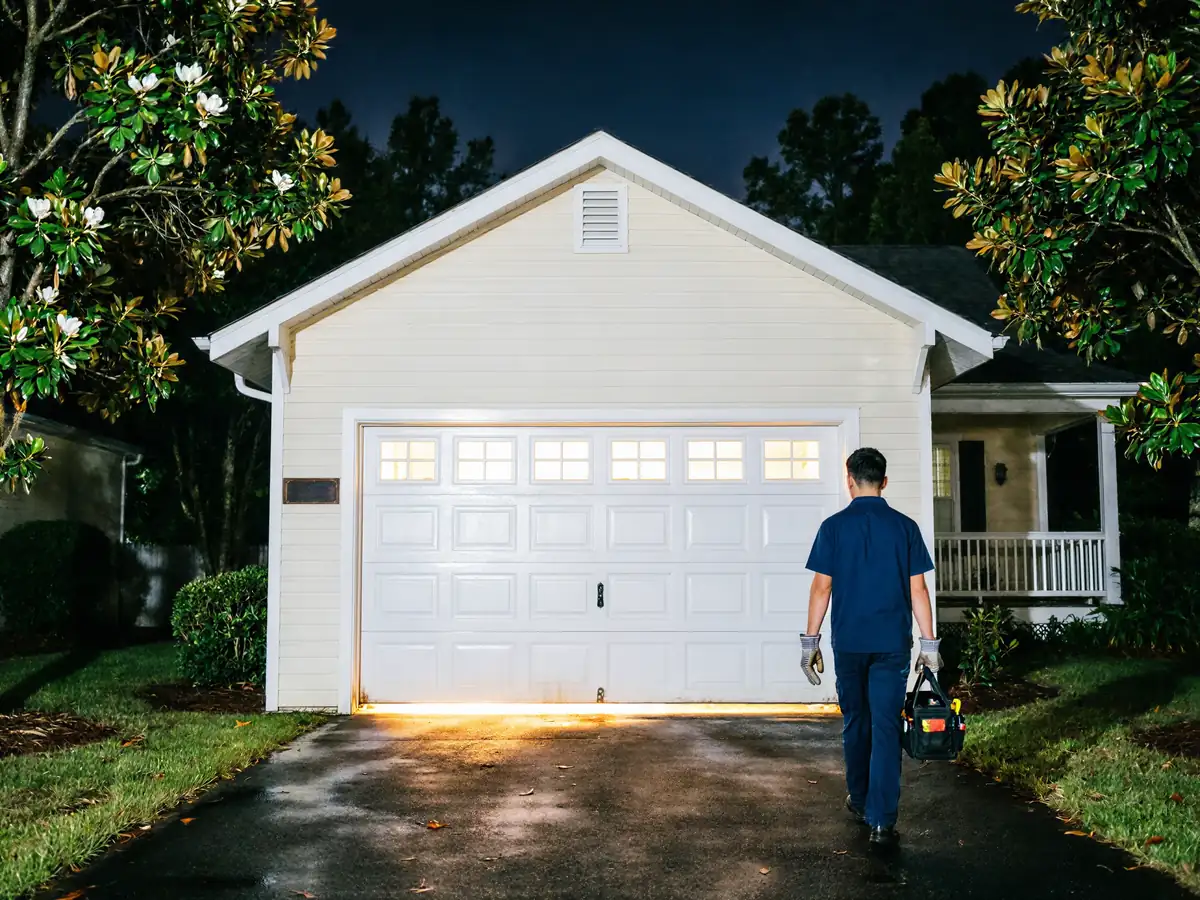
We load panels sized for the sectional doors common across homes built in the 1960s through the 1990s, since that's most of what's out in this part of the service area. Standard widths cover 8 and 9-foot doors, with steel panels in the finishes that match what went up during that build window rather than newer composite trims. We also carry the end hinges, strut reinforcement, and matching fasteners needed to tie a replacement panel into an older track system, since panels rarely fail alone - a bent panel usually means a bent track section nearby that needs straightening or swapping too. What we don't stock on the truck is a wide range of custom colors or insulated panels built to exact match an existing door that's been discontinued; those get special-ordered, and that adds lead time we can't shorten. We travel the 12 miles out from Clayton with what covers the common case. If your door turns out to be an uncommon size or an older style no longer made, we'll tell you that at the door rather than make you wait on a part that isn't coming.
What You Are Seeing
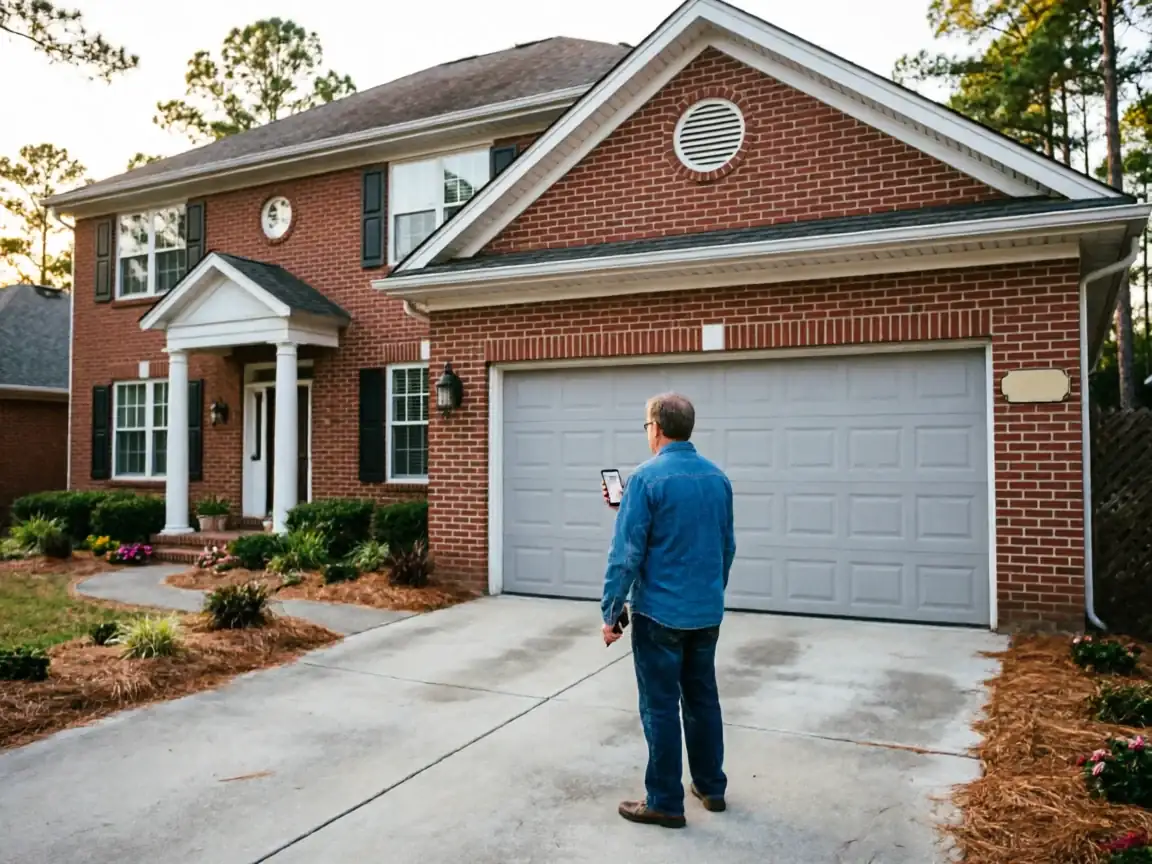
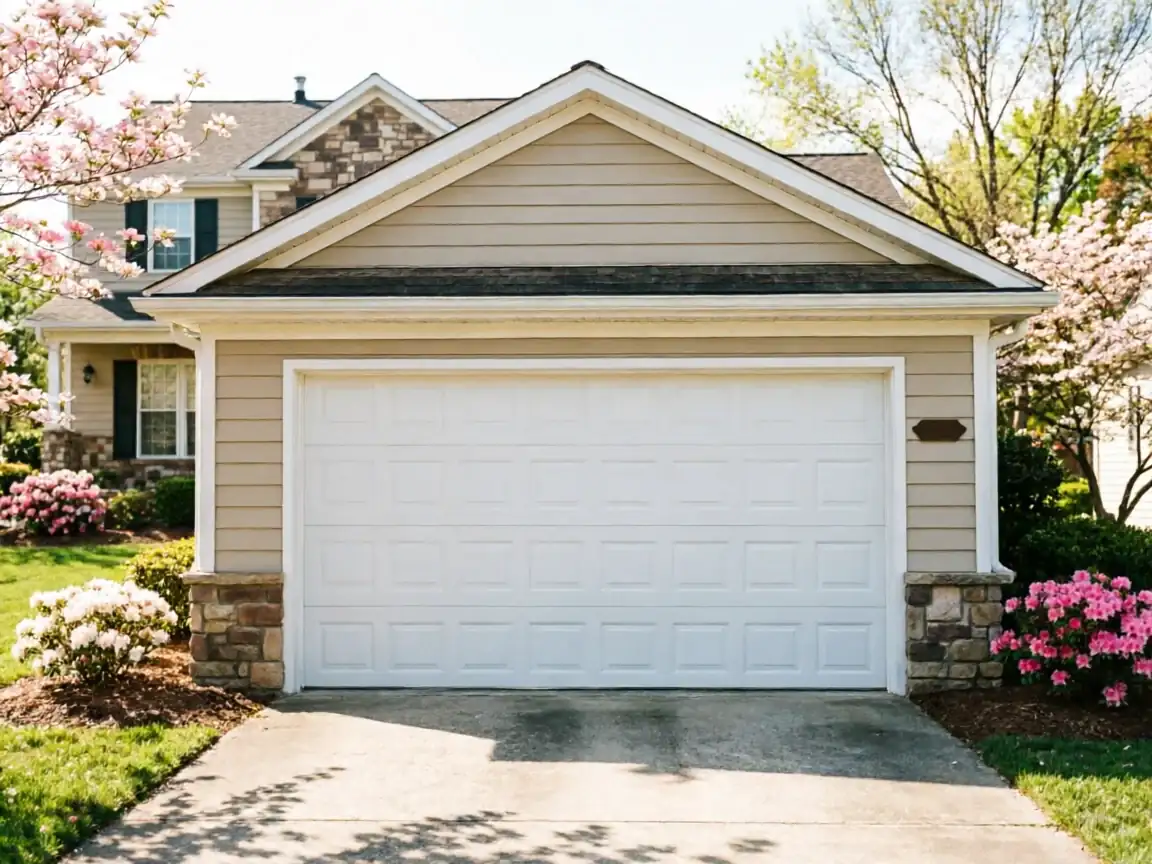
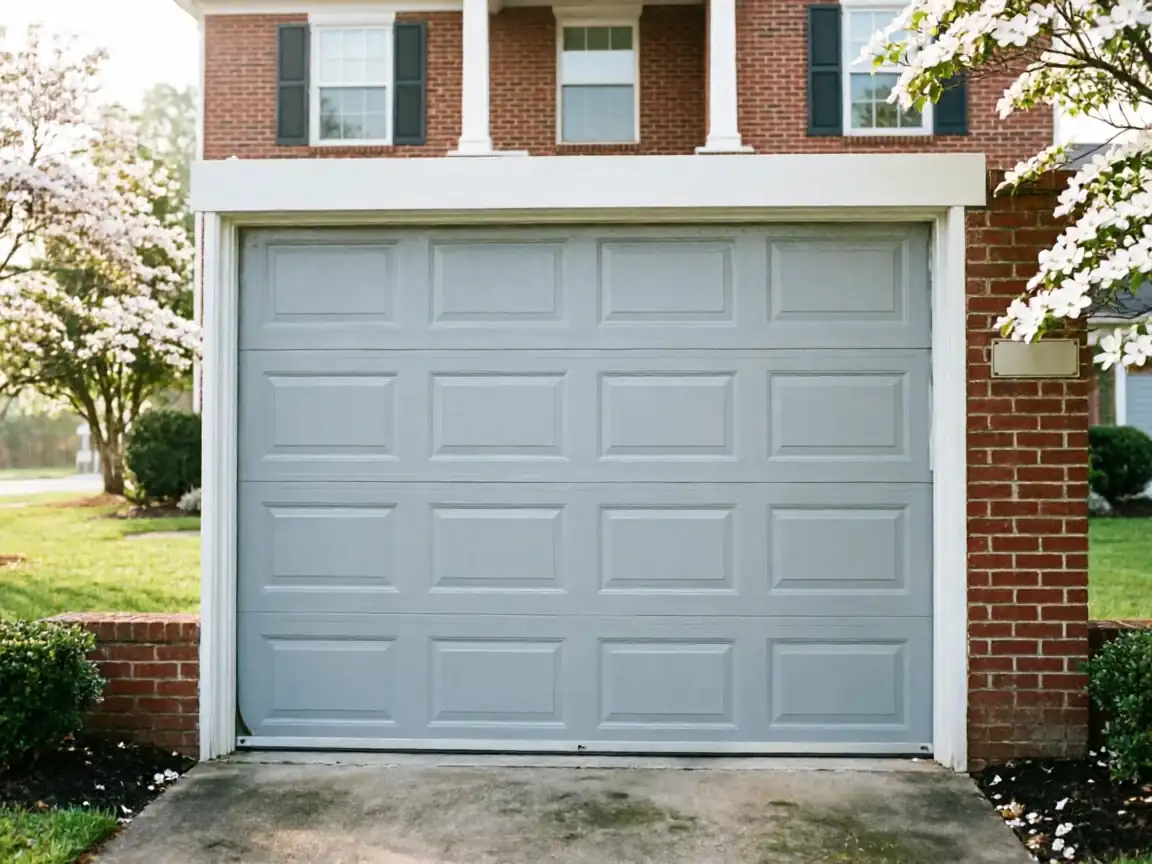
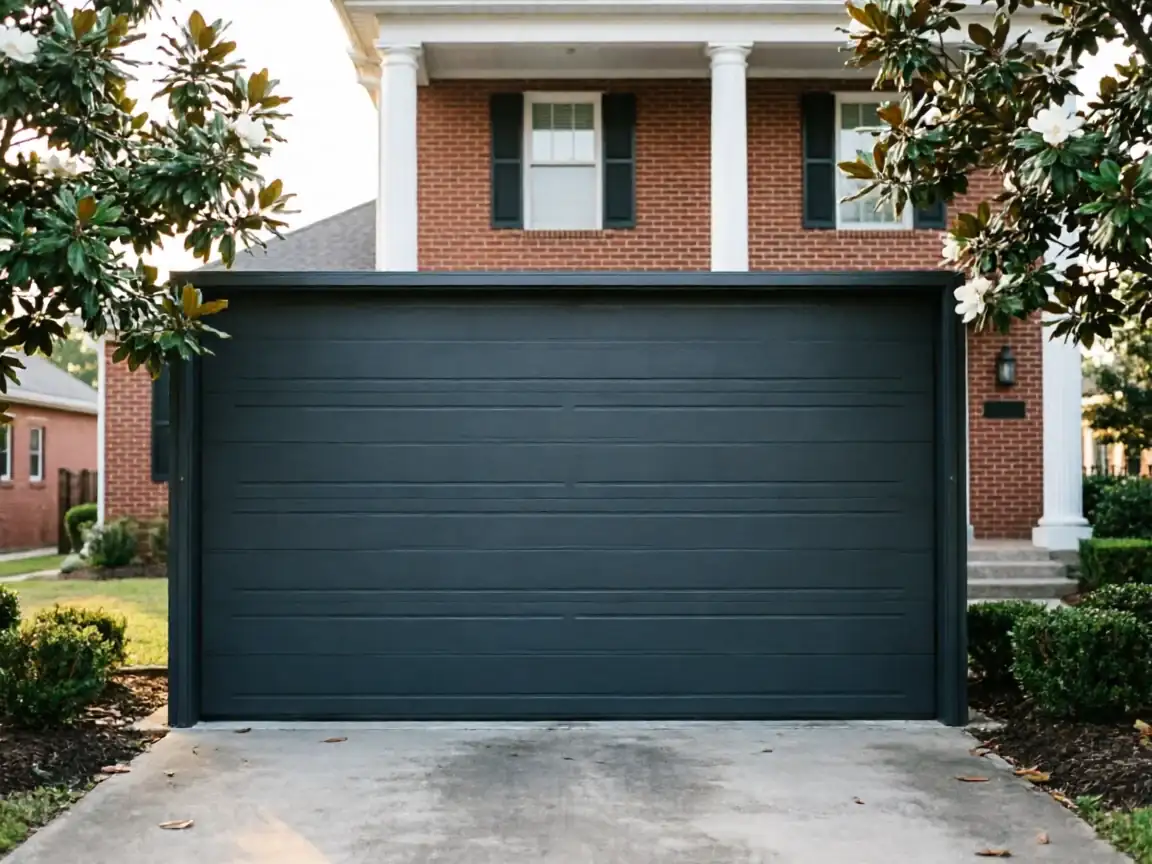
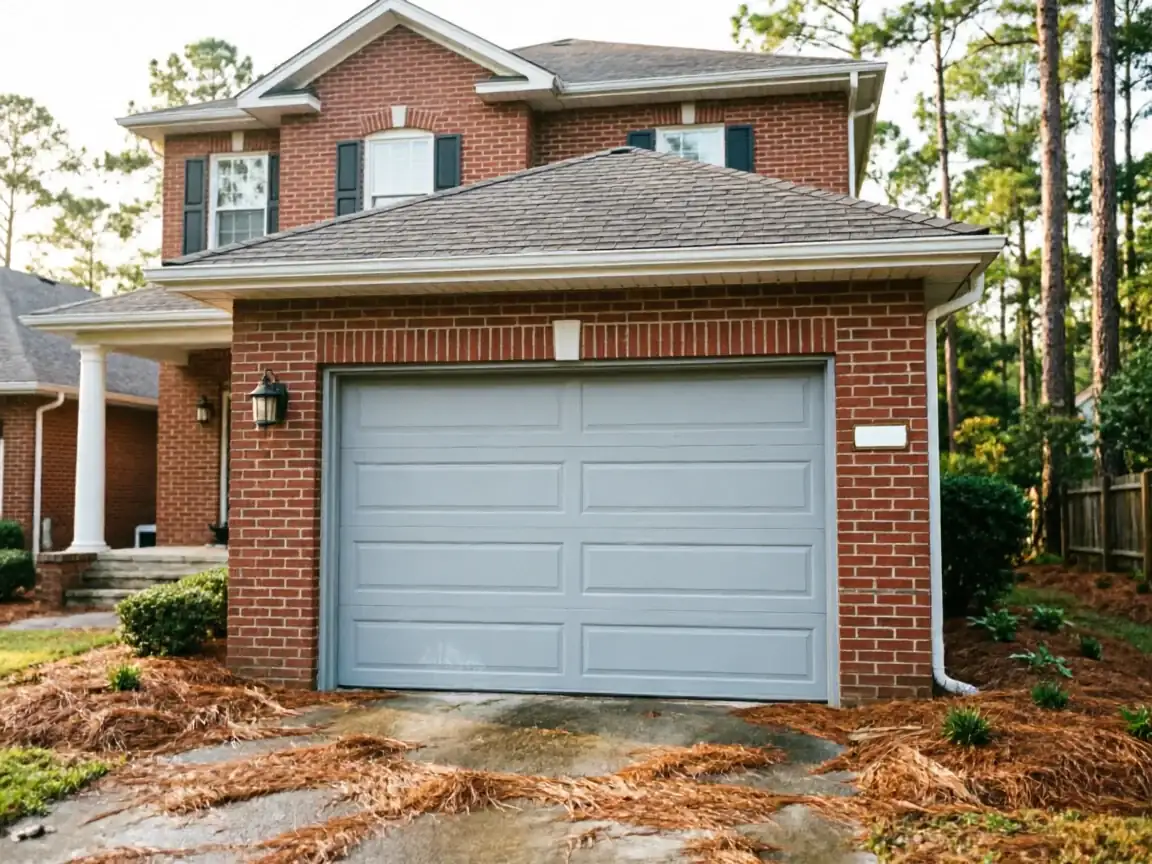
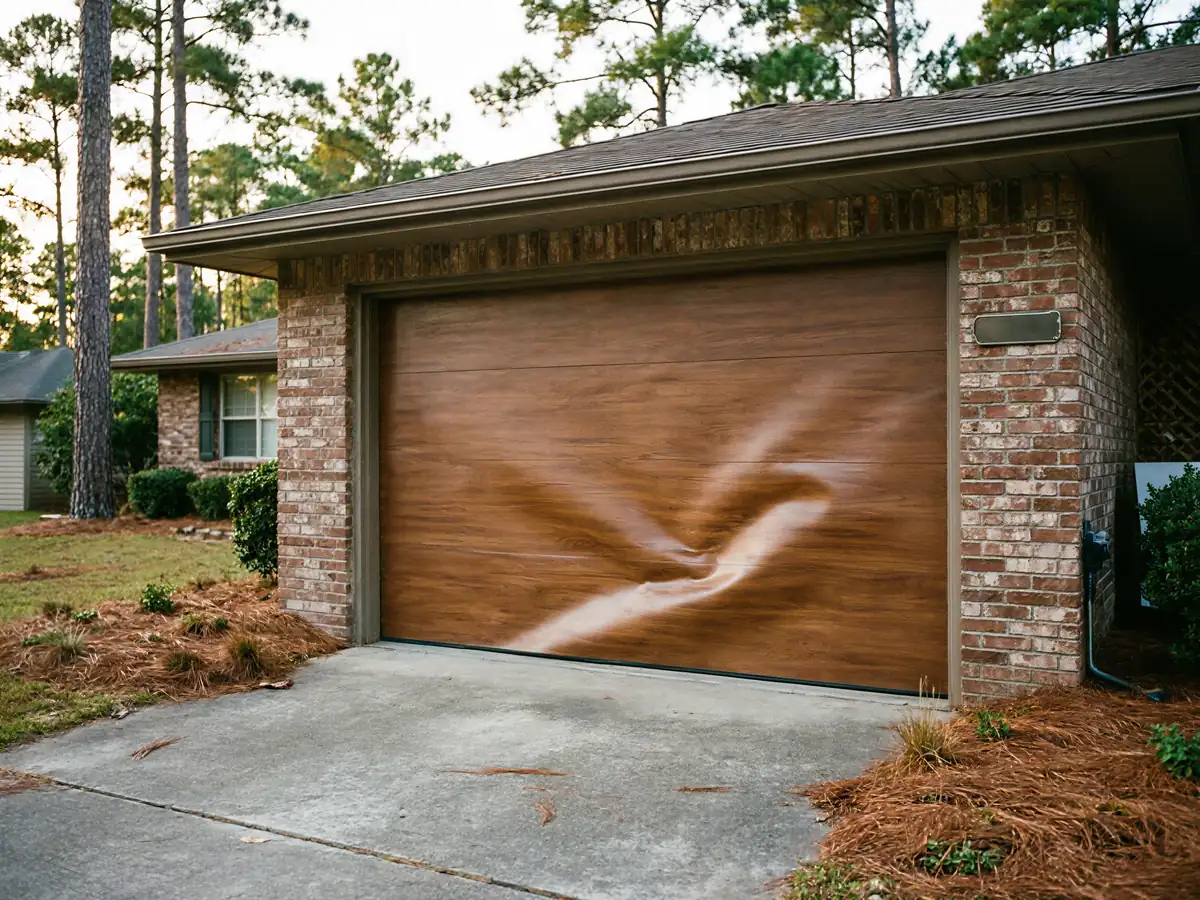
A dented or caved panel on a sectional door usually comes from one of two things: a direct hit, car bumper, trailer hitch, basketball, or metal fatigue where a panel's been flexing slightly off-track for years without anyone noticing. On the older housing stock around Selma, the second cause shows up more than people expect, because doors from the late 1960s and 1970s have had decades to drift out of adjustment. If you see a crease that runs the full width of one panel but the door still opens and closes smoothly, that's usually cosmetic and isolated. If the door catches, binds, or the opener strains near the damaged panel, the track or rollers are involved too, and replacing the panel alone won't fix it. Rust along the bottom panel seam is common on doors this age and isn't the same problem as impact damage - rust usually means the whole bottom panel needs replacing, not patching. We'll tell you straight if what you're seeing is one panel or the start of a bigger job.
How We Fix It
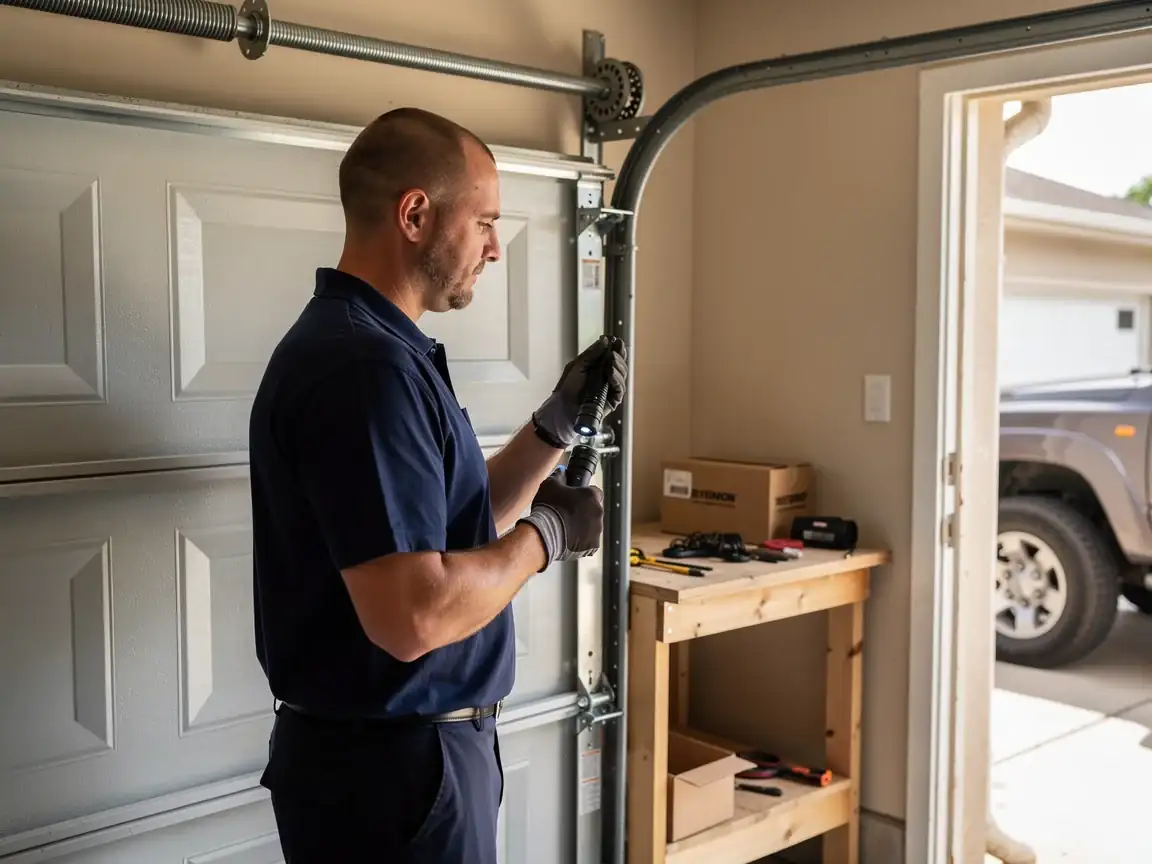
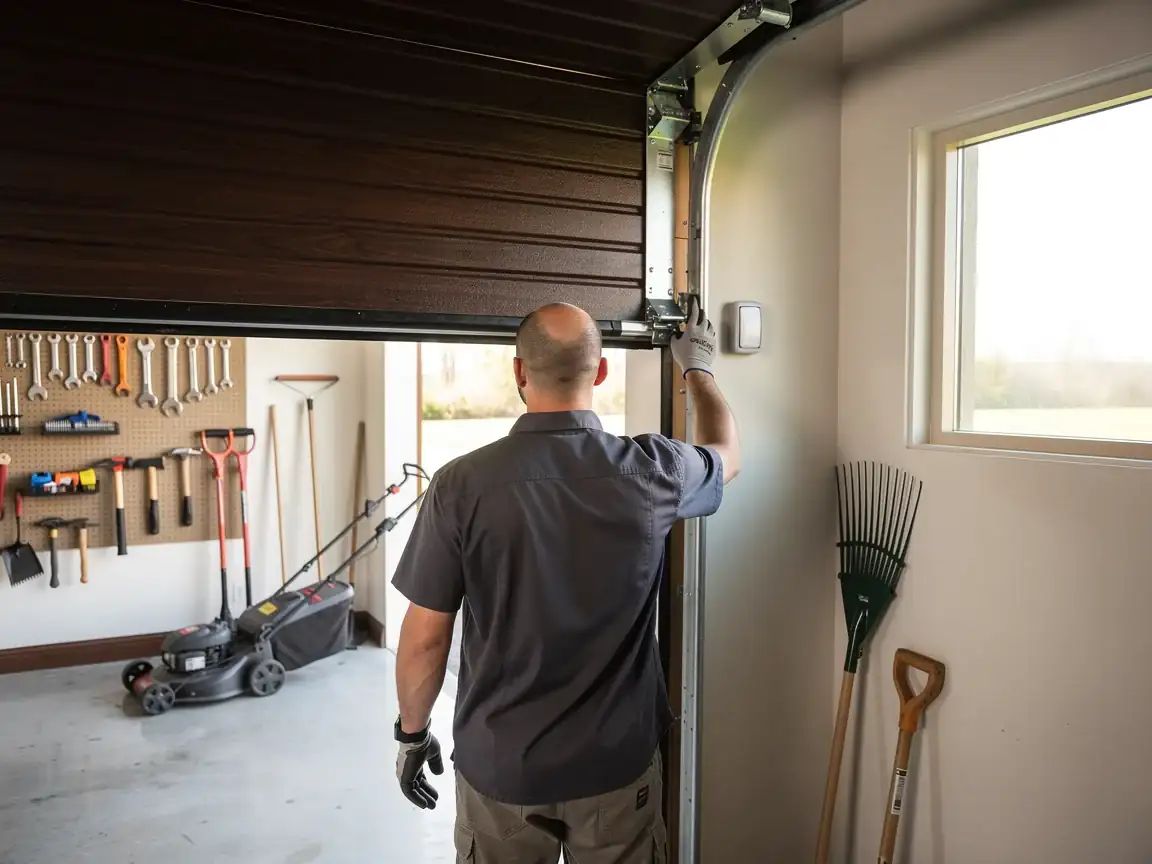
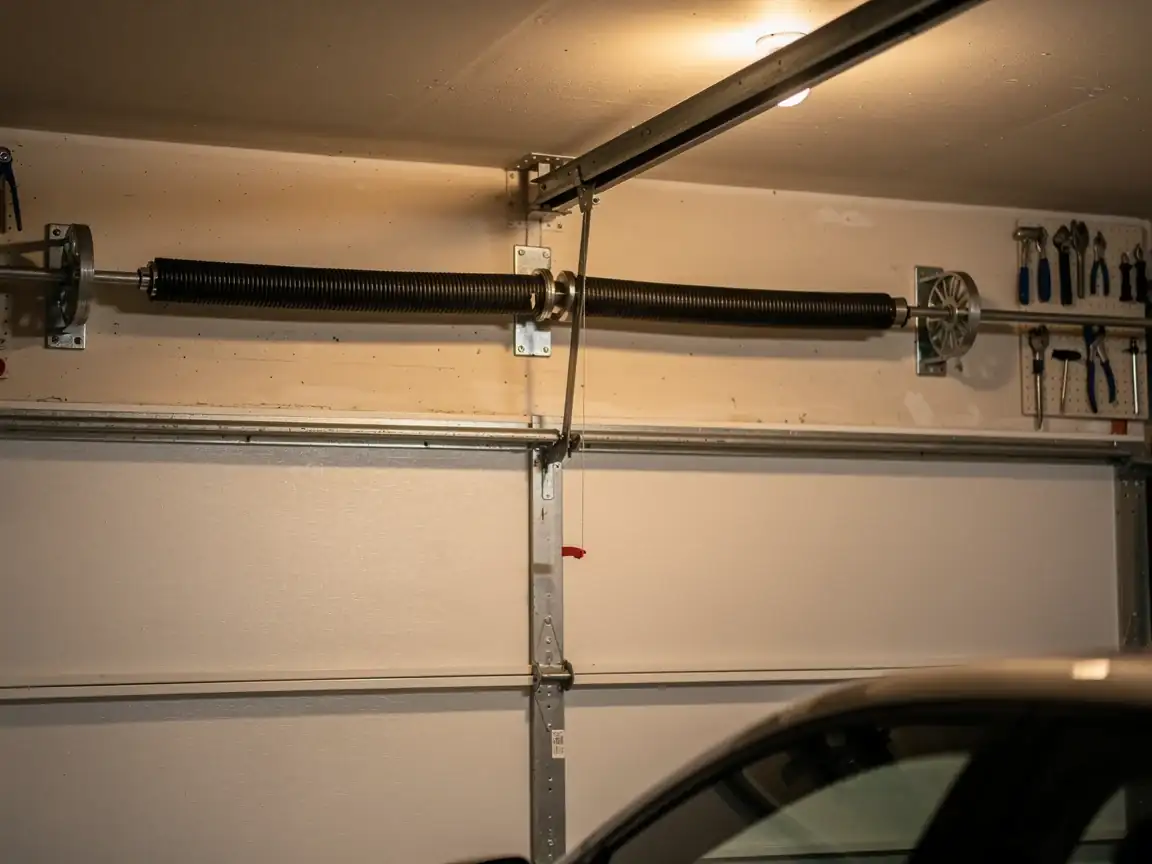
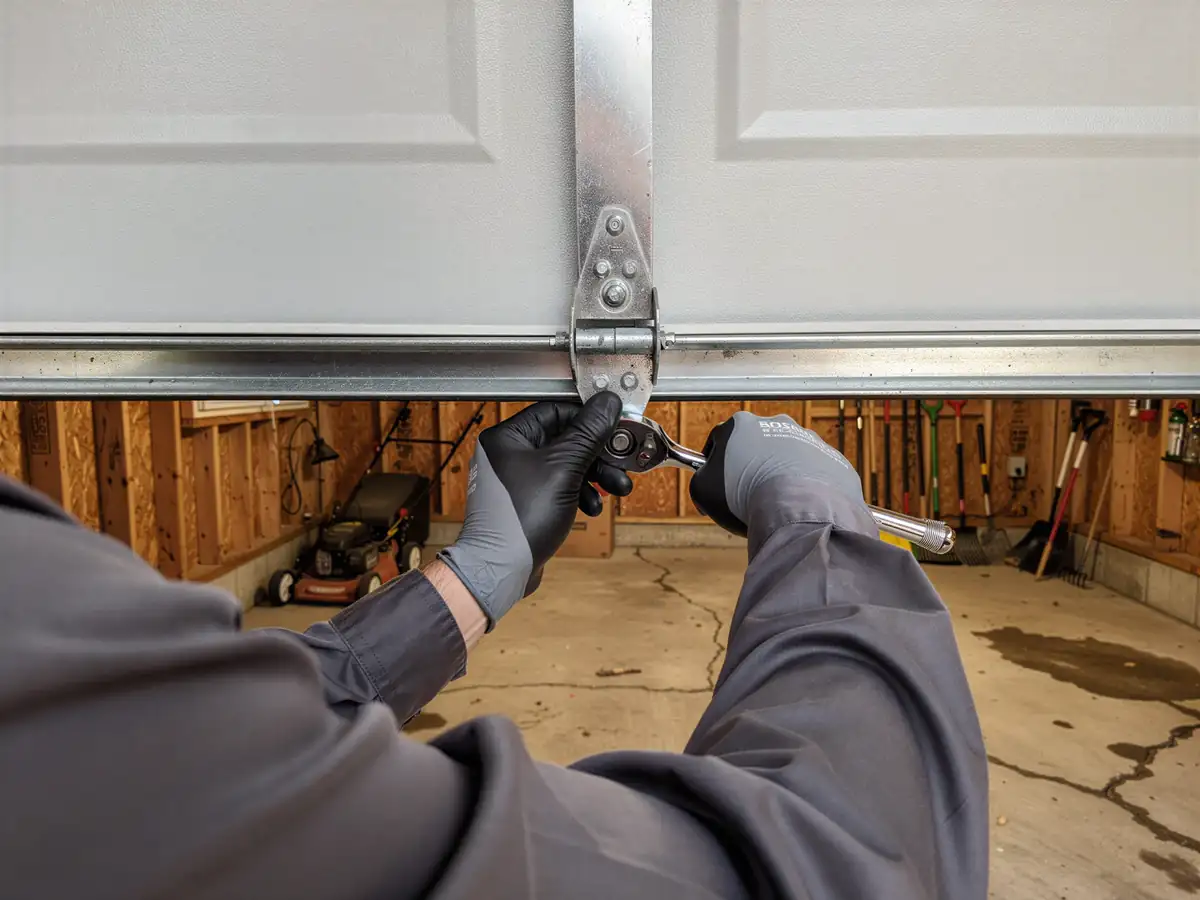
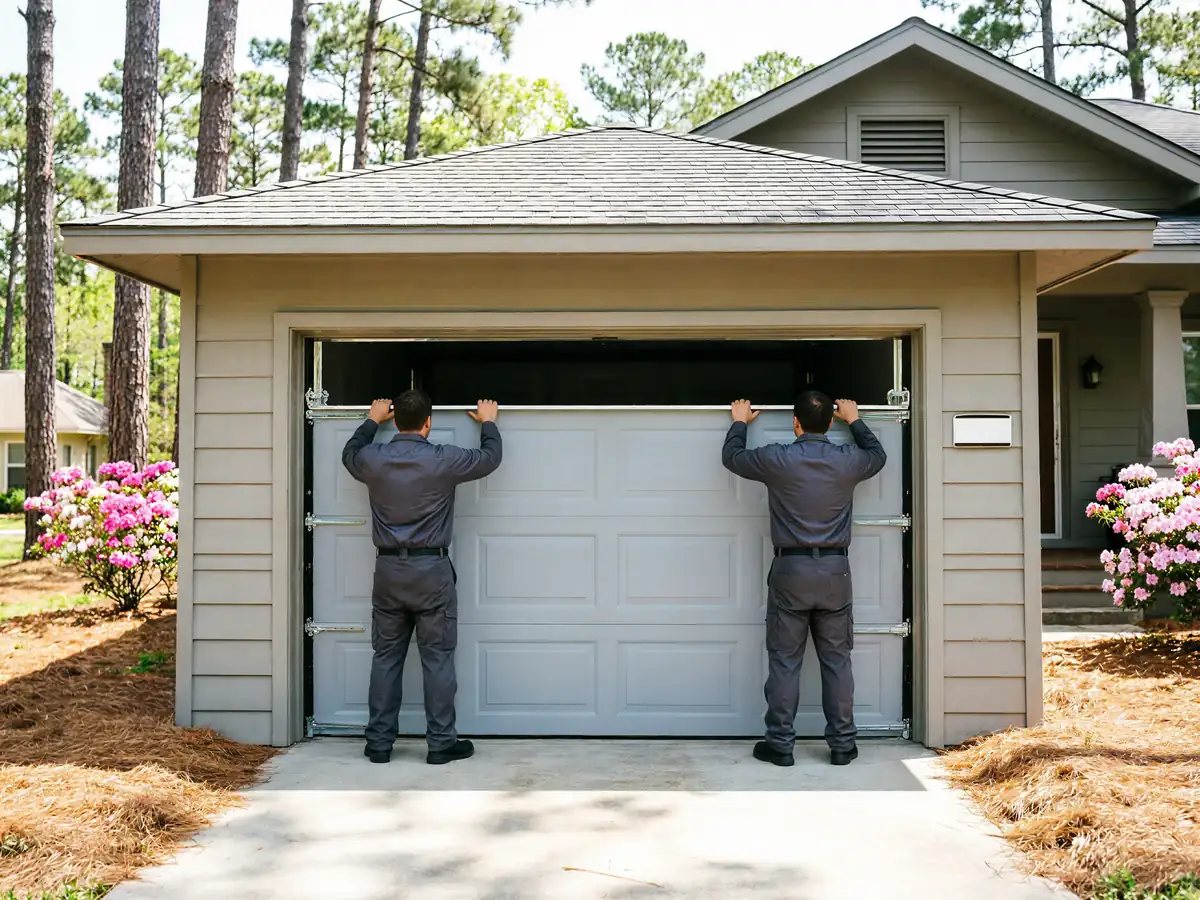
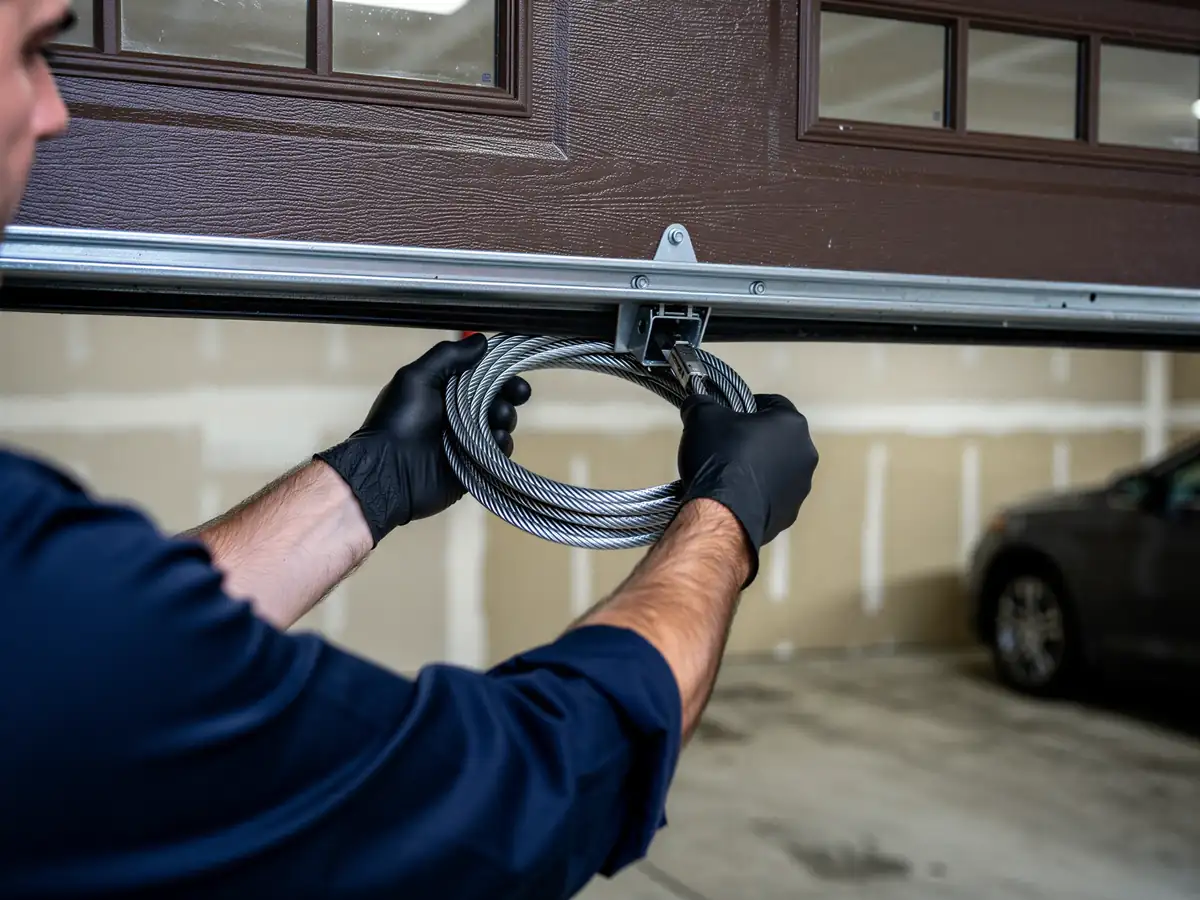
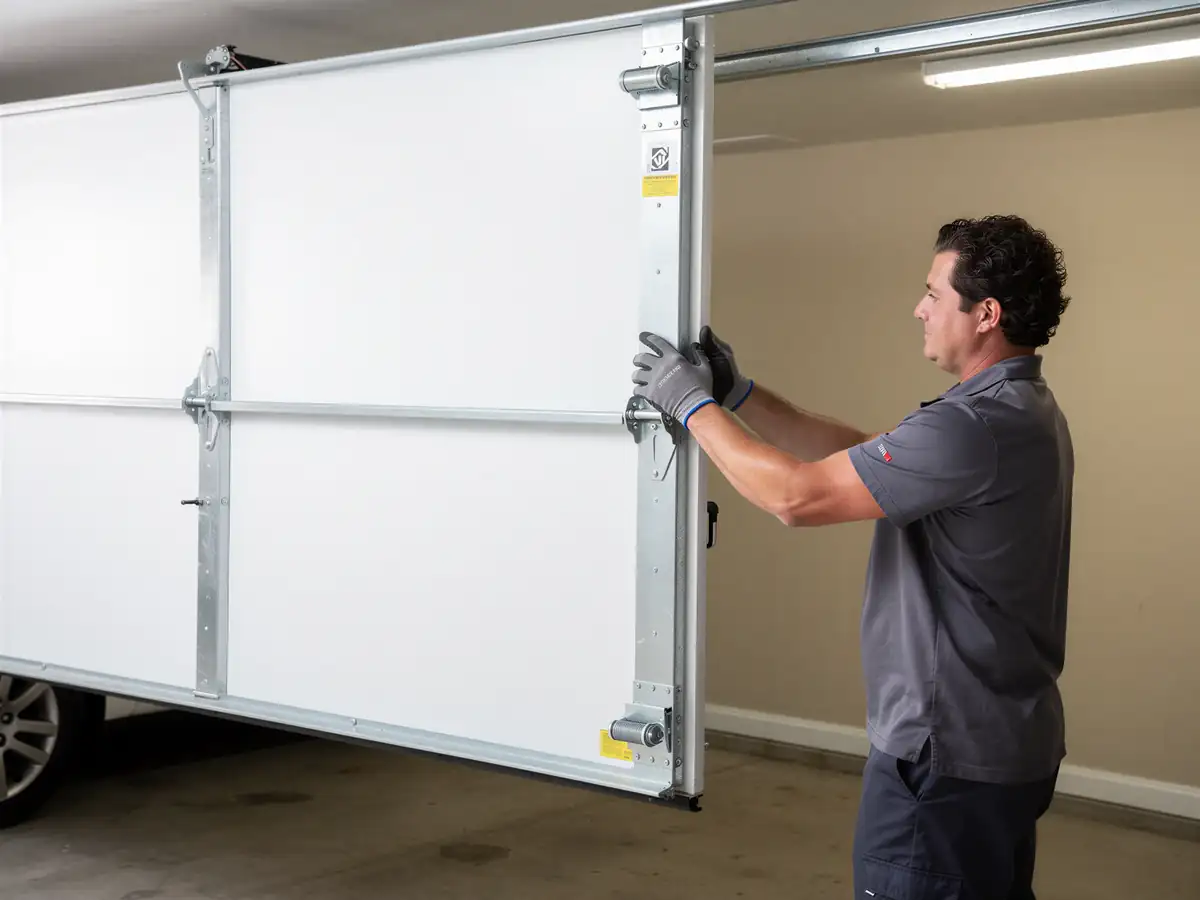
First we check the track and rollers on the damaged side before touching the panel itself, because a panel replaced onto a bent track will fail again within months. If the track's straight, we unbolt the damaged panel's hinges, slide it out, and fit the replacement, matching it to the existing color and panel style as closely as stock allows. On the older doors common to houses built near 1968, this sometimes means the new panel's pre-drilled holes don't line up exactly with decades-old hinge placement, and we redrill rather than force it. Once the panel's set, we run the door through a full open-close cycle under power to check balance - a panel swap can shift the door's weight distribution slightly, especially on a door that was already a little out of adjustment. If the springs are working harder than they should after the panel goes in, we'll say so rather than call the job done.
The Complications
The complication we run into most in this part of the service area is matching a replacement panel to a door where the original has been discontinued or where the house has had mismatched repairs done over the years. With median build years sitting around 1968 here, some of these doors are old enough that the manufacturer no longer makes an exact-match panel, and we'll either special-order the closest match or tell you it's time to talk full-door replacement instead. We also won't replace a single panel on a door where the track or springs are failing - that's a bandage on a job that needs more, and we'd rather say that upfront than have you pay twice. Parts that aren't common stock add lead time we can't shrink, since we're ordering them in, not pulling them off a shelf.