How Long You Are Without the Door
We don't keep a crew stationed in Smithfield - we run the job from Clayton, 11 miles out
That matters for how you plan your day. There's no walk-in counter here, so the first call is where we find out what's wrong and whether the part is something we carry on the truck already or something we need to order.
- 11 miles
Most of Smithfield's housing dates to around 1973
Which puts a lot of openers in this town well past their original service life even after a motor swap or two along the way. If your opener is the original unit from a house built in that window, parts like drive gears and capacitors for that generation aren't always sitting on a shelf at the supply house - sometimes we have it, sometimes it's a day out. We'll tell you straight which one it is before you commit to the call, not after.
The honest limitation
If your opener needs a part we don't stock and the supplier doesn't have it same-day, you're looking at a return trip, not a same-visit fix. We'd rather say that up front than promise a window we can't hit from 11 miles away.
- 11 miles
What Is on the Truck
Given how much of Smithfield's opener stock traces back to houses built in the 1970s through the 1990s, we carry the parts that fail on that generation of hardware: run capacitors, drive gears (chain and screw-drive both), limit switch assemblies, and logic boards for the mid-range residential models that were standard installs during that build era.
We also carry safety sensor pairs and wiring harnesses, since a lot of openers from houses built before the 1990s were retrofitted with sensors later rather than built with them, and that wiring is often the first thing to corrode or get chewed by rodents in an older garage.
What we don't carry for every call is a brand-matched replacement remote or keypad for every opener model ever sold - if yours is an obscure or discontinued line, we may need to order a universal replacement rather than an exact match, and we'll say so rather than guess.
What You Are Seeing
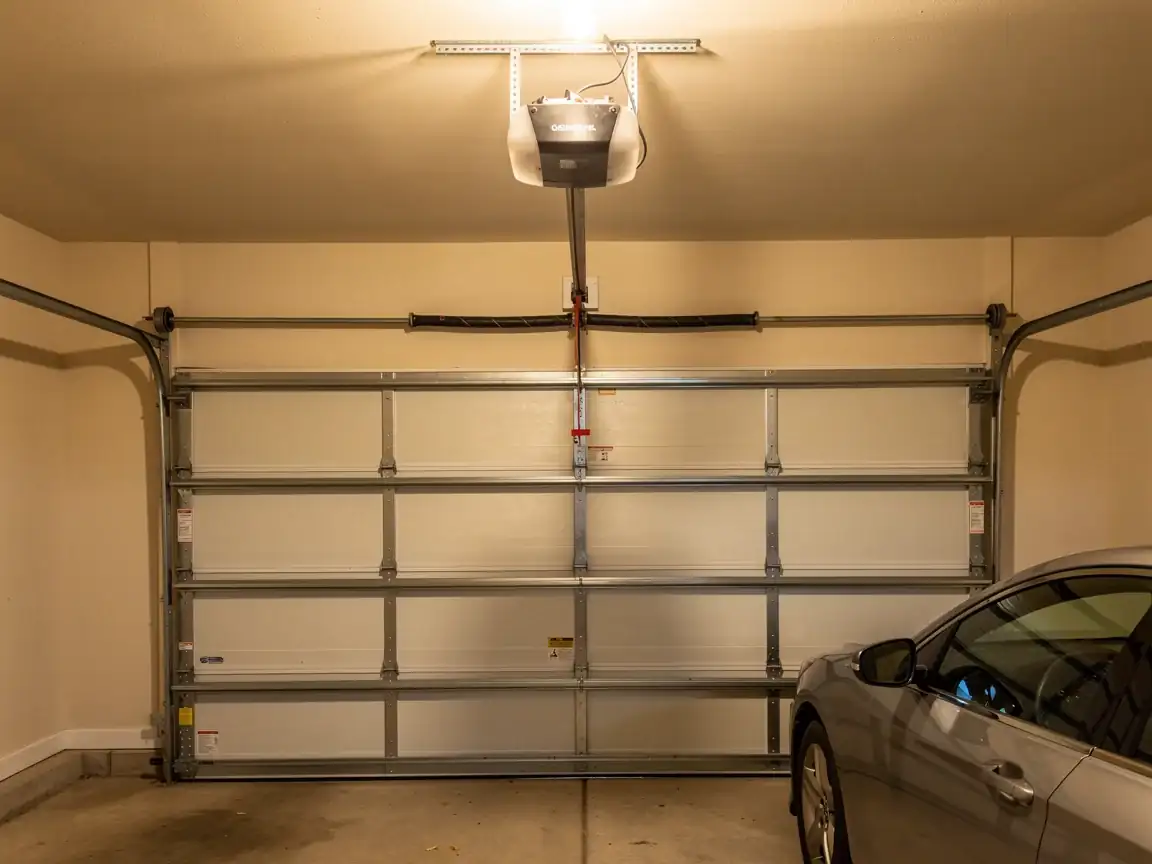
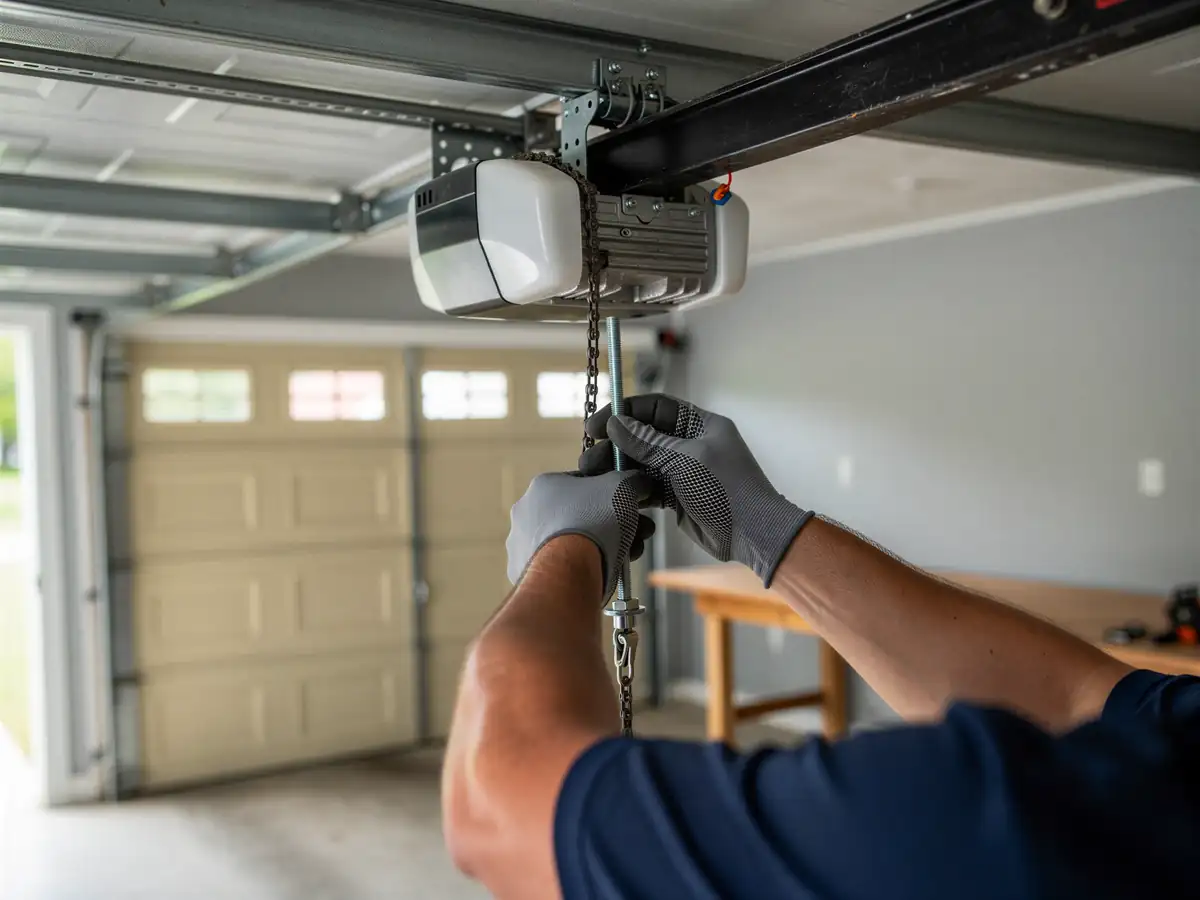
The opener in a Smithfield house built around the early-to-mid 1970s has usually been through at least one motor replacement by now, but the gearing and the rail often got reused. The complaint we hear most from this stock is the motor running - you hear the hum - but the door not moving, which usually means a stripped drive gear or a chain that's gone slack on its sprocket.
Cold mornings make it worse. This part of the state sits in a moderate cold climate band, and openers with weak capacitors or old lubricant on the rail struggle hardest on the first run of a cold day, then loosen up once the motor's warm. If yours hesitates at 6am and runs fine by noon, that's a capacitor or a dry rail talking, not your imagination.
On newer installs - anything added or replaced well after the original build - we're more likely looking at a bad logic board or a sensor alignment knocked loose than a mechanical failure.
Can You Do This Yourself
Swapping a remote battery or re-aiming a safety sensor that's blinking
That's yours to do, and you don't need us for it. Tightening a loose chain on a screw-drive or chain-drive opener is also within reach if you're comfortable on a ladder and the door is down and disconnected first.
Where we'd tell you to stop
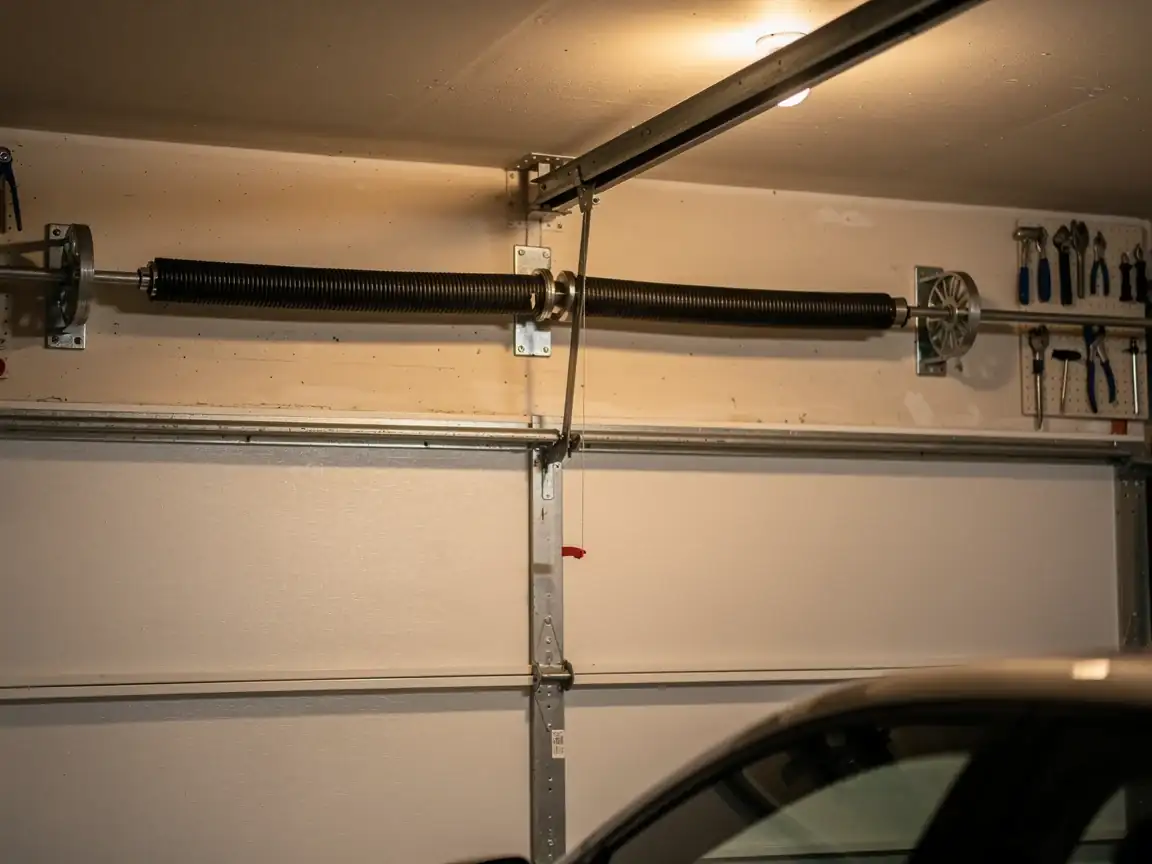
Anything involving the torsion spring system, the high-voltage side of the motor housing, or a logic board you're not sure is actually bad versus a wiring fault upstream of it. Openers carry stored spring tension nearby even when the opener itself looks like the only broken part, and guessing wrong there is how people get hurt, not how they save money.
If your opener is original to a house built in the early 1970s and it's the third repair in two years
We'll usually say replace it rather than keep feeding it parts - not because we can't fix it again, but because at some point the labor on a forty-year-old motor costs more than a new one.