How Long You Are Without the Door
Smithfield sits 11 miles out from our shop in Clayton
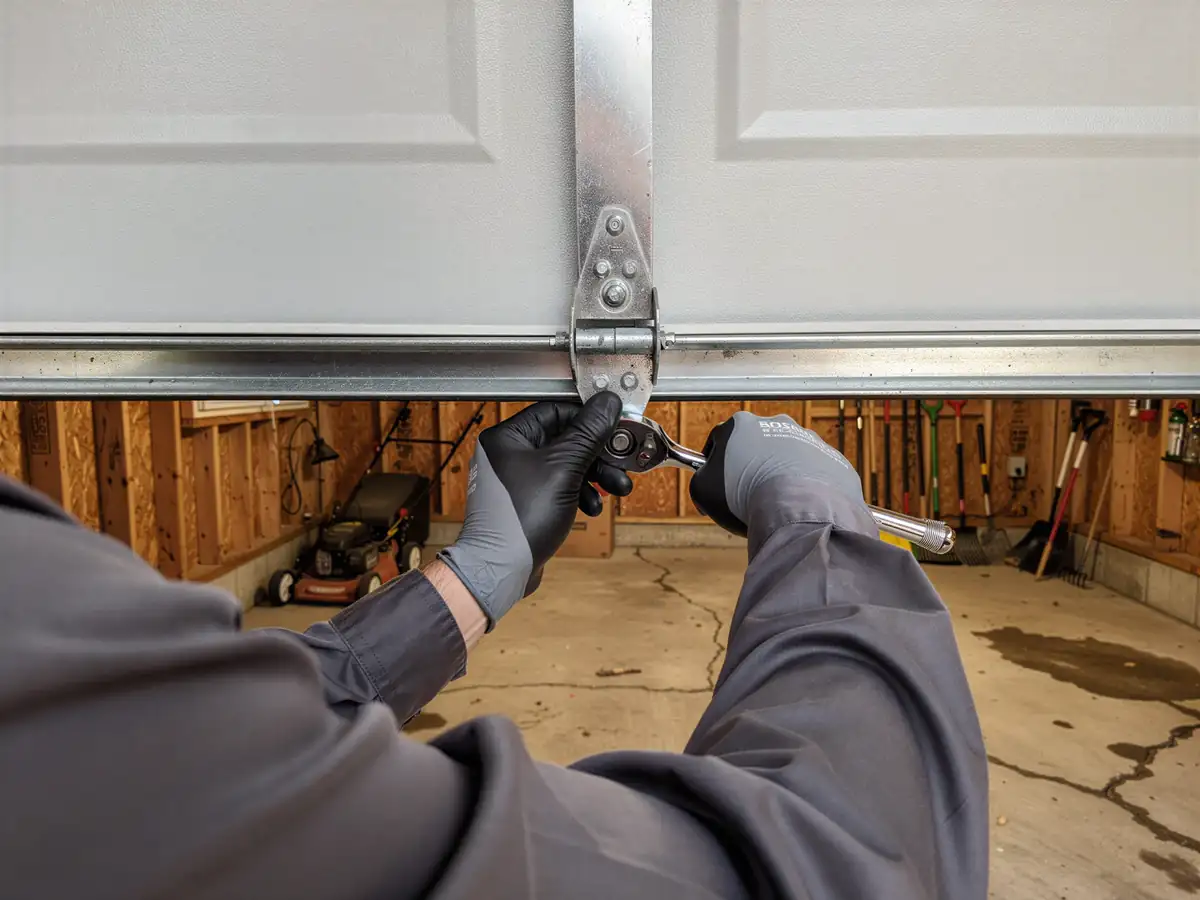
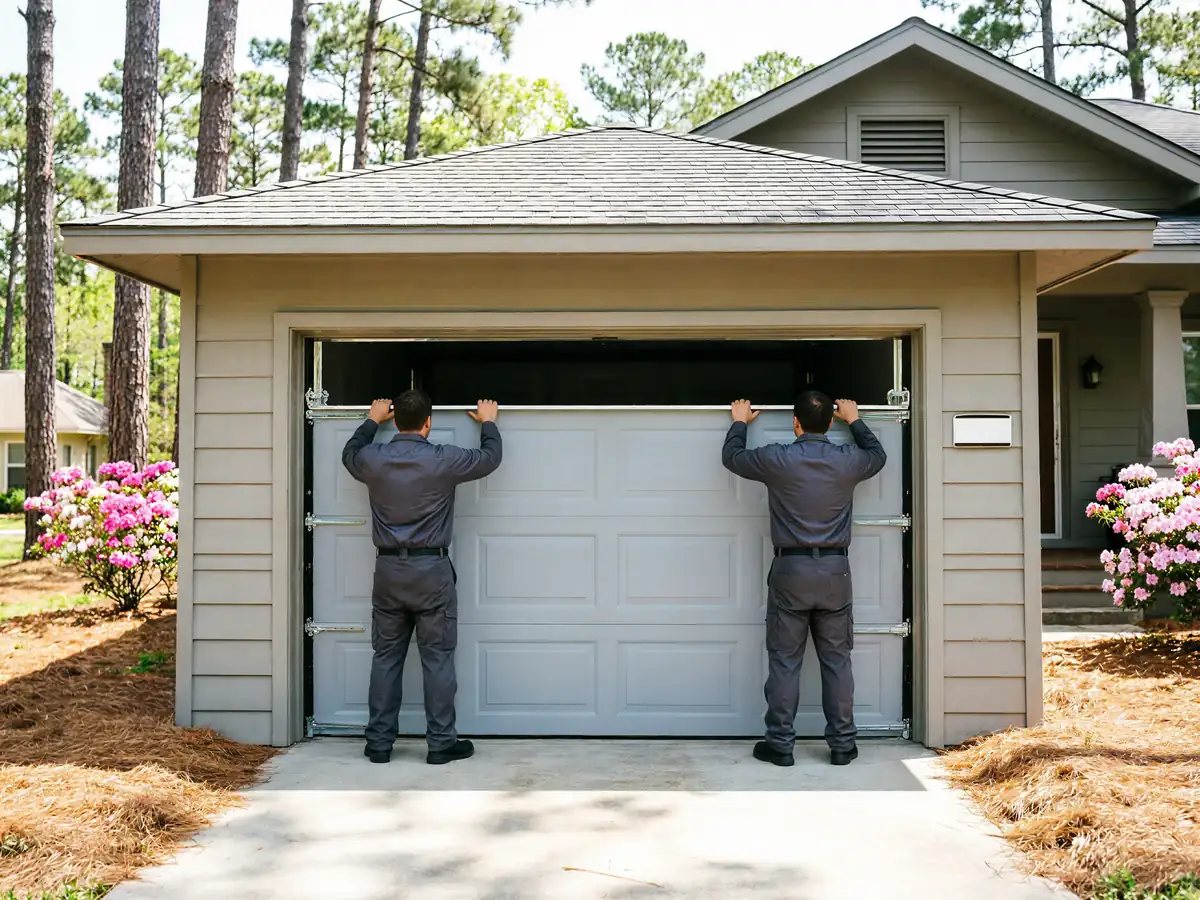
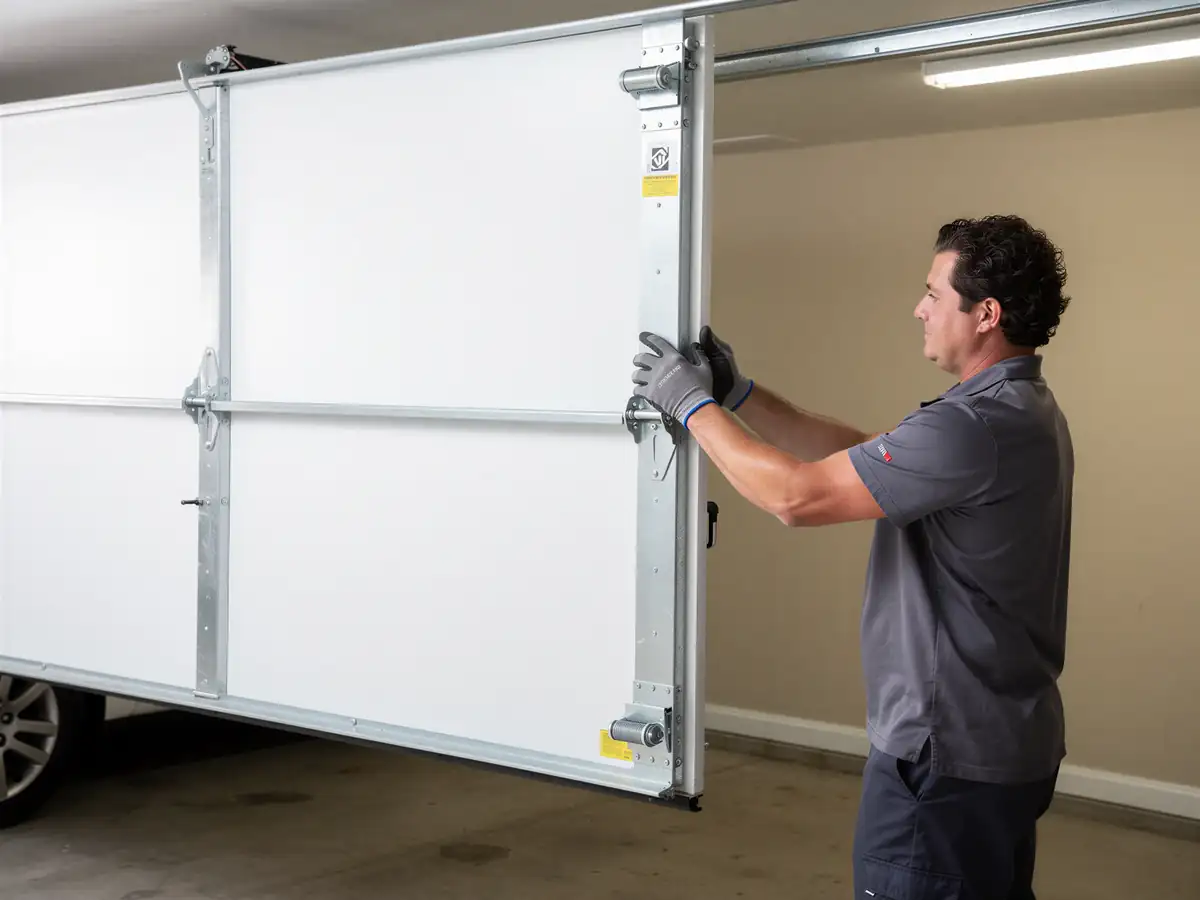
Which changes how a panel job actually runs compared to a call closer to home. We don't keep a branch or a drop point in Smithfield, so every job starts with a drive, and that drive gets built into how we plan the visit rather than treated as an afterthought. For a straightforward single-panel swap on a door that's already identified, that distance adds time to the front end of the job, not the repair itself - once the truck is there, swapping a damaged panel on a sectional door is usually an hour or two of work.
- 11 miles
What takes longer is matching the panel
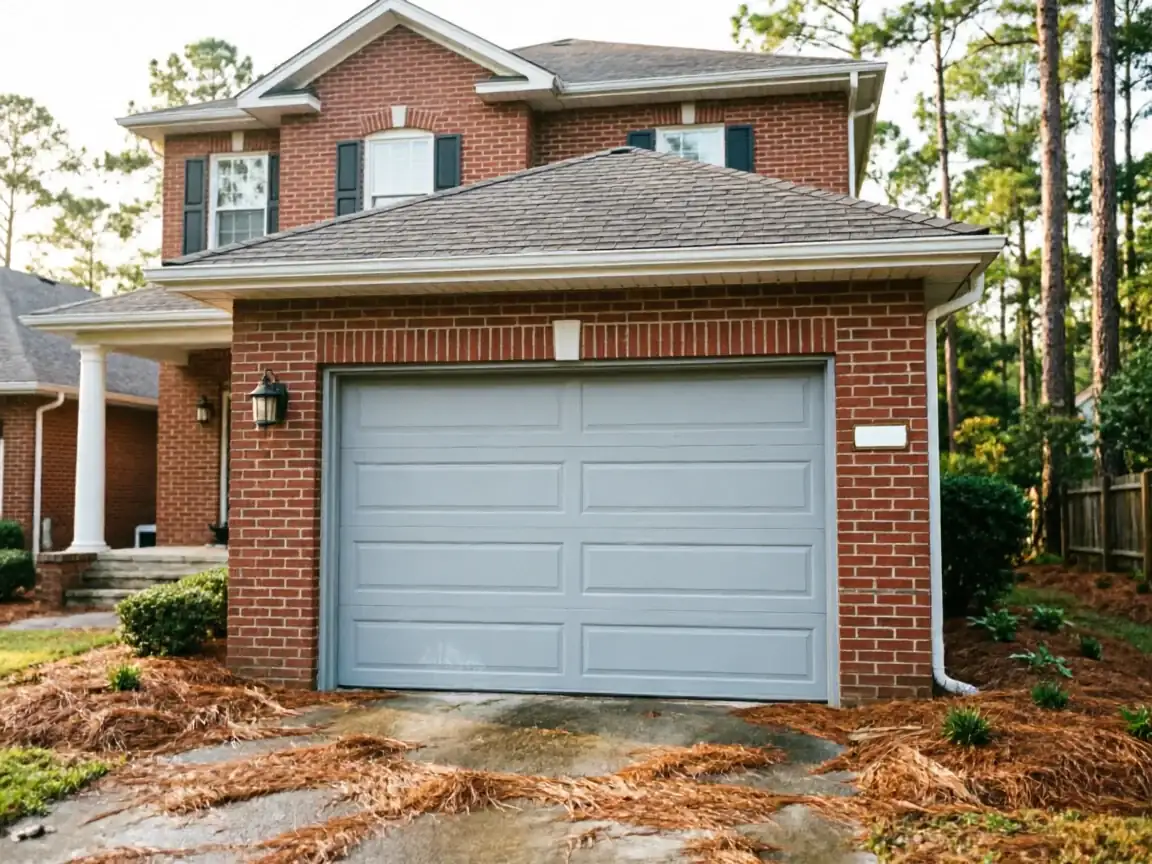
A lot of Smithfield's housing dates to the early 1970s, well before today's standard panel widths and insulation profiles became common. If your door is original to a house from that era, we may need to source a panel that fits an older track and hinge spacing rather than grab one off the shelf. That's the part of the timeline worth asking about up front - not the drive, the part.
We're straightforward about this rather than guessing
If your door is a newer replacement installed at some point after the original build, panel matching is simple and fast. If it's original hardware from the 1970s, we tell you that during the first look, not after we've already ordered the wrong part.
What Is on the Truck
We stock panels sized for the door styles that show up most across the wider Clayton service area, which runs from newer construction through houses built as far back as the late 1960s. Smithfield's housing stock, with a median build year around 1973, leans toward the older end of that range, so the truck carries panels and matching hardware sized for narrower, non-insulated sectional doors as well as current-spec insulated panels.
What we can't always carry is an exact color or texture match for a panel discontinued decades ago. Steel panel profiles from the early '70s weren't standardized the way current lines are, and some manufacturers from that era are long out of business. When we can't match the exact panel, the honest options are a close substitute panel that's visibly different, or replacing all the panels on that section so the door reads as one piece again. We'll tell you which situation you're in before any work starts, not after.
We also carry the fasteners, hinges, and roller brackets that older panel sections use, since those sizes have shifted over the decades too and a mismatched hinge is often why a supposedly simple panel swap stalls out on-site.
What You Are Seeing
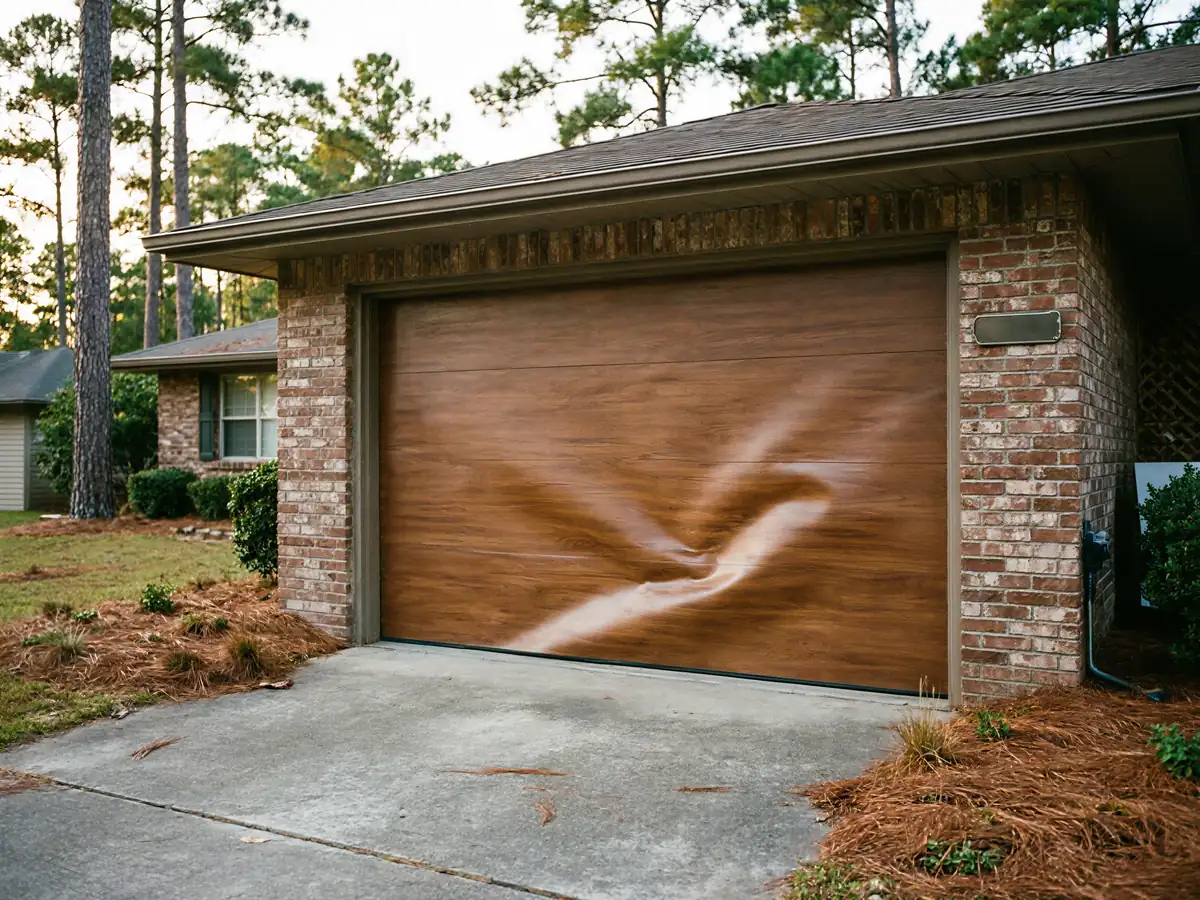
A dented or caved panel on a door from the early 1970s usually isn't an isolated problem - it's often the first visible sign of a door that's been flexing on original, non-insulated steel for fifty years. In a moderate-cold climate, repeated freeze-thaw cycles work on steel panels and their seams over that much time, and a panel that's already dented is one that's already lost some of its structural stiffness, which means the section next to it is carrying more load than it was built for.
What we're checking for, beyond the obvious dent, is whether the track alignment has shifted because of the impact, whether the hinges at that panel are bent or just worn, and whether the rest of the door's steel shows the same thinning you'd expect from age rather than from the one hit that brought you to call. A single clean dent from a backed-into mower is a different repair than a panel that's rusted thin at the bottom from decades of ground moisture.
We won't always recommend replacing just the one panel. If the rest of the door is original 1970s steel and showing its age everywhere, a single new panel next to worn ones can actually look worse and cost you twice over when the next section goes.
Can You Do This Yourself
Panel replacement is one of the more DIY-feasible garage door jobs
And we won't pretend otherwise. If you've got a newer sectional door and the damaged panel is a standard size, ordering the part and swapping it with basic tools is within reach for someone comfortable on a ladder.
Where it gets harder in Smithfield specifically is sourcing
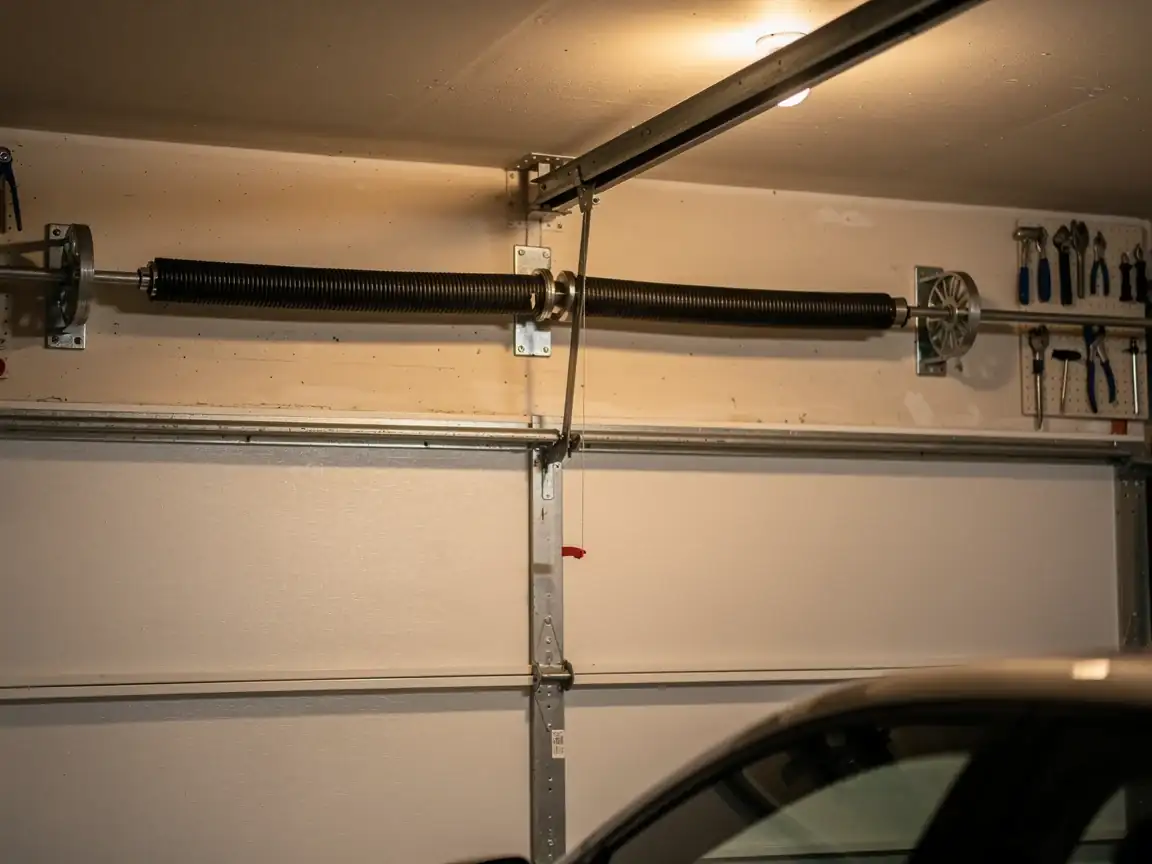
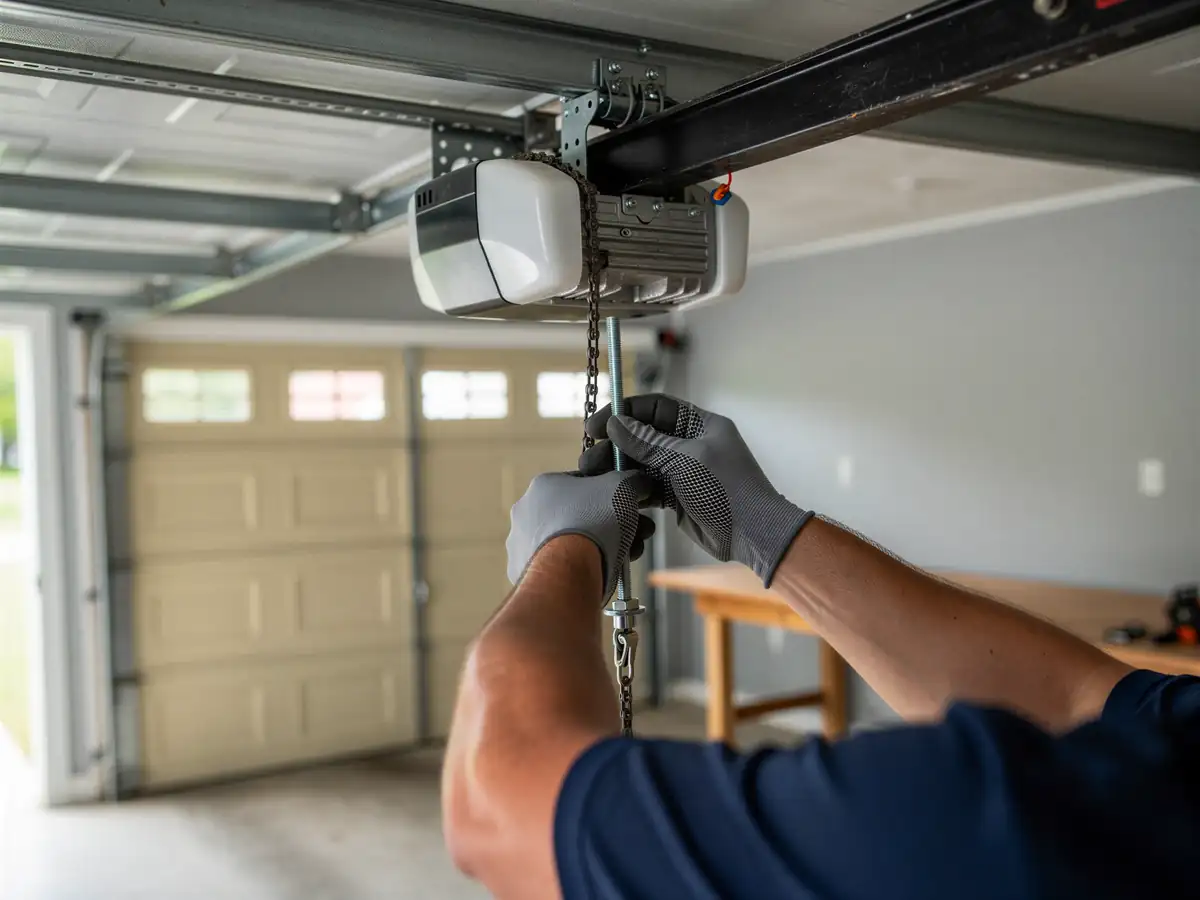
If your door dates to the early 1970s building stock common here, finding a panel that matches your track spacing and hinge pattern without a supplier relationship is genuinely difficult - you may end up ordering several wrong parts before finding the right one, and return shipping on steel panels isn't cheap. There's also the torsion spring risk: on any door with a spring system under tension, working near the panel section closest to the spring without knowing how to safely release that tension is how people get hurt. That part we don't recommend doing solo regardless of panel age.
If your door is a newer, lower-tension setup and you're confident with tools
It's a reasonable weekend job. If it's original hardware from the '70s, the sourcing alone usually makes it worth a call before you start ordering parts.