How Long You Are Without the Door
Wendell is a small town by household count
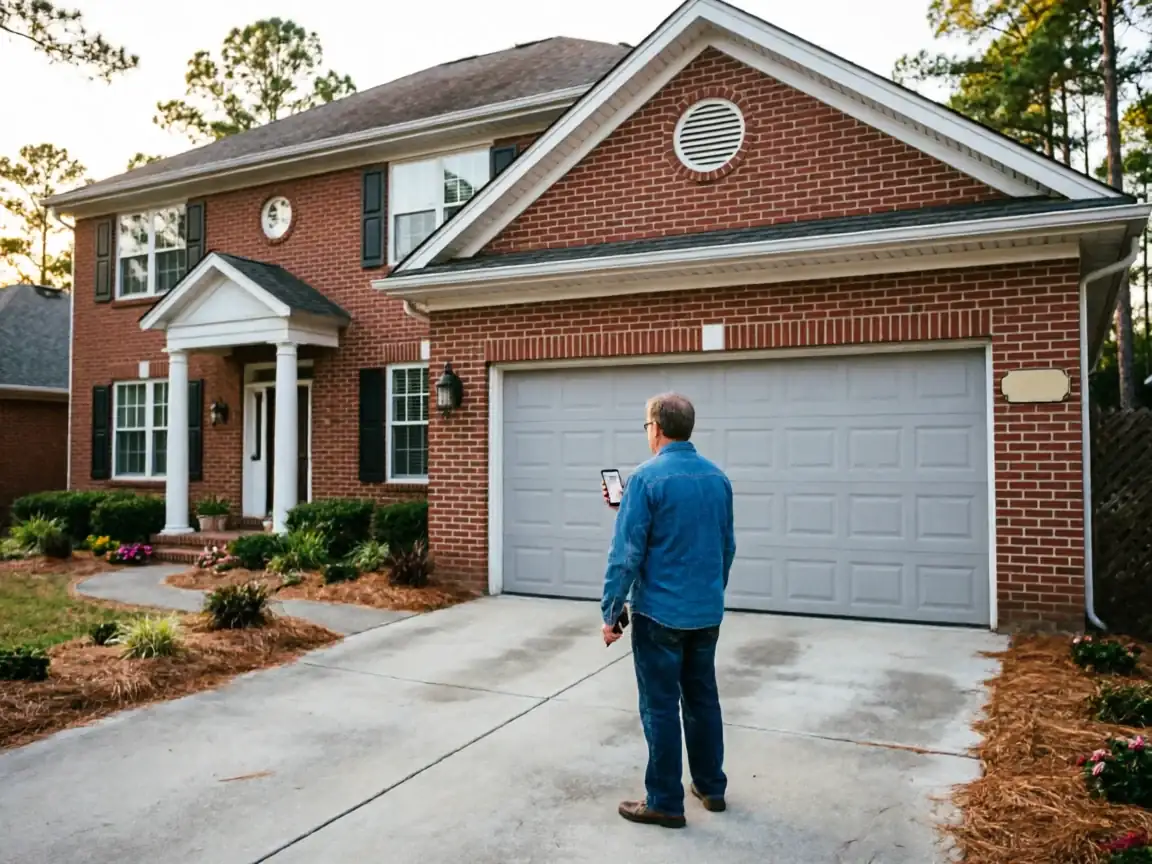
About 4,164 of them - so we don't run a crew stationed here. The truck comes from Clayton, nine miles up the road, and that drive is built into how we schedule the day rather than something we try to hide. We don't promise a same-hour swap because we're not sitting on your street waiting for the call. What we can tell you is that a full door replacement is a one-day job once parts are on the truck, and we sequence the route so Wendell jobs aren't an afterthought tacked onto the end of someone else's day. If your opener dies and the door is stuck down, that's the one situation where timing actually matters, and it's worth saying up front: we're not local in the sense of being five minutes away. We're local in the sense of knowing this part of the county.
The honest limitation
If you need a door the same morning you call, we may not be the fastest option for Wendell specifically. We'll tell you a realistic window rather than guess.
Can You Do This Yourself
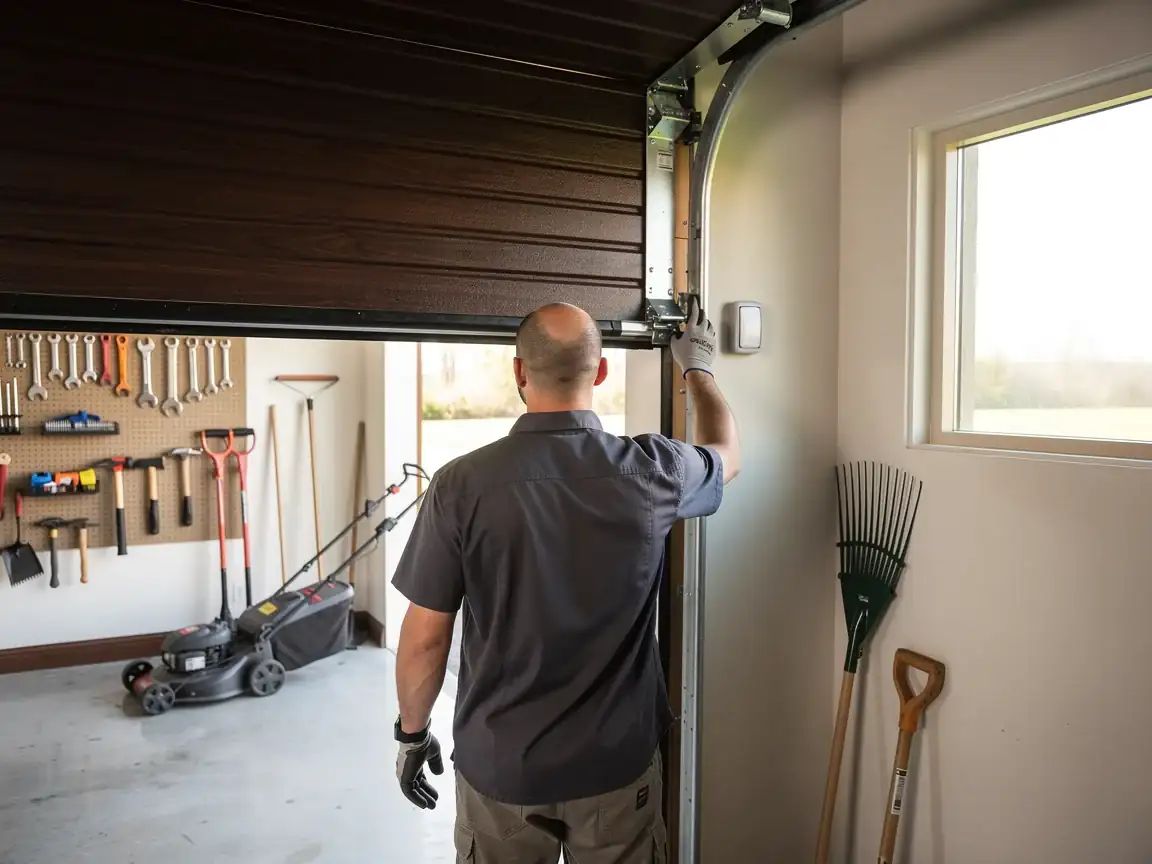
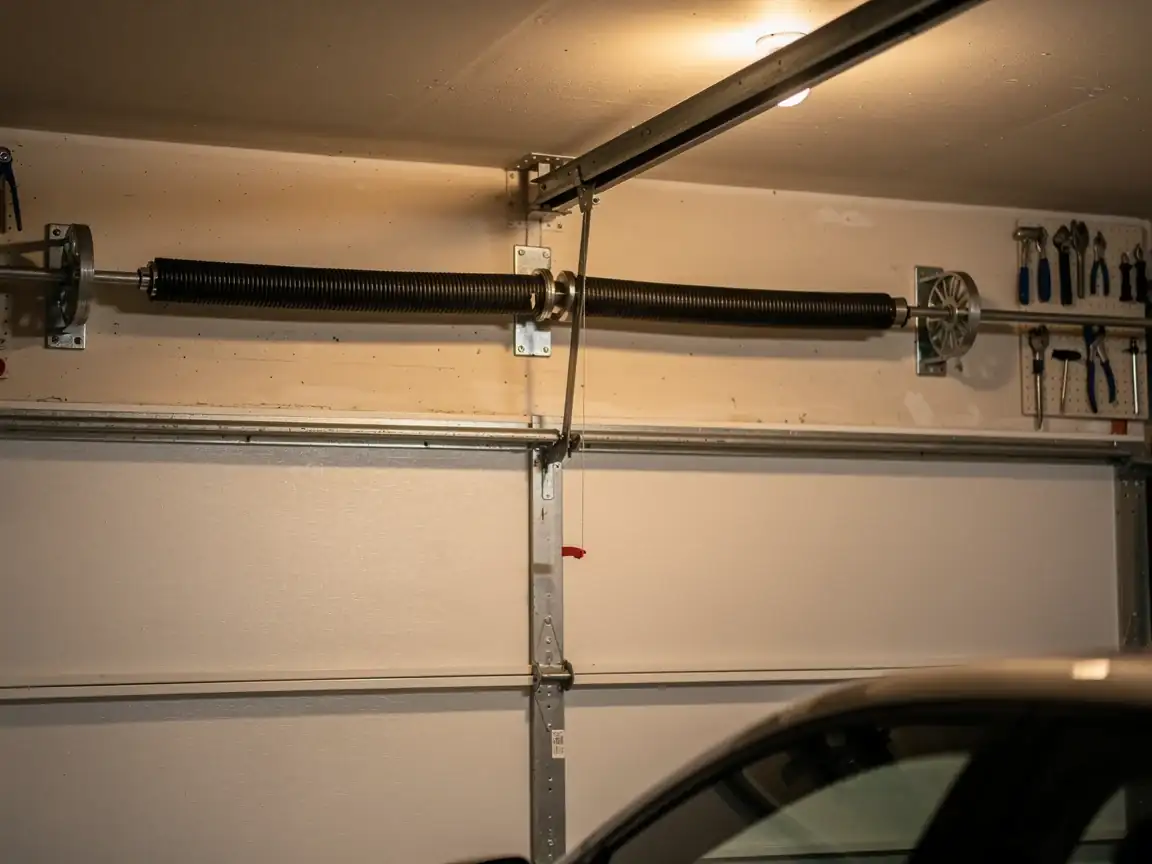
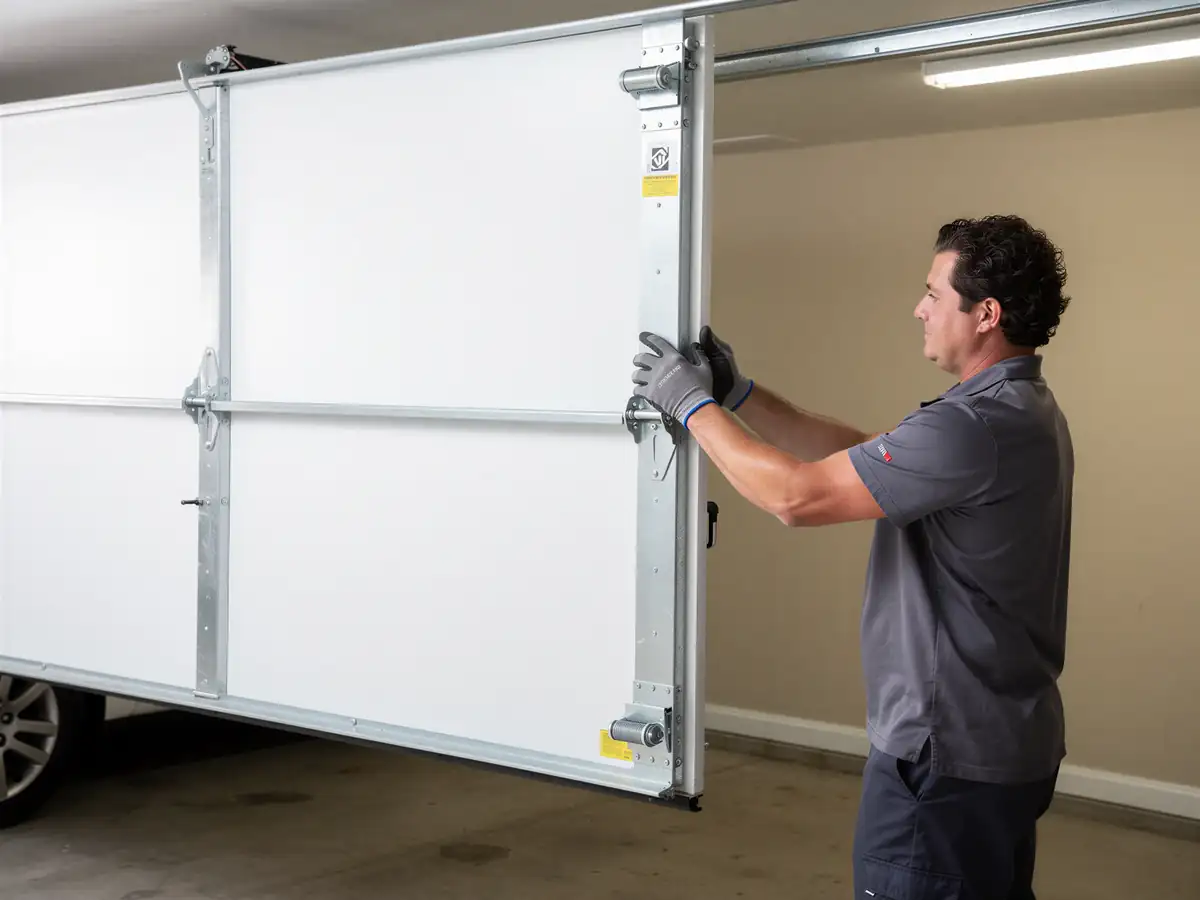
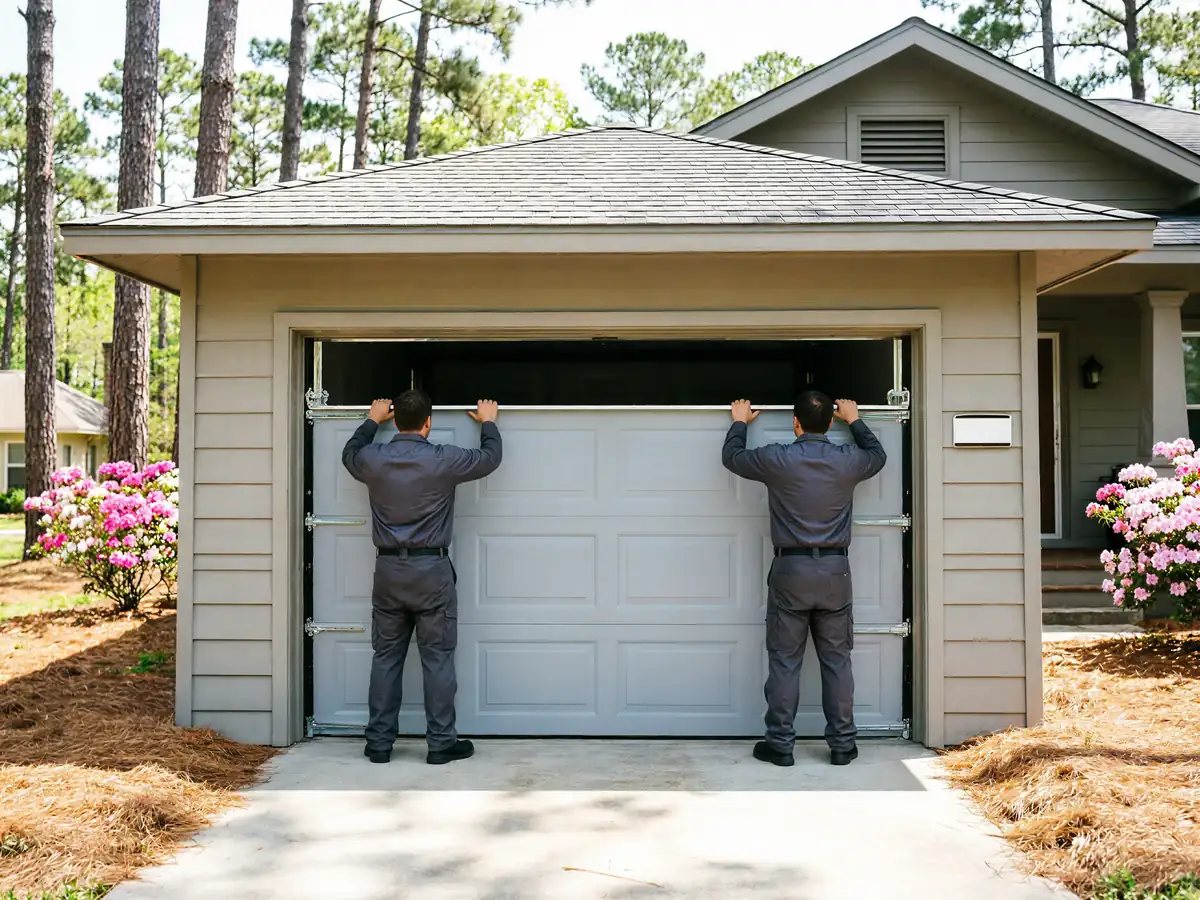
A new garage door installation is not a weekend project, and that's true whether you're putting in a 16-foot double or a single-car door. The panels alone run over a hundred pounds assembled, the torsion spring is wound under enough tension to break a wrist if it slips off a winding bar, and getting the track plumb on both sides is the difference between a door that glides and one that binds within a month. Kits sold at home centers assume a stock opening and standard headroom - plenty of newer Wendell construction has tighter headroom than those kits plan for, since many of these homes were built with two-car garages set close to the ceiling joist.
If you're comfortable with framing and have done header work before, you can probably hang the door itself. Where most DIY installs go wrong is the spring sizing and the opener mounting - both need to match the door's actual weight, not a number off a box. Get those two things wrong and you're either replacing a stripped opener gear in six months or living with a door that slams the last six inches of travel.
What Is on the Truck
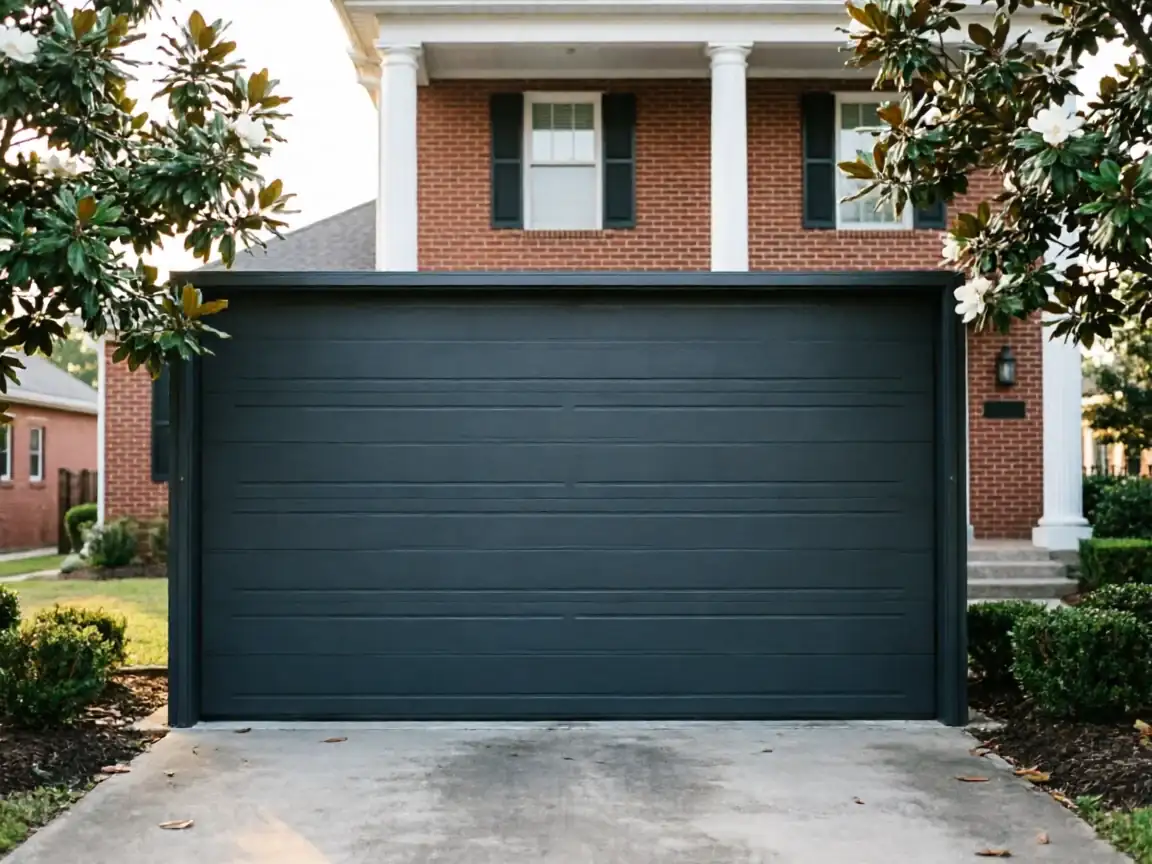
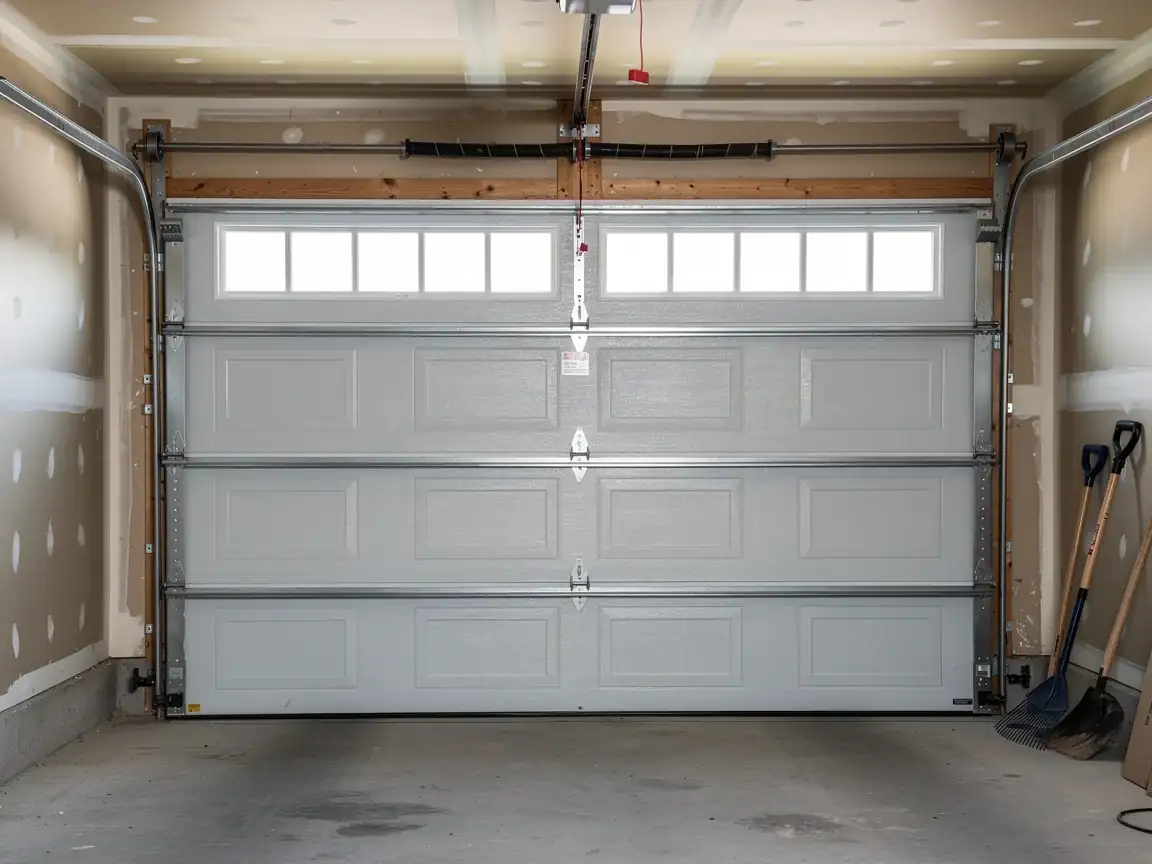
We carry steel doors in the weights and R-values that fit this part of North Carolina's climate - moderate cold, not the deep-freeze builds you'd spec further north, but enough temperature swing that an insulated door with a thermal break earns its keep on an attached garage. For a town where most construction landed after 2000, that usually means a door sized for a standard 7-foot or 8-foot opening with modern track clearance, not the odd heights you run into on older stock.
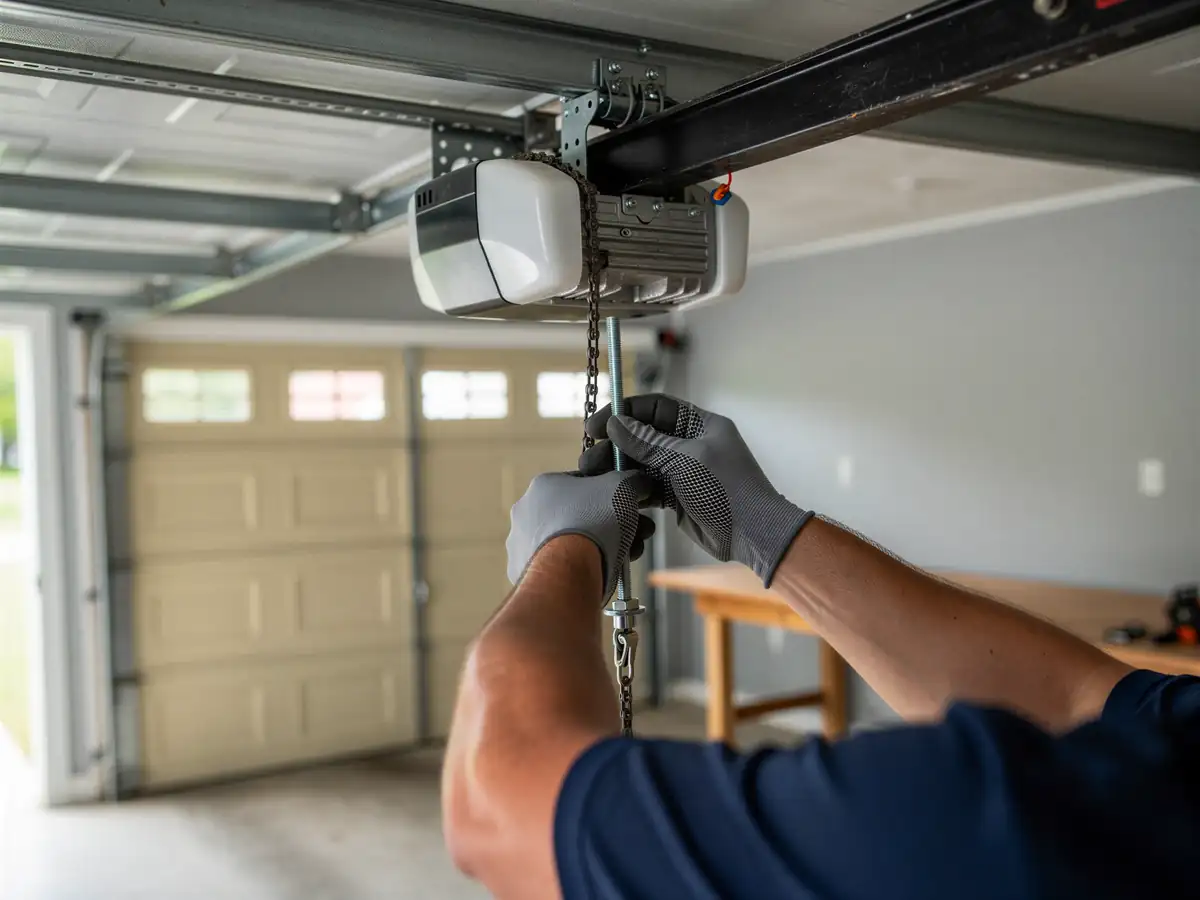
We stock torsion springs rated by cycle life, not just by weight, nylon and steel rollers, and openers in belt-drive and screw-drive, which is what newer construction here tends to already have wired for rather than the older chain-drive units. What we don't carry on the truck is custom wood doors - those are special order, and if that's what you want, the lead time is longer than anything else on this page. We'll tell you that number when you ask, not bury it.
Why This Fails Locally
Across the wider service area, the median home went up in 1985
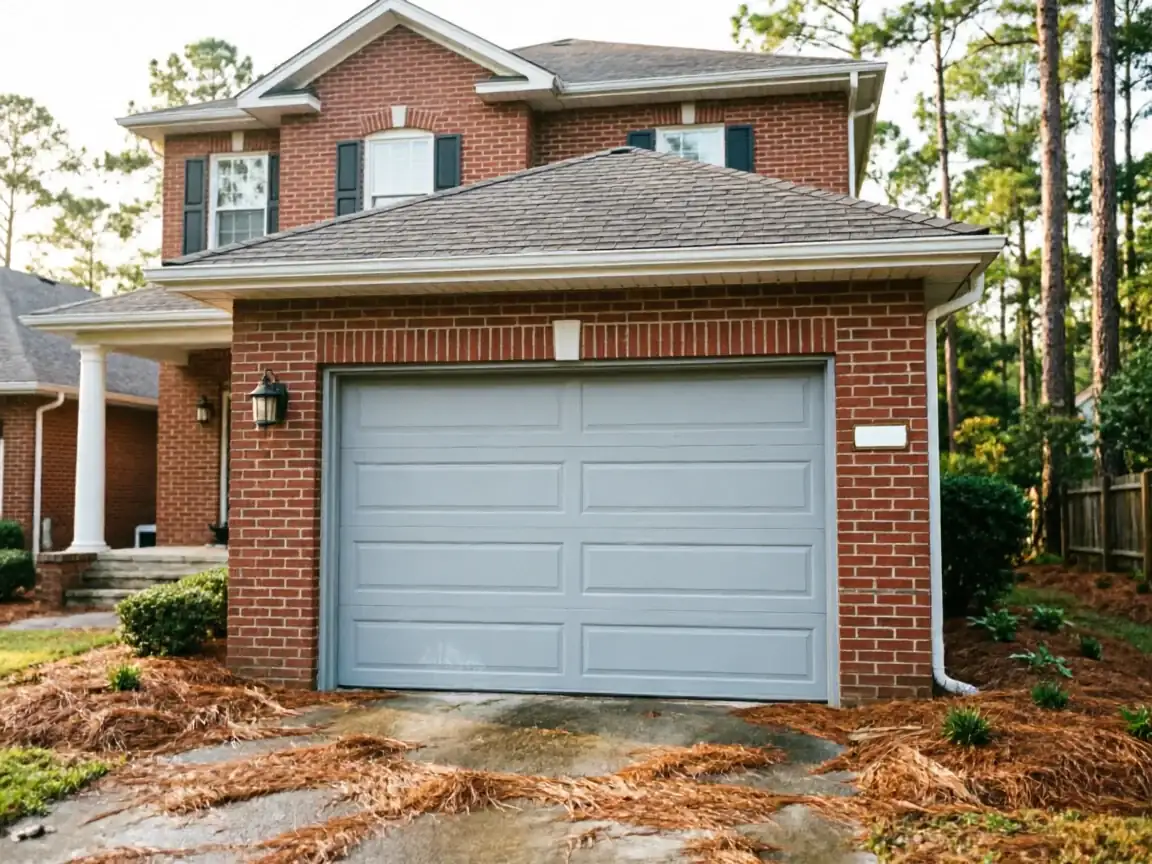
And a lot of what we replace out that way is original one-piece doors on hardware nobody stocks anymore. Wendell doesn't have that problem. The houses here mostly date to around 2005 - newer than the area median by two decades - so what fails isn't old hardware, it's builder-grade hardware. Developers install the lightest door and opener that passes inspection, and that door is doing fine until year twelve or fifteen, when the springs - sized for the door's shipped weight, not for years of humidity and temperature swing - start losing tension early, and the plastic idler pulleys that came standard on the cheaper opener models crack.
The other pattern we see
Owners here have the income to upgrade rather than just repair, and a fair number ask for heavier-gauge insulated steel on their next door instead of matching the thin builder panel that came with the house. That's a real option here in a way it isn't everywhere - it's a choice, not a necessity, and we'll say so when a repair would do the job just as well.
How We Fix It
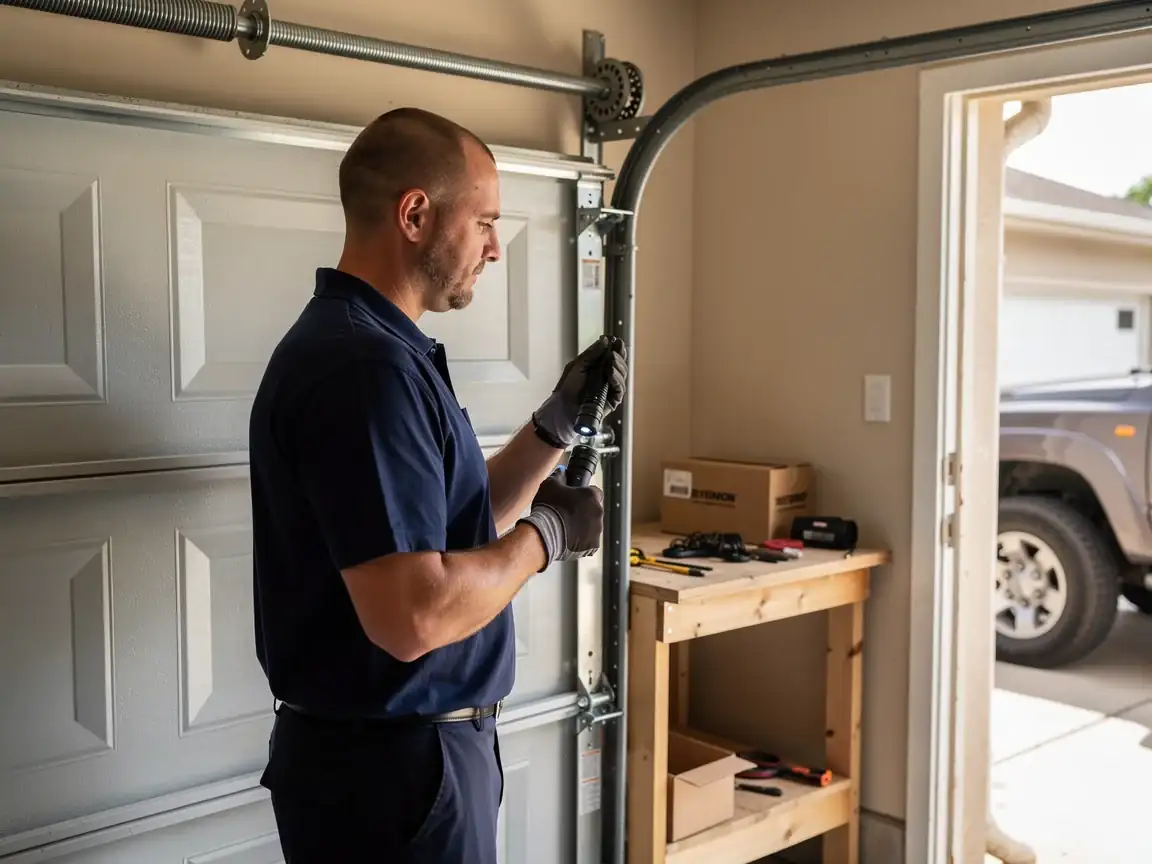
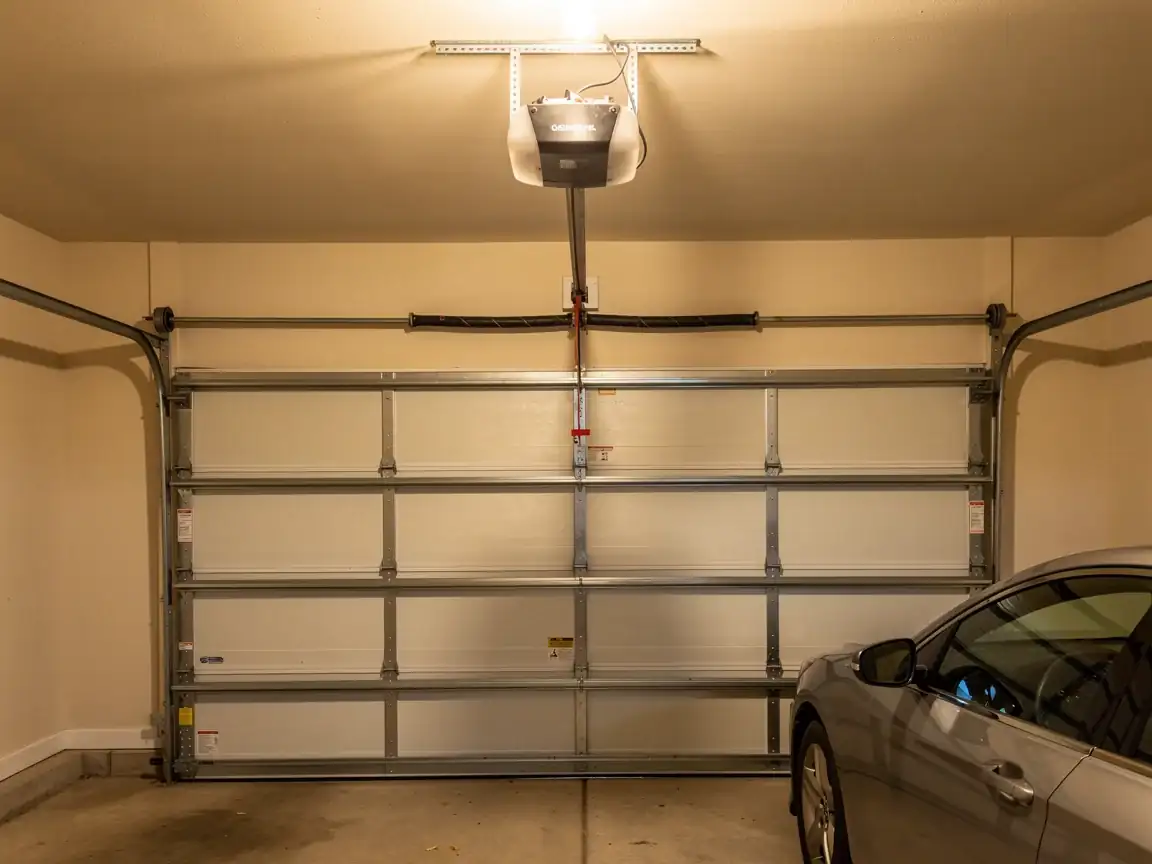
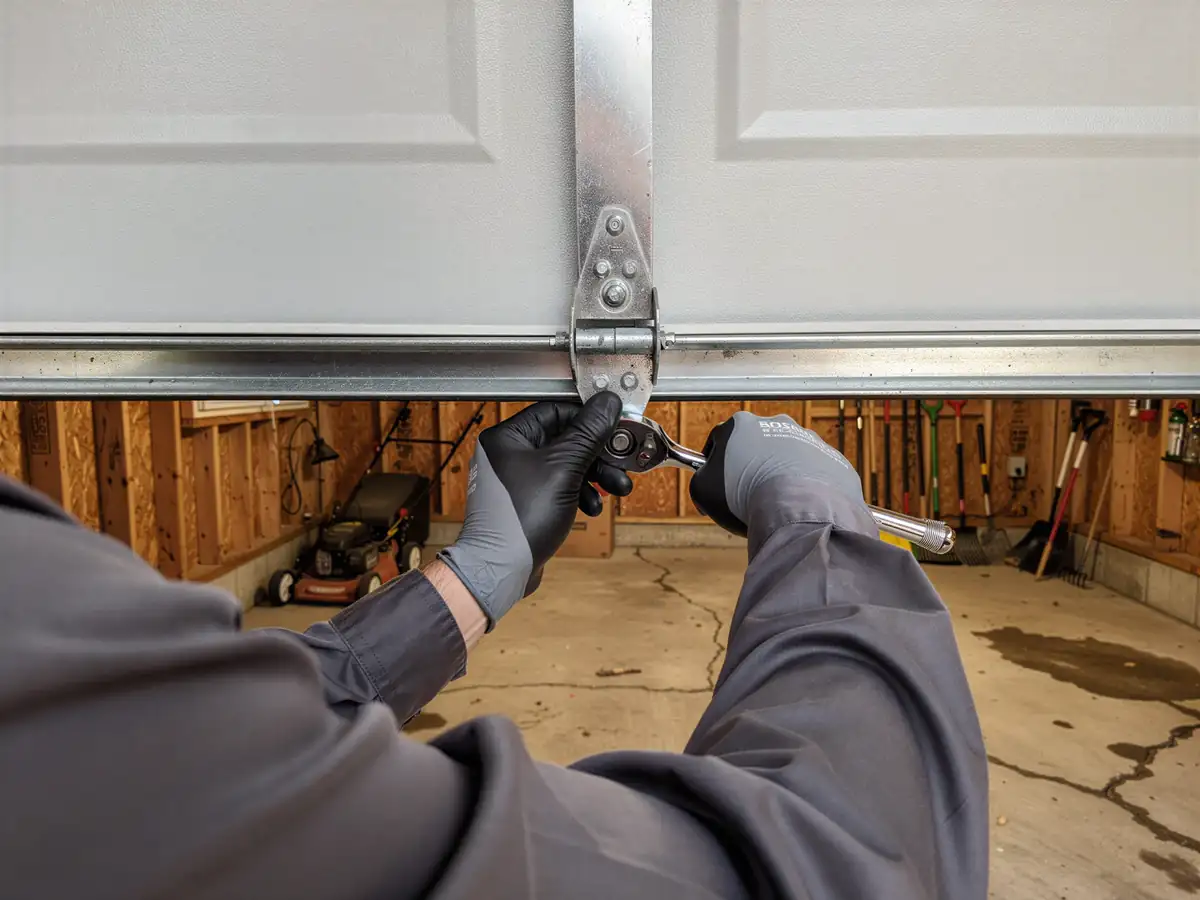
For a new install, we start with the opening - measuring actual headroom and backroom rather than trusting what the original builder plan called for, since field changes during construction aren't rare. We size the spring to the door's real weight once it's assembled, not the number printed on the box, because a 25-pound difference in panel weight changes torque enough to matter.
We set the track plumb on both sides before the door goes up, not after, and we test the opener's force settings against the actual door weight rather than leaving factory defaults - factory defaults are tuned for the lightest door that model ships with, which isn't yours. Once it's hung, we run it through a full open-close cycle under load, check the auto-reverse safety function, and walk you through the opener's remote and keypad setup before we leave. If you want more detail on how we handle the installation itself end to end, that's covered on our main installation page.
What You Are Seeing
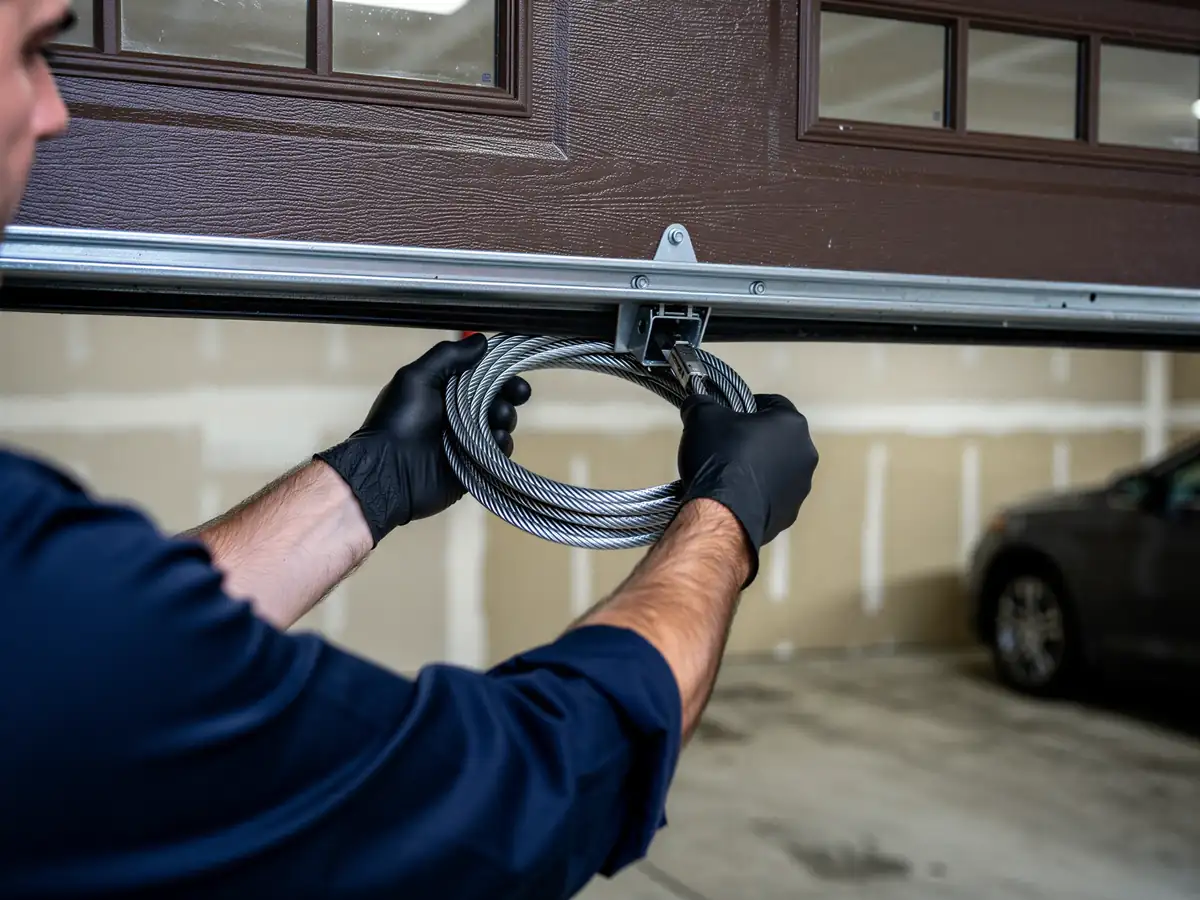
If your door is a builder-grade steel door from a house built in the early-to-mid 2000s, here's what trouble looks like before it becomes an emergency. The door starts closing slower than it used to, or it reverses partway down for no visible reason - that's usually the opener's force setting drifting as the spring loses tension, not a bad sensor. You'll hear a grinding or scraping sound from one side of the track before you see a dent, because the roller wearing out always makes noise first. A door that looks level but visibly shudders as it travels is often a sign the cable on one side is starting to fray.
If the door won't budge at all and the opener motor just hums, don't force it with the emergency release repeatedly - that's almost always a broken spring, and running the opener against a broken spring is how you burn out the motor on top of the spring. Call before you try to muscle it open by hand.